The fringe guide
Bangs and Fringe: Curtain, Wispy, Blunt, and Curly Styles
Updated
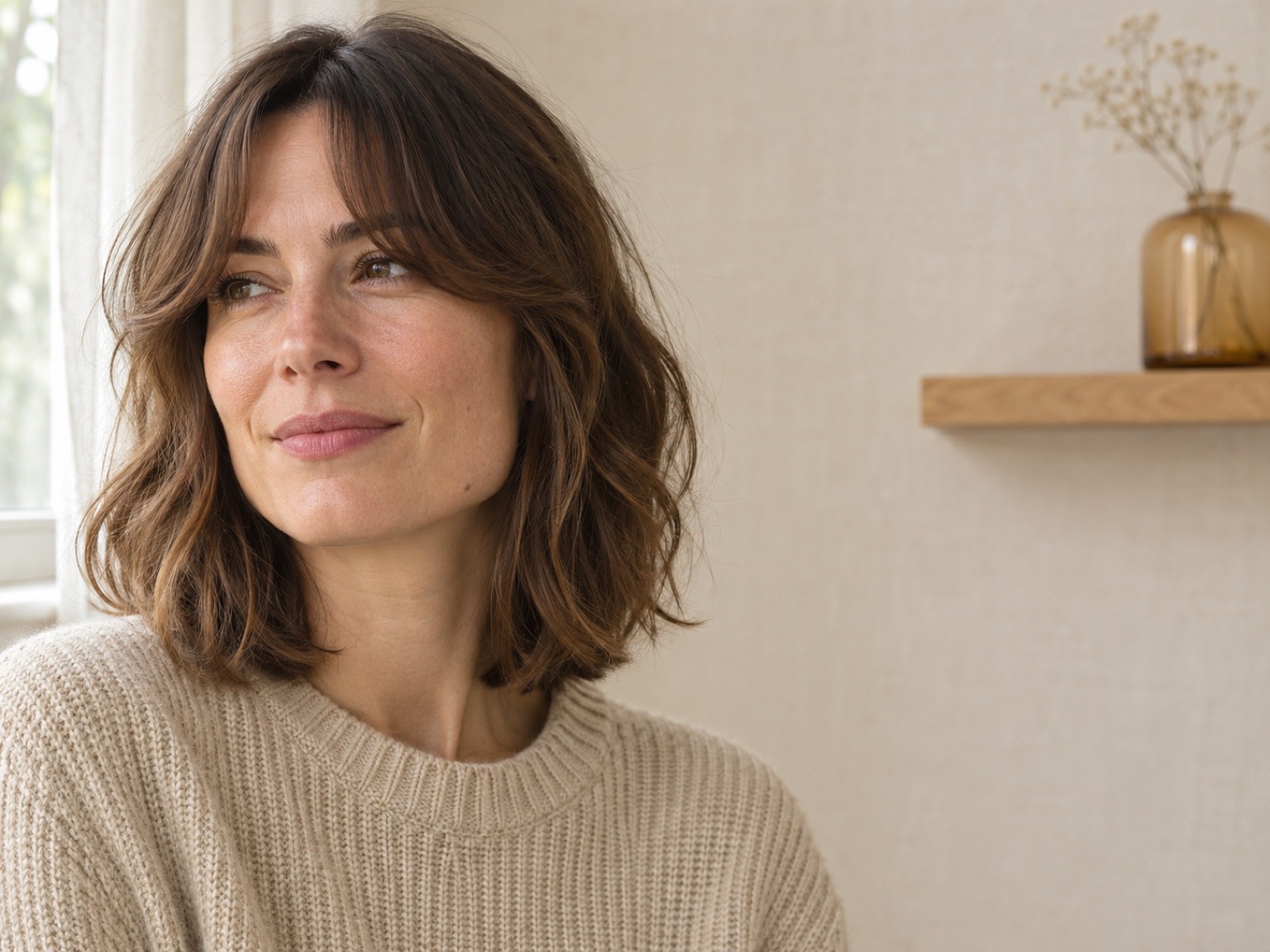
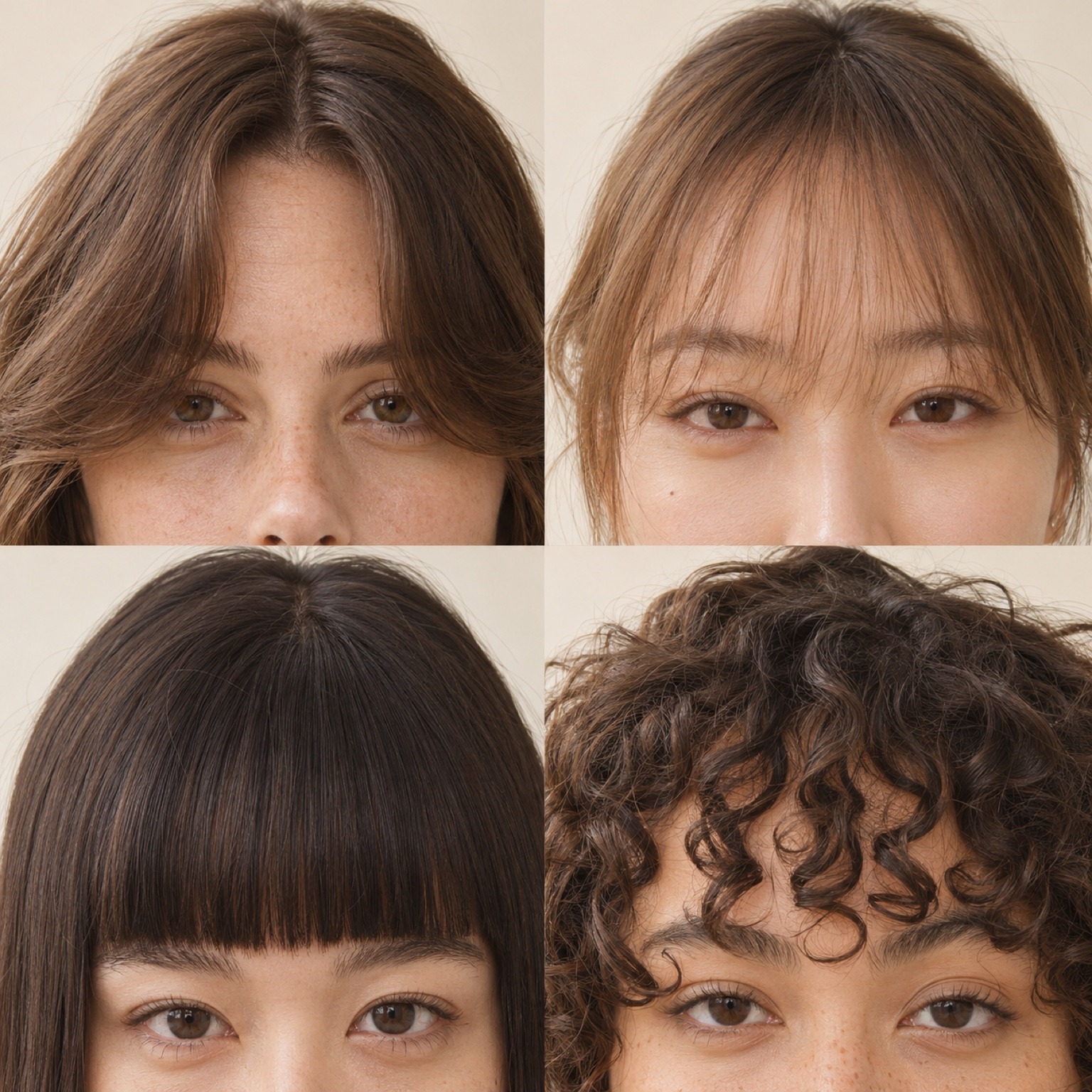
Bangs are the strands that fall over the front hairline to cover part of the forehead. The main choices are curtain bangs that part in the middle, soft wispy bangs, straight-across blunt bangs, and curly bangs cut for natural texture — each needs a different amount of trimming and styling.
Start with the length you want at the eyebrows, the edge you want to see, and the way your hair behaves when it dries. Those details are more useful at an appointment than a style name alone.
01 / The basics
What counts as bangs
Bangs are a front section cut to fall across or around the forehead. They may sit above the eyebrows, brush the brow line, or reach below it and open toward the sides. Fringe means the same thing; it is the usual word in British and Australian English. The fringe terminology is useful when a reference photo uses a different name.
When you describe a reference, point to the shortest piece as well as the longest. “Below my eyebrows when dry” is clearer than “long bangs,” especially if you want the front to frame your face instead of lying straight across it. Note whether you part your hair in the center, off center, or somewhere that changes from day to day.
02 / Compare the shapes
Four bang styles compared
Curtain bangs are longer through the sides and part to open around the center of the forehead. They can sit alongside loose waves or be tucked into a low ponytail. Because the side pieces already sweep into the rest of the hair, they can feel less abrupt as they grow out than a straight-across line. Decide how much forehead you want visible and where the shortest center pieces should end.
Wispy bangs have an airy, broken edge that lets some forehead show through. Blunt bangs make a more continuous horizontal line, with a stronger edge that is easy to notice when it grows. Curly bangs follow the shape of the curl rather than a ruler-straight line. Ask your stylist to assess the front when dry, since curls can spring shorter than they appear while damp. The cut of the front layers changes whether the result reads soft or sharply defined; see more curly hairstyles for the surrounding shape.
| Style | Length | Edge | Upkeep | Best on (texture) |
|---|---|---|---|---|
| Curtain | Center near brows; longer sides | Open, sweeping | Reset the part; blend as it grows | Straight, wavy, or curly |
| Wispy | Usually around brows | Light, separated | Restyle pieces that separate | Fine strands or a lighter front section |
| Blunt | At or around brow line | Strong, straight | Refresh the line when it grows | Straight or easily smoothed hair |
| Curly | Judge on dry curls | Defined by curl pattern | Refresh and shape curls | Natural waves, curls, or coils |
| Baby bangs | Well above brows | Short and visible | Frequent line checks | Discuss shrinkage and growth pattern |
Curtain
Center near the brows, longer sweeping sides. Reset the part and blend the sides as they grow.
Wispy
Light pieces around the brows with an airy edge. Restyle if the pieces separate.
Blunt
A strong line at the brow area. Refresh it when the length changes.
Curly
Length judged on dry curls, with an edge shaped by the curl pattern.
Baby bangs
A short line well above the brows. Discuss shrinkage and more frequent upkeep.
A fringe can also be part of a short cut. If you want to plan the whole outline, compare pixie haircuts before deciding how long to keep the front.
For additional examples of curtain, curly, and short fringe shapes, see Wella Professionals’ bangs ideas.
03 / Work with your hair
Match bangs to your hair texture
If your hair has fewer strands across the front, a lighter wispy fringe or a narrow curtain section may leave more hair in the rest of your cut. Look at where your part naturally opens; a very wide, heavy bang section may change the coverage you have at the sides. The guides to haircuts for thin hair and haircuts for fine hair separate density from strand diameter, which helps you describe what you actually see.
Thick, straight hair can show a blunt edge clearly, but that strong line also makes growth easier to spot. On waves and curls, compare the shape once the hair has dried in your usual routine. Ask how much spring the shortest pieces have and whether the stylist plans to leave extra length. If your hair changes direction at the hairline, show the part you normally wear rather than forcing the front flat for a reference photo.
04 / Between appointments
Living with bangs between cuts
Bangs sit where you notice small changes in length. Baby bangs, which end well above the eyebrows, leave little extra length for a later trim of worn ends. A crisp blunt line also changes visibly as it grows. Curtain bangs usually give you more ways to part or sweep the front while the sides lengthen. Choose a trim rhythm with your stylist based on the line you want to keep, your growth pattern, and how often you are willing to style the front.
On an ordinary day, notice whether your bangs need a quick reset after washing, whether they fall into your eyes, and whether you use a dryer or let them air-dry. Bring those observations to your next appointment. Avoid cutting a damp curl to the length you want it to sit when dry; let your stylist account for its spring and check the finished shape.
What to tell your stylist
- Show the eyebrow landmark where you want the shortest pieces to end when dry.
- Describe a straight line, an airy broken edge, or a curved sweep to the sides.
- Show how you part and style the front on a normal day.
- Bring a front and side reference, then point to which details matter most.
05 / Quick answers
Bangs questions
Are bangs and fringe the same?
Yes. Bangs is the usual North American word for the front section of hair that falls over the forehead; fringe is the common term in British and Australian English. Either word can describe curtain, wispy, blunt, or curly versions.
Which bangs are easiest to grow out?
Curtain bangs are often easier to blend into the rest of a cut because they already part and sweep toward the sides. As they lengthen, ask your stylist how to connect the shortest pieces to the surrounding layers.