Shape first, then definition
Curly Hairstyles Guide: Cut, Definition & Daily Styling
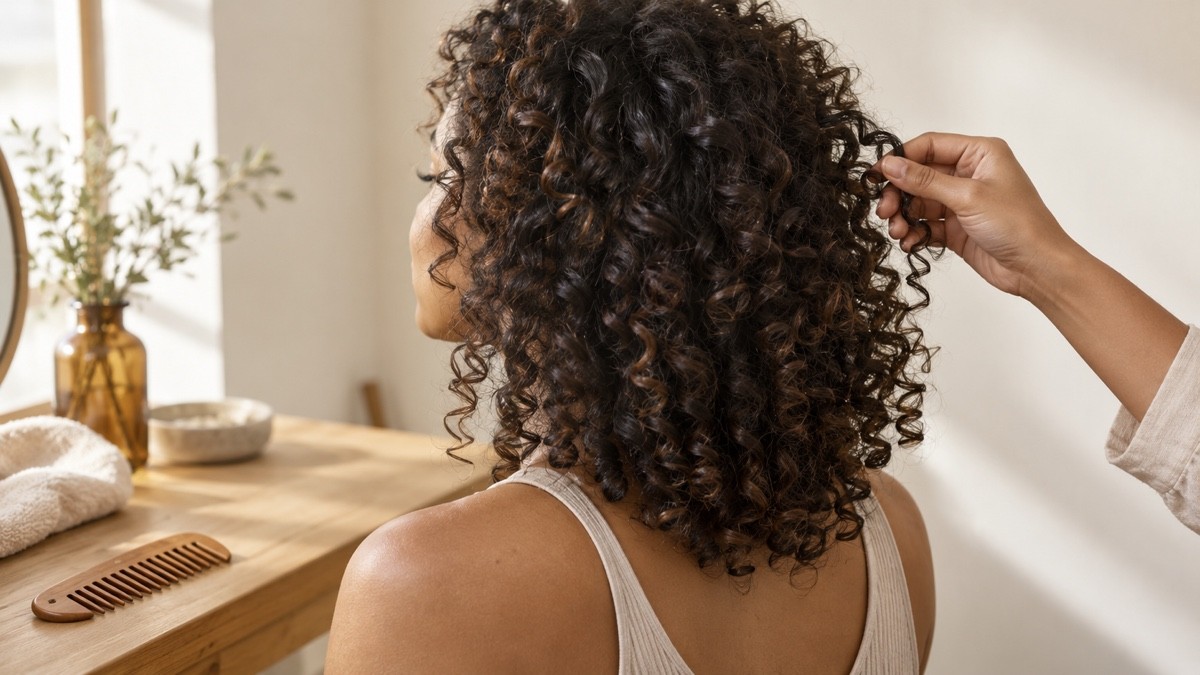
A useful curly hairstyle begins with the outline your curls make when fully dry. Decide where you want length and volume, then choose layers and a styling routine that support that shape. Detangling with moisture and letting curls form groups can help preserve definition; a dry shape check at the salon helps you see how much each section springs up.
Compare a classic rounded cut with layered options, bring a specific shape request to your stylist, and build a routine you can repeat at home.
01 / The foundation
Understanding the Style: Core Principles & Definitions
Curly hair bends into waves, spirals, or tighter coils, and different sections of one head may form different patterns. The visible haircut depends on more than a curl label: length, density, strand diameter, shrinkage, layers, and the location of the widest point all change the outline. Milady's cosmetology curriculum treats cutting curly hair and textured-hair techniques as distinct practical skills. Use that as a reason to discuss the cut on your own hair, rather than expecting a reference photo to transfer exactly.
Start with your preferred silhouette, not a face-shape rule. A stronger perimeter keeps weight toward the ends; shorter layers move some of that weight upward and can open space around the face. Fine strands may need less product to stay buoyant, while dense curls may need more sectioning time to detangle and dry evenly. If your pattern is tighter and more coily, the Coily Hairstyles Guide is the adjacent place to compare those shapes. Check the planned length at the front, sides, and back after the hair dries: wet length alone does not show the final line.
Read the dry outline
Take front, side, and back photos on a typical hair day. Mark where the width sits, which pieces frame your face, and where the shortest curls land. Bring those observations to the salon so “more layers” becomes a specific shape request.
02 / Shape and finish
Key Variations & Silhouettes
A curly cut can be compact and rounded, long with a heavier edge, or layered so the crown and sides carry more movement. The same cut may look different with a side part, a centered part, or a stretched versus fully dried curl pattern. Compare photos with a similar natural texture and note the dry perimeter before choosing a name for the style.
Classic Execution
A classic rounded curly shape keeps a clear perimeter around the shoulders or above them, with enough interior shaping that the sides and crown relate to the lower edge. For a bob, decide whether the dry hem should sit at the jaw, neck, or shoulder; curls may rise differently in each area. Keep the outline relatively solid if you want a compact finish. Daily wear depends on how you set and refresh the curls, and the cut itself does not have a fixed wear time.
Modern Textured & Layered Variations
A curly shag uses shorter crown and face-framing layers to shift visual weight upward while keeping length through the back. A long layered cut can preserve the overall length but break up a heavy lower edge. For short curly hair, a cropped shape puts the outline closer to the head; discuss the top, sides, and nape separately. Ask how each layer will look when fully dry and whether the shortest pieces can still join the curl groups you like. Cutting curl by curl is one possible method, but the useful test is the finished dry balance, not the name of the technique.
03 / The salon conversation
Consultation Card: What to Tell Your Stylist
Bring a reference for the outline and a photo of your hair styled in its usual pattern. Say where you want the widest point, how much volume you want at the crown, where face-framing pieces should land when dry, and how much length you are willing to lose. Explain whether you air-dry or diffuse and how much daily resetting feels practical. Ask your stylist to show the planned perimeter and to check the dry result before taking more length.
| Detail | What to request | What to check |
|---|---|---|
| Length | Name a dry landmark at the front and back, such as chin or shoulder. | How far does each section spring up from wet to dry? |
| Layers | Point to the crown and sides where you want more or less width. | Do the shortest layers keep the curl groups you want? |
| Styling product | Discuss a light leave-in, cream, mousse, or gel based on your desired hold. | Does the finish feel comfortable and match your routine? |
| Refresh | Ask what needs resetting between wash days and when to reassess the shape. | Can you repeat the routine without a salon-only finish? |
Try this: “I want to keep my dry length near my shoulders, with a rounded outline and a little more lift at the crown. Please show me where the shortest layers will sit after my curls dry, and how to refresh the shape at home.”
04 / At home
Daily Styling Routine & Maintenance
Wash according to your scalp and hair needs, then apply conditioner and detangle gently in sections. The American Academy of Dermatology's curly-hair guidance recommends wetting hair thoroughly and using fingers, a wide-tooth comb, or a suitable brush to detangle; it advises against brushing curly hair when dry because that can increase breakage and frizz. On damp hair, distribute a modest amount of leave-in conditioner if needed, then add mousse or gel for hold. Scrunch or smooth sections in the direction you want the curls to group, and let them set before handling them again.
Air-drying leaves the curl groups largely undisturbed. A diffuser can dry sections with gentler, dispersed airflow; hold it near the hair rather than repeatedly raking through curls, and compare the result with your usual air-dry finish. Use a low or medium heat setting and a product labeled for heat protection when appropriate. The AAD's hair-care advice warns that excess heat can damage hair. Between washes, mist or dampen only the sections that need resetting, smooth them with a little product, and let them dry again. A loose nighttime gather can reduce friction; avoid a style that pulls at the scalp.
05 / Quick answers
Frequently Asked Questions
How often does this style require maintenance or trimming?
Use four to eight weeks as a conversation point if you want a crisp short or strongly layered outline, then adjust to your growth and the way the dry perimeter changes. Longer shapes may stay satisfactory for a different interval. Book a shape check when the crown collapses, the lower edge feels too heavy, or face-framing pieces no longer land where you want them. Refresh curls between washes as needed rather than following a fixed daily product schedule.
Can this style work on fine or thinning hair?
Yes, with different choices. Fine hair has smaller-diameter strands; thinning refers to reduced density or coverage. Keep a stronger perimeter if you want the lower edge to look fuller, and use fewer or longer layers so the ends are not over-reduced. Start with a small amount of lightweight styling product and add more hold only if needed. If shedding or thinning is new or progressing, seek a dermatologist's assessment rather than treating a cut as a solution to the cause.
More ways to compare your style
If you are considering less length, the short hairstyle guide helps you compare the perimeter and the pieces around your face. For closer sides with curls left through the top, compare the silhouettes in the curly hairstyles for men guide.