The braiding guide
Braided Hairstyles
Braided hairstyles can change your silhouette, keep strands gathered, and make daily styling simpler. Choose by how long you want to wear the style, how much weight and scalp tension feel comfortable, and the care you can give it.
A loose three-strand braid and a set of long box braids call for different decisions. This guide helps you compare their construction, visible shape, and upkeep before choosing a reference or booking an appointment.
01 / The foundations
Understanding the Style: Core Principles & Definitions
A braid interlaces sections of hair into a repeating pattern. In a familiar three-strand plait, one outer strand crosses the middle, then the other does the same. Adding hair as you work anchors a French or Dutch braid to the head; braiding separate sections creates individual plaits. Milady's cosmetology curriculum treats hair preparation, braiding, and braid extensions as distinct skills. The parting pattern determines where braids begin, while their size, length, and any added hair change their movement and weight.
There is no single texture that owns braiding. Straight or slippery strands may need a secure tie or a little styling grip for a one-day braid. Waves, curls, and coils offer different amounts of hold and visible fullness; shrinkage can change the apparent finished length. For a longer-worn style, talk through your hair's density, strand condition, scalp comfort, and the weight of any extensions rather than choosing from a photograph alone.
Compare three things first
- Placement: Do you want one braid, two scalp braids, or many individual sections?
- Weight: How long and full should each braid look, especially if hair is added?
- Wear: Is this a style for today or one you intend to maintain for weeks?
02 / Patterns and silhouettes
Key Variations & Silhouettes
Start with the braid's path: does it hang free, follow the scalp, or fall as a group of individual braids? That choice affects the outline more than a trend name does. A French braid brings added hair over the center as it travels; a Dutch braid passes sections underneath for a raised effect. Cornrows follow planned rows close to the scalp. Box braids start from individual geometric sections; a knotless variation feeds added hair in gradually. Compare the section size and direction as carefully as the finished length.
Classic Execution
A single three-strand plait makes a clean line down the back or over one shoulder. Two French braids divide that line and keep more hair close to the head. Both can be unbraided after a day, so they suit someone who wants to change the part or wear their hair loose tomorrow. A neat center part makes the arrangement symmetrical; an off-center part shifts the visual weight without changing the basic technique. French Braids Guide looks more closely at that overhand pattern.
Modern Textured & Layered Variations
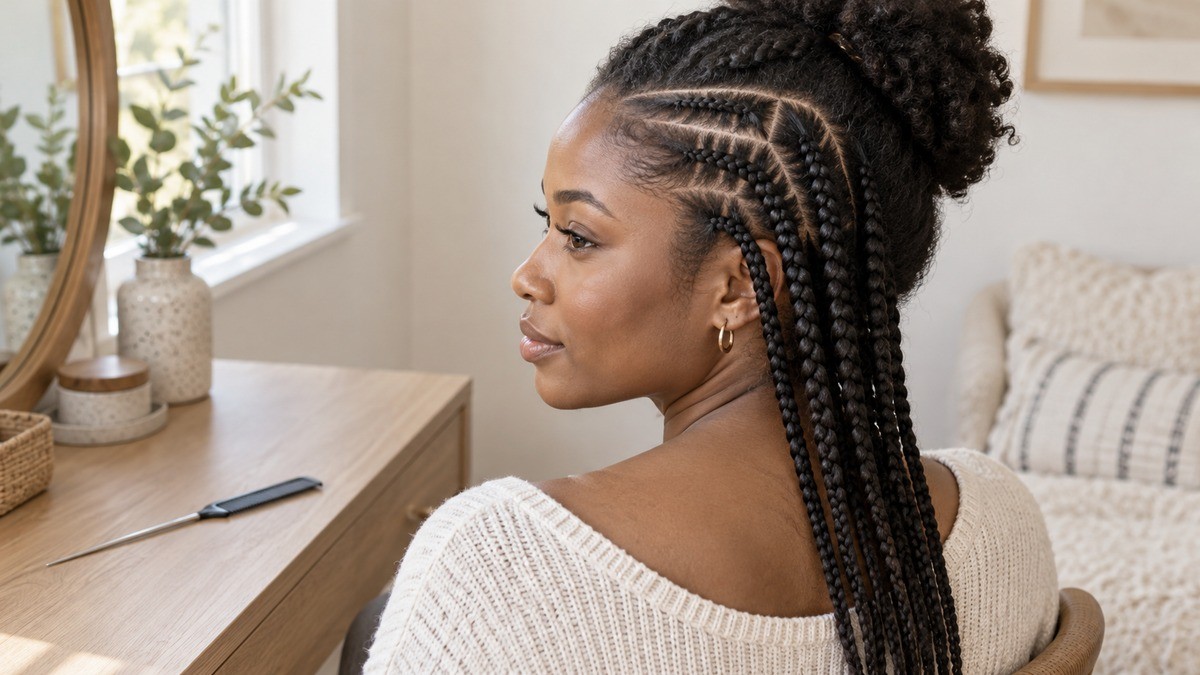
For a softer outline, leave selected face-framing pieces loose or stop a braid partway and let the remaining length fall naturally. Short layers can slip out of a plait, so ask whether a looser finish is intentional or will need pins and product. Many smaller individual braids create a different silhouette: they can move freely or be gathered into a low updo, while their length and added hair change the load at the roots. See the Box Braids Guide for size and parting choices, the Cornrows Guide for rows that trace the scalp, and Men's Braided Styles for other placement references.
03 / The salon conversation
Consultation Card: What to Tell Your Stylist
Bring a clear view of the top, sides, and back. Name the parting pattern, braid size, finished length, and whether the reference includes added hair. Explain how you want the front hairline to feel and where a braid or updo should sit. If a style pulls or hurts while it is being made, ask for it to be loosened immediately; the American Academy of Dermatology warns that repeated tension can damage hair and lead to traction alopecia.
| Choice | What to say or show | Upkeep question |
|---|---|---|
| Length | Point to the finished end at the shoulder, chest, or back; say whether extensions are included. | Will the length and added weight be comfortable day to day? |
| Texture and size | Show the section pattern and how smooth or soft you want the finished braid. | Which shorter pieces may need a pin or a little product? |
| Hold | Say whether you prefer a flexible daily plait or a longer-worn installation. | What ties or light styling product, if any, will help maintain it? |
| Refresh | Describe your comfort at the hairline and your planned wear period. | What change means it is time to remove or redo the style? |
Try: “I like these medium individual braids and the square parting, but I want a shorter, lighter finished length. Can we plan a version that feels comfortable at my hairline?” It gives the stylist a visible reference and a practical limit.
04 / At home
Daily Styling Routine & Maintenance
For a one-day braid, start with hair prepared in the way that suits its texture, detangle gently, and section before weaving. Keep your grip even without pulling at the scalp. Secure the end with a tie that holds without snagging. If you want a smoother finish, use a small amount of styling product only where it helps; if you blow-dry or use a hot tool beforehand, keep heat modest and follow your tool's heat protection directions. The AAD recommends limiting excessive heat and handling wet hair according to its texture.
For braids worn over several weeks, keep the scalp and braids clean with a routine your stylist explains for that installation, and dry them thoroughly after washing. Avoid repeatedly pulling the same braids into a tight updo. Watch for pain, stinging, crusting, or lifted skin at a part; these are reasons to change the style rather than wait for the next scheduled appointment. Loosen or remove a painful installation and speak with a dermatologist if hair loss or scalp symptoms concern you.
05 / Quick answers
Frequently Asked Questions
How often does this style require maintenance or trimming?
A loose daily braid can be redone whenever you change your style; it does not create a separate trimming schedule. For an installation intended to last weeks, plan a check and removal within roughly four to eight weeks according to its condition and your stylist's guidance. The AAD says braids should not be worn longer than six to eight weeks. Growth, loosening, buildup, and scalp comfort may call for an earlier change. Trim your hair based on the condition of its ends, not the braid calendar alone.
Can this style work on fine or thinning hair?
A loose, lightweight braid can work with fine strands; a large, heavy installation may put more load on fewer hairs. Fine describes strand diameter, while thinning means reduced coverage or a change in density. Ask for a size and weight that respect the hair present, and avoid tension at sparse areas. Light product can help short pieces stay in place without making them stiff. If thinning is new or progressing, a dermatologist can help identify its cause before you choose a longer-worn style.