The individual braid guide
Box Braids Guide: Sizing, Parting & Scalp Care
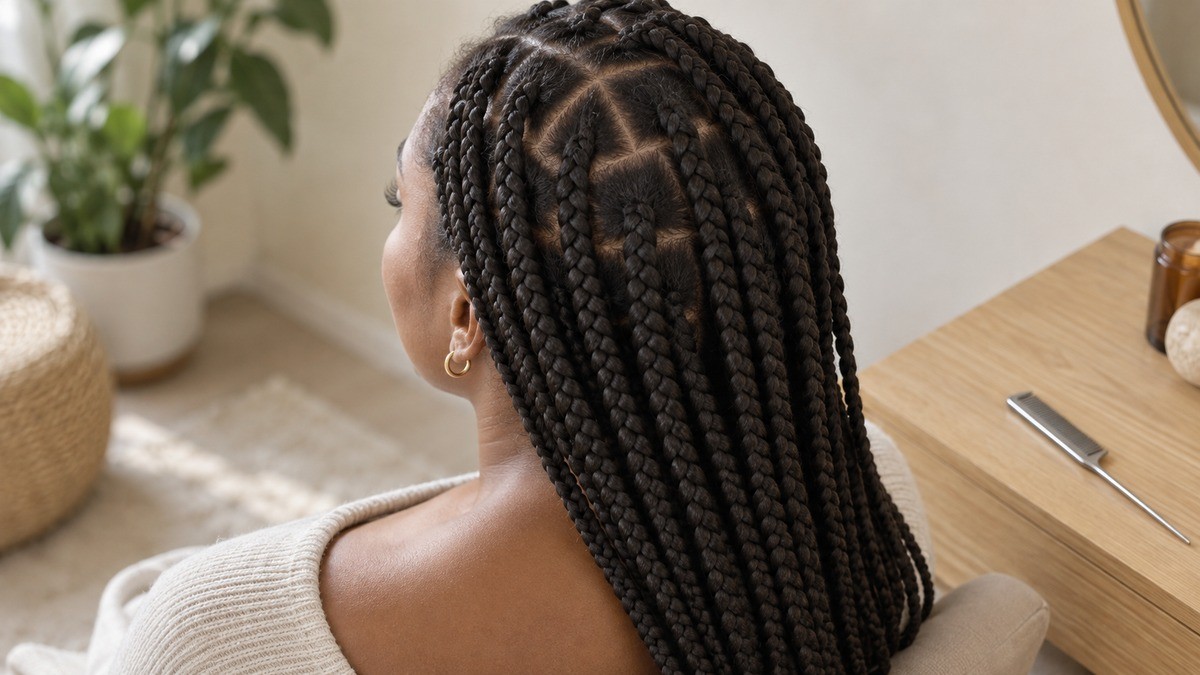
Box braids are individual plaits that begin at square or other geometric parts. Their size, finished length, and any added hair determine much of the look and weight. Choose a part and braid size your hair can support comfortably; the installation should not hurt.
Use this guide to compare small, medium, and jumbo braids, plan your parting pattern, and prepare a clear request for your braider. Scalp comfort and a workable cleansing routine belong in that conversation from the start.
01 / The foundations
Understanding the Style: Core Principles & Definitions
Each box braid starts with its own section of hair. A braider parts the scalp into boxes or another repeated shape, divides the hair in each section into strands, and weaves an individual plait. Added hair is optional; when used, it changes the braid's fullness, length, and weight. Milady's natural hair care and braiding curriculum includes single box braids among its professional techniques. The part is the starting footprint, while the visible braid is the finished strand pattern.
There is no single texture rule for the style. Coils and curls may grip differently from straighter or silkier hair, and shorter layers may need more careful integration. What matters in the consultation is the actual density, strand condition, length, hairline, and scalp comfort. A photograph can show the pattern you want, but the braider should decide with you how much added hair each section can carry.
Check the load at the root
A smaller part holds fewer of your own strands, so ask whether the planned extension bundle is light enough for that section. Longer added hair also increases the hanging weight. If a braid pulls, stings, or causes pain, ask for it to be loosened immediately. The American Academy of Dermatology says painful styles are too tight and that repeated pulling can lead to traction alopecia.
02 / Sizes and silhouettes
Key Variations & Silhouettes
Braid size is a visual choice and a sectioning choice. Small box braids create more individual lines and allow flexible gathering, but each section is narrow. Medium box braids show the parting pattern clearly and make the size of each braid easy to discuss. Jumbo braids make a bold, widely spaced pattern; their larger sections do not automatically make a heavy, long installation comfortable. Compare examples at a similar finished length and ask how much added hair each option uses.
Classic Execution
Traditional box braids begin at distinct parts and continue as individual three-strand plaits. A square grid gives the familiar ordered look, while brick-laid or triangular parts shift where the lines appear. Decide whether you want a center or side part, and whether the front row should fall forward or sweep back. Ask to see the top and side of a reference, not only the ends. The style can be worn down, gathered low, or arranged in a loose updo if the roots remain comfortable.
Modern Textured & Layered Variations
Leaving selected ends loose changes the outline from a uniform plait to a softer, more textured finish. Different braid lengths can create a layered silhouette, but the shortest ends should still reach the placement you expect when the style is gathered. A knotless installation gradually feeds in added hair for a flatter-looking start at the root; it is a construction choice worth comparing separately in the Knotless Braids Guide. Neither technique excuses a painful installation.
03 / The salon conversation
Consultation Card: What to Tell Your Stylist
Bring a top view that shows the parting grid and a side or back view that shows braid thickness and finished length. State whether the reference uses extensions and whether you prefer a traditional or knotless start. Tell the braider about fragile areas, recent shedding, or a tender scalp before sectioning begins. Ask to check the first few braids for weight and comfort rather than waiting until the whole head is finished.
| Detail | What to show or say | What to ask |
|---|---|---|
| Length | Point to the end position on your body when the braids hang down. | How will that length and any added hair affect weight? |
| Size and parting | Show small, medium, or jumbo braids from the top and side; name a square, brick-laid, or triangular layout. | How much hair will each part hold, especially along the hairline? |
| Texture and finish | Choose fully braided ends or a deliberately loose, layered finish. | Which shorter pieces need a light hold product, if any? |
| Refresh and removal | Describe how you normally clean your scalp and how long you hope to wear the style. | When should I check the roots, wash, and remove or redo the braids? |
A useful request is: “I like these medium box braids with square parts and shoulder-length ends. I want the bundles light at my hairline. Can we check the first row together and plan how I will clean and remove them?”
04 / At home
Daily Styling Routine & Maintenance
Keep the scalp accessible so you can notice buildup and changes at the roots. Clean it according to your hair and scalp needs, using the method your braider recommends for this installation, and rinse thoroughly. The AAD advises washing hair according to how dirty or oily it gets and applying shampoo to the scalp. Let washed braids and the hair beneath them dry thoroughly. If you use a dryer, avoid excessive heat and follow the tool's directions.
Gather braids loosely for sleep or activity and avoid pulling the same front row into a tight high style every day. Use a little product only if it helps with flyaways or scalp comfort; more product can leave buildup to wash out. Inspect the hairline for breakage or thinning and take pain, stinging, or irritation seriously. Loosen or remove a painful style rather than trying to endure it. A dermatologist can assess concerning scalp symptoms or hair loss.
05 / Quick answers
Frequently Asked Questions
How often does this style require maintenance or trimming?
Check comfort and cleanliness throughout wear, and agree on a removal plan with your braider before installation. The AAD recommends wearing braids for no longer than six to eight weeks; looseness, buildup, or scalp discomfort may mean removing them sooner. Jumbo size alone does not establish a universal shorter deadline. Box braids do not create a separate haircut schedule: trim your natural ends based on their condition when the style is removed.
Can this style work on fine or thinning hair?
Fine means each strand has a smaller diameter; thinning means less coverage or a change in density. They call for different conversations. A braider may suggest fewer extensions, shorter length, or a looser alternative if the proposed parts would place too much weight on the hair present. Avoid tight sections around sparse areas. If thinning is new or progressing, speak with a dermatologist before committing to a longer-worn installation.
More ways to compare your style
For a different braid construction, compare the scalp-following pattern in the French braid guide. If you want to gather your finished braids, use the ponytail guide to compare placement and the outline you prefer, keeping the roots comfortable.