The barber vocabulary guide
Men’s Haircuts: Taper, Fade, Crew Cut, and Buzz Cut
Updated
Most men’s haircuts are described by two lengths: how long the top is and how short the back and sides are. A taper shortens the sides gradually, a fade takes them down close to the skin, a crew cut keeps a short graduated top, and a buzz cut is one short length all over.
Use the comparison below to decide what to keep on top and how close to take the sides.
01 / Compare the shapes
Four cuts barbers name most often
A taper moves from longer hair on top toward shorter hair at the lower hairline on the back and sides. A fade follows that gradual transition but takes the sides much closer to the skin. If you already know you want a close transition, the taper fade guide goes into where to place it.
A crew cut leaves a short top that generally gets shorter from the front hairline toward the crown, with tapered sides. That gives the front a little more shape than a uniform buzz cut, which keeps the hair very short at the same length across the head. Ask about a crew cut if you want a small amount of front length; ask about a buzz cut if you prefer an even, close outline.
| Cut | Top | Back and sides | Upkeep |
|---|---|---|---|
| Taper | Longer than the lower edges; length varies | Gradually shorten toward the hairline | Watch the outline near the ears and nape |
| Fade | Can be short or long | Blend down very close, often toward skin | Close contrast becomes softer as it grows |
| Crew cut | Short, often a little longer in front | Short and tapered | Minimal daily styling; front shape may need a reset |
| Buzz cut | Uniformly very short | Same short length across the head | Little daily styling; even length needs refreshing |
Taper
Top: Longer than the edges; length varies.
Back and sides: Gradually shorten toward the hairline.
Upkeep: Watch the ears and nape.
Fade
Top: Short or long.
Back and sides: Blend very close, often toward skin.
Upkeep: Contrast softens as it grows.
Crew cut
Top: Short, often longer in front.
Back and sides: Short and tapered.
Upkeep: Minimal styling; reset the front as needed.
Buzz cut
Top: Uniformly very short.
Back and sides: Same short length.
Upkeep: Little styling; refresh the even outline.
For the underlying haircut terms, see descriptions of the taper, crew cut, and buzz cut.
02 / Before the appointment
How to describe your cut to a barber
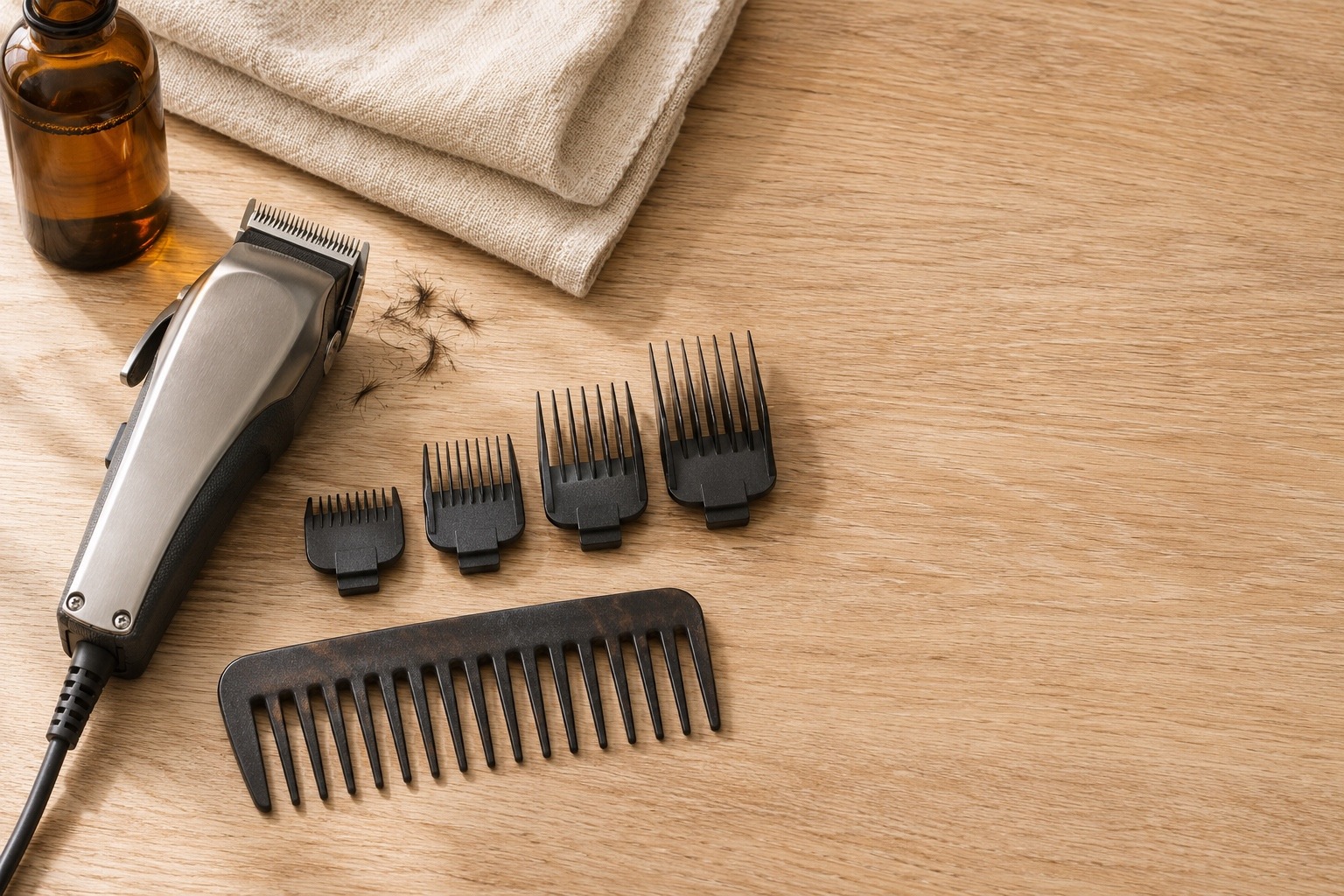
Start with the two lengths: how much hair you want on top and how close you want the back and sides. Clipper guards help set the cutting length, but a guard number alone does not describe the finished shape. Show the amount of scalp you want visible and ask your barber which guard or technique suits the clippers being used.
Bring front, side, and back references. Point to where the shorter section should begin at the temples and nape, and say whether you want a soft edge or a sharper one. Your barber can check your growth pattern and explain how the transition will sit on your hair. A useful request is: “Keep enough on top to brush forward, take the sides close without a high fade, and leave a natural neckline.”
03 / Keep exploring
Choose your next guide
Explore the transition or styling details that matter to you.
04 / Quick answers
Questions about men’s haircuts
What is the lowest-maintenance men’s haircut?
A buzz cut usually needs the least daily styling because the hair is uniformly short. A crew cut also keeps styling simple, though its longer front may need a quick reset. Both short outlines change as hair grows, so choose a refresh schedule that suits how precise you want the shape to look.
Is a fade the same as a taper?
A fade is a type of taper that takes the back and sides very short, often close to the skin. A taper can leave more length at the lower hairline. Show your barber where you want the transition to begin and how much scalp you want visible.