The men’s styling guide
Men’s Hairstyles
Choose a men’s hairstyle by the length you want on top, how you want the hair to frame your face, and the effort you want to spend styling it. A short crop, medium flow, and longer style can each be shaped around your natural texture.
Start with a silhouette you like, then decide how much contrast you want at the sides and whether a matte, touchable finish or a polished, shinier one fits your routine. This guide turns those choices into a useful conversation with your barber or stylist.
01 / The foundations
Understanding the Style: Core Principles & Definitions
A hairstyle is the shape you wear, not just the name of a cut. Look at the length on top, the outline at the sides and back, the front hairline, and where the hair carries its weight. A close taper leaves little bulk near the ears; a fuller side keeps a softer outline. Layers can reduce or move visible weight, while a fringe brings it toward the forehead. Milady’s haircutting curriculum groups cuts by length and construction, a useful reminder that the same overall length can have several different shapes.
Texture, density, and growth direction change how a reference looks on you. Straight hair may reveal a crisp part and cut line; waves and curls make the outline expand or shorten as they dry. Dense hair can support more fullness, while fine strands often benefit from a lighter product and a shape that does not require a heavy lift. Face proportions are another design input: decide whether you prefer height above the forehead, width at the sides, or a softer fringe. There is no face shape that requires a corrective haircut.
Make three decisions first
- Top length: Do you want a close crop, enough length to part or sweep, or hair that can be tied back?
- Side shape: Should the transition be close and defined, softly tapered, or full?
- Finish: Would you rather air-dry, add a little texture, or create a polished shape with a dryer?
02 / Length and silhouette
Key Variations & Silhouettes
Think in families before choosing a trend name. A crop keeps the top short and usually places texture or a small fringe forward. A side part needs enough length to move across the head. Medium flow leaves movement around the temples and ears; longer layers can sit at the jaw, shoulders, or beyond. The side can be clipped close, tapered gradually, or left full with any of these top lengths. For cut terminology and fade details, use the Men's Haircuts Directory.
Classic Execution
A classic side-parted shape keeps more length through the top and a tidy, gently tapered side. Comb the top in its natural direction and keep enough length at the front to sweep it back or across. The outline can look neat without a sharp shaved line. A close crop is the simpler classic alternative: it exposes the head shape and needs little daily rearranging, though the short perimeter becomes more visible as it grows. See Short Hairstyles for Men for crops and other short options.
Modern Textured & Layered Variations
For a looser result, ask for movement through the top instead of one solid block of hair. A textured fringe can fall forward; medium layers can open around the face or tuck behind the ears. Keep enough length for the natural wave or curl to show before asking for a close side. Curly hair also changes visible length as it dries, so show a reference with a similar curl pattern and discuss shrinkage. Curly Hairstyles for Men covers definition and curl-specific care. At longer lengths, layers can distribute weight and a loose man bun can gather the hair when needed; the Long Hairstyles for Men guide owns those details.
03 / The salon conversation
Consultation Card: What to Tell Your Stylist
Bring views of the front, side, and back, then point out the details that matter: the top length when dry, where the fringe or part should land, how much scalp you want visible at the sides, and whether the neckline should look natural or sharp. Tell the stylist how your hair behaves after a normal wash and how often you actually use a dryer or product. A photograph gives a direction; those measurements and habits make it a workable request.
| Choice | What to say or show | At-home implication |
|---|---|---|
| Length | Point to the dry top length and the finished level around the ears and neckline. | Short outlines show growth sooner; medium and long shapes need more detangling and drying time. |
| Texture | Show your natural wave or curl and ask where weight will remain or be removed. | Layers change movement; curls need their dry shape considered before cutting too short. |
| Hold and finish | Choose touchable matte texture, flexible control, or a more polished shine. | Try a small amount of product first; stronger hold may take more work to restyle. |
| Refresh | Ask which edge or section will lose its intended shape first. | Plan a trim around your preferred outline and rate of growth, not a fixed calendar alone. |
Try: “I want enough length on top to sweep to the side, soft texture rather than a hard part, and a low taper that does not expose much scalp. I usually air-dry. What length would let this sit well with my growth pattern?”
04 / At home
Daily Styling Routine & Maintenance
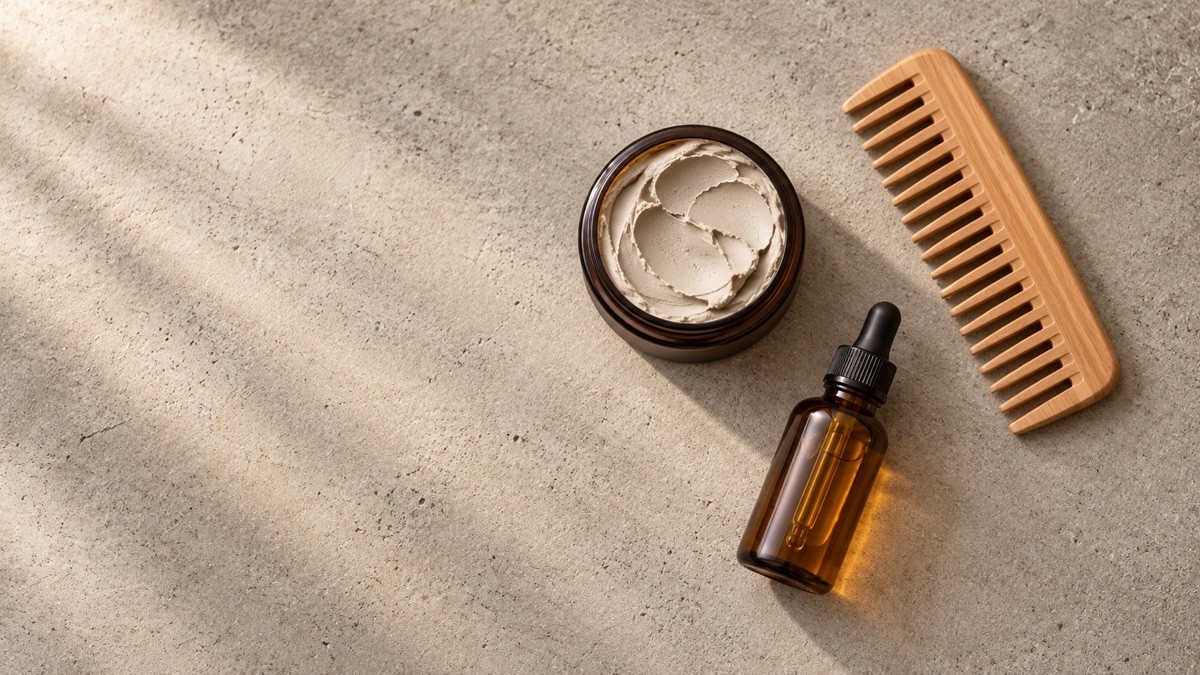
Start with clean or lightly damp hair, then direct it where you want it to fall. A short crop may need only your fingers and a small dab of matte paste or clay. For a side part, place the part before drying and guide the front with a comb or brush. Medium waves and curls often look better when you work with their pattern and avoid brushing the dry shape apart. Choose product by the finish and hold you need, then adjust the amount in small steps; a shiny pomade will give a different look from a matte clay, but neither is required for every texture.
If you blow-dry, let hair dry partly first and use a low or medium setting and a heat-protecting product according to its directions. The American Academy of Dermatology recommends limiting heat and protecting hair when you use it. Be gentle when detangling, especially around a longer fringe or curls, and avoid repeatedly combing through stiff, long-lasting hold products; the AAD notes this can contribute to breakage. A small comb can reset the part during the day, while a little water and your fingers may be enough to revive a soft texture. Leave close edging and major shape changes to a barber or stylist rather than chasing a line with a trimmer at home.
05 / Quick answers
Frequently Asked Questions
How often does this style require maintenance or trimming?
Four to eight weeks is a useful conversation starter for many short and medium cuts, but it is not a universal schedule. A close fade or crisp neckline can lose its intended outline sooner, while a longer layered shape can grow more gently. Ask which part of your cut will need a refresh first, then book according to how quickly your hair grows and how exact you want the silhouette to stay.
Can this style work on fine or thinning hair?
Yes, with a shape and finish chosen for the hair you have. Fine hair describes narrow strands; thinning describes a change in coverage or density. A shorter textured top or a soft side part can give fine strands movement without asking them to support a heavy, tall style. Keep product light and avoid a rigid finish that separates the hair into obvious sections. If thinning is new or progressing, a dermatologist can help identify what is happening; a hairstyle can change the outline, but it cannot treat hair loss.