The placement and finish guide
Ponytail Hairstyles Guide: Sleek, High & Bubble Variations
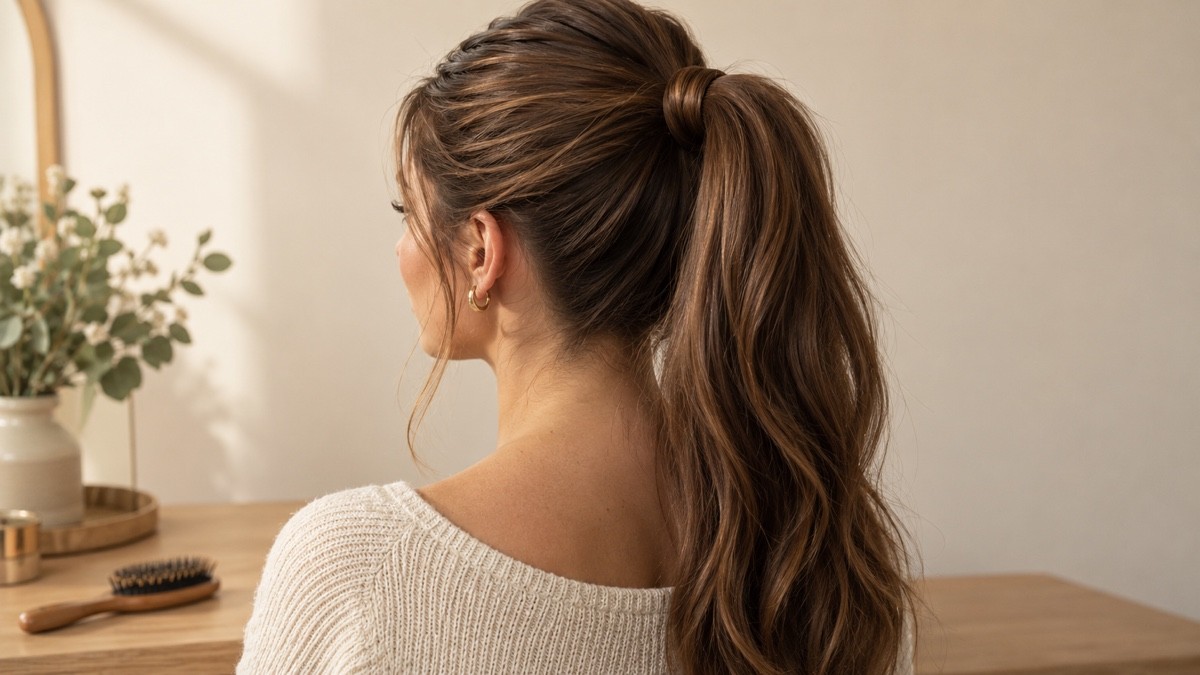
Ponytail hairstyles can sit high and sleek, at mid-height with movement, or low and softly gathered. Placement changes the outline you see from the front and side: a high crown placement draws the eye upward, while a lower one lets the length fall closer to the neck. Choose the silhouette you like, then adjust tension, finish, and hold for your hair.
Compare classic, textured, and bubble ponytails here; use the consultation card to explain your reference; and follow a routine that keeps the hairline comfortable.
01 / The shape
Understanding the Style: Core Principles & Definitions
A ponytail gathers most or all of the hair at one point and secures it so the remaining length hangs free. The anchor point determines the silhouette: high placement lifts the tail away from the nape, mid-height placement follows the back of the head, and low placement rests near the neckline. Parting, root smoothness, and the thickness of the gathered tail change what the shape looks like from the front and side. Professional cosmetology training, including Milady Standard Cosmetology, treats shaping and styling as choices made for the hair in front of the stylist.
There is no required face shape or texture. Straight hair can make a smooth surface easy to see; waves, curls, and coils can make the tail look fuller or more textured. Shrinkage changes the visible length after gathering, and short layers may need a lower anchor, a few pins, or a deliberately loose finish. Density and strand diameter matter separately: a thick-looking tail can come from many fine strands, thicker individual strands, or both. Try the placement with your natural texture before deciding how much prep you want each morning.
The sleek base technique
Choose the anchor first. Brush or comb hair toward it in small sections, smoothing the surface without yanking the roots; a soft brush can help guide flyaways. Secure with a covered elastic that holds without cutting into the hair. For a wrapped base, take a narrow piece from the tail, circle it over the elastic, and fasten its end underneath. Smoothness comes from even direction and modest product, not from maximum tension.
02 / Height and texture
Key Variations & Silhouettes
Start with three decisions: where the elastic sits, whether the surface is polished or loose, and whether the hanging length is left alone or divided into sections. A high ponytail shows lift and movement; a low ponytail creates a quieter line; a bubble ponytail adds repeated rounded sections along the tail. These choices can be mixed without changing your haircut.
Classic Execution
For a classic mid-height ponytail, gather hair near the center back of the head and secure it once the roots feel comfortable. A low version can sit at the nape with a center or side part; it works especially well when shorter layers cannot reach a higher elastic. For a sleek high version, bring sections upward toward a single anchor and check the side profile before tightening the elastic. Keep the hairline relaxed. Wear it for the day if it stays comfortable, then release and restyle as needed rather than treating it as a fixed long-wear installation.
Modern Textured & Layered Variations
For a softer result, preserve waves, curls, or coils in the tail and loosen a few front pieces after securing the base. To make a bubble ponytail, place additional soft elastics down the free length, then gently widen each section between elastics to create rounded shapes. Keep the sections similar if you want rhythm, or vary them for a more casual finish. Longer layers make a continuous tail easier; shorter pieces can be left free or pinned without forcing them into a tight anchor. If you prefer the length fully pinned up, compare the Updo Hairstyles Guide.
03 / The salon conversation
Consultation Card: What to Tell Your Stylist
Bring one front view and one side or back view. Point to the height of the elastic, the part, the amount of volume at the crown, the finish of the tail, and whether you want face-framing pieces left out. Say how long you need the style to hold and whether your hairline or scalp feels sensitive when hair is pulled back. Ask the stylist to check the base before adding stronger hold.
| Detail | What to specify | What to check |
|---|---|---|
| Length and layers | Show where the tail should fall when your hair is dry. | Can shorter pieces reach the chosen anchor comfortably? |
| Texture and placement | Choose high, middle, or low; polished roots or natural texture. | How does the shape look from the front and side? |
| Hold | Say whether you want a light, touchable finish or firmer control. | Can an elastic and a little product hold it without painful pulling? |
| Refresh | Describe washing, activity, and how often you restyle. | Which loose pieces might need a quick reset during the day? |
A useful request is: “I want a high ponytail with a smooth crown, a wrapped elastic, and my natural wave through the length. Please keep the front comfortable and show me how to redo the base at home.”
04 / At home
Daily Styling Routine & Maintenance
Start with hair that is detangled enough to gather without snagging. Decide on the part and anchor before brushing; use your fingers for a relaxed finish or a brush for a smoother one. If you use a styling cream or flexible hold product, apply a small amount where it helps control short pieces. Secure the elastic without repeatedly winding it tighter than needed. For a bubble version, add the second and later elastics to the free tail, then widen those sections gently. If you use heat to prep the length, follow the tool and product directions and avoid excessive heat; the American Academy of Dermatology's hair-styling guidance explains that excessive heat can damage hair.
Check the roots during the day. A ponytail that causes pain, stinging, or visible pulling at the hairline needs loosening or a different placement. The American Academy of Dermatology links repeated tight pulling, including tight ponytails, to traction hair loss and recommends changing tight styles. Release the elastic gently, rather than dragging it through the tail; if it catches, unwind it. Cleanse and condition according to your scalp and hair needs. The style does not set a trimming schedule for the haircut underneath.
05 / Quick answers
Frequently Asked Questions
How often does this style require maintenance or trimming?
Refresh the ponytail when the base loosens, the part shifts, or you want a different placement. Take it down when washing and whenever the scalp feels strained. A four-to-eight-week number can describe some haircut maintenance plans, but it is not a rule for a ponytail or for every haircut. Discuss trims based on your cut's shape and the condition of your ends.
Can this style work on fine or thinning hair?
Yes, with a gentle anchor and a finish that suits the amount of hair available. Fine hair means the individual strands are small in diameter; thinning means there is less coverage or density. A low or mid-height tail and light product may keep fine strands from being flattened by heavy styling. For a thinning hairline, avoid repeated tight pulling in the same place. If the thinning is new or progressing, a dermatologist can help identify the cause before you choose a tension-heavy style.
More ways to compare your style
If your starting style is individual braids, review the sectioning and root-comfort considerations in the box braid guide before choosing a gathered shape. To compare a ponytail with a scalp braid, see the French braid guide. For a ceremony, the wedding hairstyle guide helps you plan the finished shape alongside a veil or accessories.