Choose the shape, then the routine
Short Hairstyles Guide: Pixies, Bobs & Cropped Styling
A good short hairstyle starts with three decisions: where the perimeter ends, how much length stays on top, and how you want the hair to move around your face. A pixie, cropped cut, and short bob can each be tailored to your texture and styling habits. Short hair often makes the cut's outline more visible as it grows, so discuss how you will maintain that shape before you cut.
Use this guide to compare silhouettes, prepare a precise salon request, and build a styling routine that fits your mornings.
01 / The foundation
Understanding the Style: Core Principles & Definitions
Short hairstyles range from close crops and pixies to bobs that sit above the shoulders. The haircut creates their structure: the perimeter is the outer edge, layers change how weight is distributed, and the top, sides, fringe, and nape determine the final outline. Milady's cosmetology curriculum distinguishes foundational blunt, graduated, and layered haircuts and teaches cutting angles and guidelines. Those choices matter more than a style name alone. A solid bob edge concentrates visual weight lower down; shorter interior layers can create separation and lift higher up.
Choose the outline you enjoy seeing from the front, side, and back. Straight, wavy, curly, and coily hair can all be worn short, but the same wet cutting length may settle differently when dry. Density, strand diameter, growth patterns, and shrinkage affect how much length a stylist should leave. A cowlick may change how a fringe falls; tighter curls can spring above the planned landmark. Face proportions can guide where you place width or face-framing pieces, but they do not dictate one correct cut. Bring a photo of your own hair on an ordinary day alongside your references.
Read the cut in four parts
Point to the top, sides, fringe, and nape in each reference. Decide which areas should sit close and which should keep enough length to tuck, part, or style.
02 / Shape and finish
Key Variations & Silhouettes
Compare short styles by their dry landmarks and weight placement. A cropped shape follows the head closely, a pixie usually leaves more styling room through the top or fringe, and a bob makes the perimeter a prominent design feature. The Pixie Haircut Guide explores close-cut proportions in detail; the Bob Haircut Guide goes deeper into jawline and chin-length edges.
Classic Execution
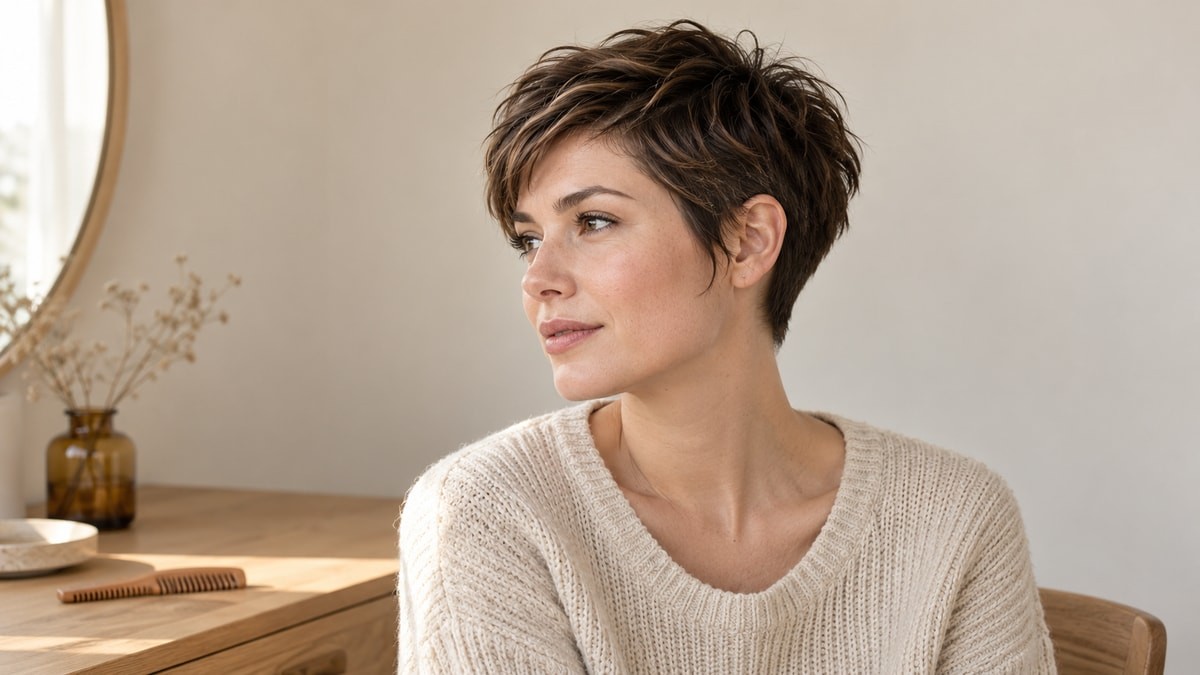
A classic pixie pairs a short back and sides with a defined top or fringe. Ask whether the sides should expose the ears, cover their tops, or leave a little length for softness. A classic short bob uses a stronger edge at the jaw, chin, or neck. You can ask for a level line or a front that sits slightly longer than the back. For either style, look at the nape and side view: a reference that shows only the front leaves two important choices unanswered. How long the cut feels tidy depends on growth and on how sharp you want that edge to remain.
Modern Textured & Layered Variations
A textured pixie leaves selected top sections longer so they can be separated or swept across. A cropped cut can keep a soft, piecey fringe instead of a uniformly close front. A layered short bob removes some interior weight, creating movement without requiring a thin perimeter. “Blending” describes a smooth transition between lengths, such as a close nape and longer crown; ask to see where that transition will sit. On curls and coils, discuss the shape fully dry so the shortest layer and fringe do not rise beyond the point you intended. Texture in a photo may also come from styling, not the cut alone.
03 / The salon conversation
Consultation Card: What to Tell Your Stylist
Bring front, side, and back references. Say which exact element you like in each: the ear coverage, crown height, fringe landing point, or nape edge. Then name the dry length you want to preserve, how you part your hair, and whether you usually air-dry or use a dryer. Ask how the cut will follow your growth patterns and what it will look like without a salon finish. If you are moving from long hair to a crop, agreeing on an initial longer version can make the first cut easier to assess.
| Cut choice | Length and texture request | Styling and upkeep to discuss |
|---|---|---|
| Pixie | Set the top, fringe, sideburn, and nape lengths separately; ask where layers blend. | Will you finger-style the top, blow-dry for direction, or wear it close to its natural fall? |
| Short bob | Choose a dry jaw, chin, or neck landmark and a solid or softened perimeter. | Will the edge need smoothing, or can your natural texture make the shape you want? |
| Close crop | Specify how close the sides and nape should be and how much top length remains. | How soon would new growth change the outline enough for you to want a trim? |
Try this: “I want the back close to the nape, but I want enough length at the crown to sweep it forward. Please keep the side pieces soft, show me where the fringe will sit dry, and explain what I would do to recreate this finish at home.”
04 / At home
Daily Styling Routine & Maintenance
Begin with the way your cut naturally dries. After washing, blot with a towel or T-shirt rather than rubbing. On damp hair, use a small amount of styling product suited to the finish: a light mousse for flexible lift, a cream for softer grouping, or a little paste for piece separation once dry. Start sparingly, especially on fine strands. For a directional pixie, guide the roots toward the intended part with your fingers or a brush as you dry; for a wavy or curly crop, avoid flattening the pattern you want to keep. A short style does not automatically need a complicated daily reset.
If you use heat, the American Academy of Dermatology advises limiting blow-drying, choosing low or medium heat, and using a product meant to protect hair from heat. Letting hair dry partly first can also reduce heat exposure. Rework only the sections that lost direction overnight: lightly dampen them, reset the part or crown, and let them dry. Plan trims around the moment the perimeter, fringe, or nape no longer sits where you want it, rather than a universal calendar interval.
05 / Quick answers
Frequently Asked Questions
How often does this style require maintenance or trimming?
Four to eight weeks is a useful range to discuss with a stylist for a short, defined outline, but it is a planning estimate, not a rule. A close crop may show growth sooner than a softer bob. Your growth rate, fringe length, nape line, and tolerance for a looser shape all matter. Ask what the cut should look like as it grows and schedule a trim when the parts you care about shift.
Can this style work on fine or thinning hair?
Yes. Fine describes strand diameter; thinning describes a reduction in density or coverage. A stronger perimeter can keep ends from looking sparse, while carefully placed layers may add movement without removing too much weight. Ask your stylist to show how the cut looks in your usual part and with your normal styling effort. If thinning is new or progressing, a dermatologist can help identify its cause; a haircut changes the appearance of the hair, not the underlying cause.
More ways to compare your style
For a shorter shape with natural texture, compare dry length and volume placement in the curly hairstyle guide. If you prefer a curl-led top with closer sides, the curly hairstyles for men guide offers another set of outlines to discuss.