The men’s curl guide
Curly Hairstyles for Men: Fades, Definition & Care
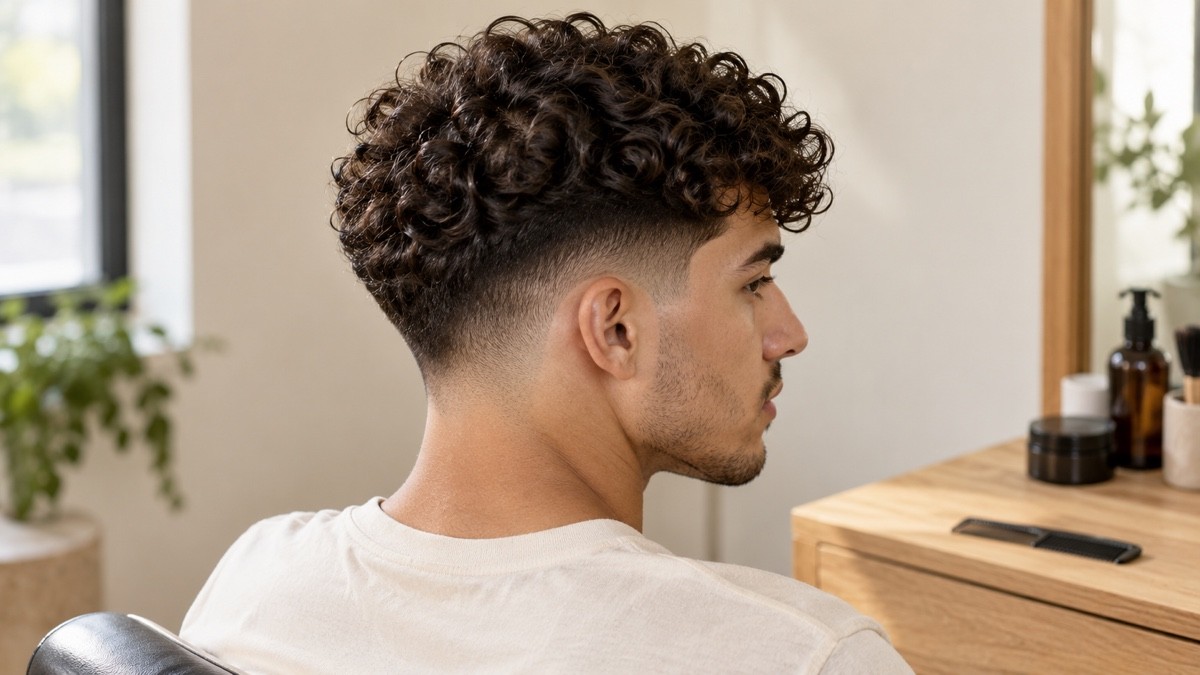
A low taper or drop fade can keep the sides tidy while leaving your natural curls and volume visible on top. The useful choice is how much length to keep through the top and sides, where the transition begins, and how the shape looks after your hair dries.
Curly hair can spring up as it dries, so agree on the finished dry outline before a barber removes length. To keep curl clumps together, detangle gently when hair is wet rather than repeatedly combing through it dry. Use this guide to compare shapes, build a manageable routine, and describe the result you want at an appointment.
01 / The foundations
Understanding the Style: Core Principles & Definitions
A curly style has two outlines: the cut made by the barber and the shape your curls form when dry. Look at the top length, the weight around the crown, the fullness above the ears, and the edge at the nape. A taper gradually shortens hair near the perimeter; a fade takes the side closer and makes the transition more visible. The curl-to-clipper blend should connect those areas without leaving an accidental shelf. Milady’s cosmetology curriculum includes cutting curly hair and a classic fade on curly hair among its haircutting procedures.
Loose waves, springy curls, and tight coils each change visible length differently as they dry. Density affects how full the outline appears; strand diameter affects how easily a curl is weighed down by product. None of these textures has one required fade height. Keep more side length if you prefer a rounded silhouette or less scalp exposure; choose a closer side if you want stronger contrast with the top. Face proportions can guide where you place height, fringe, or side fullness, but they do not prescribe a corrective cut. Bring a reference with a similar texture and ask to judge the length on your own dry hair.
Before you pick a fade
- Dry top length: Where should the curls fall after they spring up?
- Side contrast: Do you want a subtle taper or a more visible fade?
- Volume placement: Should fullness sit over the forehead, at the crown, or evenly around the head?
02 / Curl and side shape
Key Variations & Silhouettes
Start with the side outline, then choose what the curls do above it. A low taper concentrates the short transition around the temples and nape. A drop fade curves lower behind the ear and can leave more weight toward the back. A higher fade removes more side fullness and makes the top stand out more sharply. The right one is the contrast you prefer and can maintain, with enough top length for your pattern to show.
Classic Execution
The classic curly top with a low taper keeps the crown and front relatively full while cleaning the edges at the ear and neckline. Ask for a gradual blend into the curl area, with no hard step where clippers meet longer hair. A short curly crop follows the same logic at a smaller scale: it keeps a compact outline and needs less arranging each morning, though its crisp edge becomes apparent as it grows. For the clipper transition itself, see the Taper Fade Haircuts Guide.
Modern Textured & Layered Variations
A curly fringe brings some weight forward; a layered top can free up movement where one dense block feels too heavy. A drop fade can preserve a rounder curve behind the ear, while a lower, softer taper retains more side volume. Ask the barber to check the dry curl pattern before removing bulk: short interior layers may lift a dense top, but aggressive thinning can disturb a defined curl shape. If you prefer longer sides and less contrast, the Men’s Hairstyles Hub compares other length and texture options.
03 / At the barber
Consultation Card: What to Tell Your Stylist
Show front, side, and back views of the outline you like. Point to where the fade should begin, how much scalp you are comfortable showing, and where you want the dry curls to land at the forehead and crown. Tell the barber what your hair does after a normal wash and whether you use a diffuser or let it air-dry. Ask them to confirm the top length with shrinkage in mind and to show how the clipper work will meet the curl area.
| Choice | What to request | At-home implication |
|---|---|---|
| Length | Show where the front and crown should sit when fully dry. | More top length gives curls room to form but takes more time to dry and arrange. |
| Blend | Choose a low taper, curved drop fade, or stronger high contrast; mark the starting point. | A close, sharp edge shows growth sooner than a soft transition. |
| Texture | Explain where the top feels too heavy and ask how layers will affect curl clumps. | Layer placement changes volume; over-removing bulk may change definition. |
| Hold and refresh | Describe a soft finish or stronger set, and ask which part will need a shape refresh first. | Start with a small amount of product; plan trimming around the outline you want to keep. |
Try: “I want to keep enough top length for these curls to fall near my eyebrows when dry. Please give me a low taper at the temples and nape, with a soft blend into the curls and no hard shelf. I usually air-dry; can we check the dry shape before taking off more?”
04 / At home
Daily Styling Routine & Maintenance
Start with clean or thoroughly damp curls. Gently detangle in sections with fingers, a wide-tooth comb, or a brush made for curls while the hair is wet and has enough slip. The American Academy of Dermatology recommends wet detangling for curly and coily hair and advises against dry brushing, which can increase breakage and frizz. If your hair needs it, work a small amount of leave-in conditioner through the lengths, then add mousse or gel for the level of hold you want. Smooth or scrunch the curls into groups, and let them set before touching them again. A sea salt spray is an optional texture product, not a hydration step; skip it if it leaves your hair feeling dry.
Air-dry when that suits your routine, or use a diffuser on a low or medium setting without repeatedly disturbing the curl clumps. The AAD advises limiting heat, using lower settings, and applying a heat-protecting product when heat styling. During the day, try a little water and your fingers to reset a flattened section instead of combing through dry, set curls. Avoid forcing a comb through stiff long-hold product: AAD notes that this can contribute to breakage. Wash and condition according to how your scalp and hair feel, and schedule edge or shape cleanups when the fade and top no longer make the outline you asked for.
05 / Quick answers
Frequently Asked Questions
How often does this style require maintenance or trimming?
Four to eight weeks is a useful range to discuss for a full shape trim, but it is not a rule for every curl pattern or fade. A close taper or crisp neckline may need an earlier edge cleanup if you want that line to stay precise; a softer side can grow in less noticeably. Ask your barber which part will change first, then choose a return date based on your growth and preferred outline.
Can this style work on fine or thinning hair?
Yes, but choose the amount of contrast and product for the hair you have. Fine describes the diameter of individual strands; thinning describes reduced coverage or density. A modest top length, softer side transition, and lightweight mousse or gel can make movement visible without weighing the curls down. A very high fade may expose more scalp than you want, so review the side in a mirror before committing. If density is changing or hair loss is a concern, a dermatologist can assess the cause; a haircut can change the silhouette, not treat hair loss.
More ways to compare your style
For a broader comparison of curl length, layers, and volume, read the curly hairstyle guide. If you are deciding how much length to remove, compare the perimeter and cropped outlines in the short hairstyle guide.