The shape and hold guide
Updo Hairstyles Guide: Formal, Casual & Half-Up Styles
An updo lifts and secures hair so most of its length stays off the shoulders. A hidden anchor, such as a ponytail base or crossed pins, carries the weight while the visible hair forms the shape. A half-up style secures only the upper section, leaving the rest down. Choose the outline you want first, then decide how much texture, tension, and upkeep suit your hair.
Compare a polished chignon with a relaxed bun and a half-up option, then use the consultation card to plan the placement and hold with your stylist.
01 / The foundation
Understanding the Style: Core Principles & Definitions
An updo is a hairstyle built from gathered and secured sections rather than a particular haircut. The base carries the weight: a covered elastic can hold a ponytail before it becomes a bun, while crossed bobby pins can anchor smaller sections. The outer hair can be smoothed over that foundation or arranged into visible twists and loops. Crown volume, the height of the anchor, and the width of the finished shape change the silhouette. Milady's cosmetology curriculum identifies preparation, sectioning, pinning, and balance as updo skills.
No face shape or natural texture has a single required updo. A low chignon places the visual weight near the nape; a higher bun raises it toward the crown. Straight hair makes a smooth surface easy to read, while waves, curls, and coils can supply visible texture without being brushed into a different pattern. Density affects how much hair the anchor must support; strand diameter affects how each section behaves. Shrinkage and shorter layers change how much length reaches the base, so check the shape on dry hair before asking for a precise finish.
Build in two layers
Divide hair into a secure foundation and the sections that will be seen. Gather the foundation at the intended height, checking that it feels comfortable. Cross pins through the base or use a covered elastic where needed. Then place the remaining sections over and around it, pinning their ends into the foundation. The visible drape should not be asked to hold the whole style on its own.
02 / Shape and finish
Key Variations & Silhouettes
Compare updos by where the hair is gathered, how much length remains visible, and whether the finish is smooth or textured. Formal updos often use a controlled outline and concealed ends; casual versions may show individual sections and loose pieces. A half-up style offers a small anchored shape above hair worn down. For a ceremony, the Wedding Hairstyles Guide covers how accessories and a veil relate to that shape.
Classic Execution
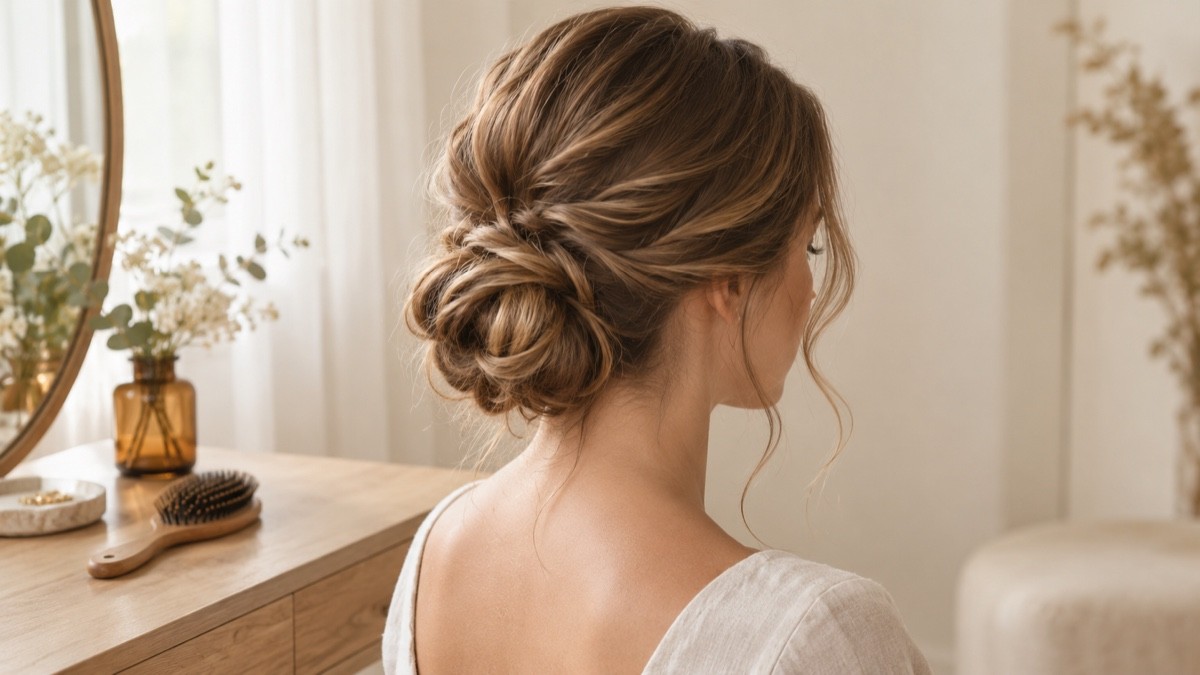
A low chignon sits at or just above the nape. Hair is gathered into a base, then folded, twisted, or wrapped so the ends are tucked away and pinned. A higher bun follows the same principle with the weight nearer the crown. For a polished result, keep the perimeter deliberate and the pins inside the shape. Ask how the style will hold through your specific event, movement, and weather; no updo has a universal wear time. Try the finished base for comfort before leaving the chair.
Modern Textured & Layered Variations
A messy bun updo is planned softness, not an unsupported knot. Gather the main length loosely, secure a reliable base, and allow selected curls, waves, or short layers to frame the face or nape. A half-up version sections off the crown and sides, pins or ties that portion, and leaves the lower length free. If you want visible crown height, build it with the position and arrangement of sections before adding product or backcombing. Loose pieces should look intentional and remain easy to reset if they fall forward.
03 / The salon conversation
Consultation Card: What to Tell Your Stylist
Bring front and rear views of the same style if possible. Point to the anchor height, where you want volume, how much of the nape should show, and whether any length should remain down. Say whether you want a sleek surface or your natural texture visible. Share the event length, expected movement, and any accessories, and mention if pins or tight styles usually bother your scalp. Ask to see the shape from the side before the final hold product goes on.
| Detail | What to request | What to check |
|---|---|---|
| Length and layers | Show which pieces should be tucked away and which can remain loose. | Can shorter layers reach the base without being pulled tight? |
| Texture and volume | Choose a smooth chignon, textured bun, or half-up outline; name the crown height. | Does the dry-hair silhouette look right from front, side, and back? |
| Hold | Describe your movement and preference for flexible or firmer finish. | Do the pins and base feel secure without pain? |
| Refresh | Ask which loose pieces can be reset and how to remove the pins. | Will the style be easy to take down after the event? |
A useful request is: “I want a low textured chignon with a little crown height and two soft pieces at the front. Please keep the pins hidden, the hairline comfortable, and show me which sections I can refresh later.”
04 / At home
Daily Styling Routine & Maintenance
For an easy updo, start with detangled hair and decide where the base will sit. Section the hair you want to leave out, gather the rest with a covered elastic, then wrap and pin small sections into the base. Use only enough styling cream or flexible hold product to manage flyaways. For a half-up style, secure the upper section and let the lower hair follow its natural pattern. If you curl hair for grip or shape, follow the tool's directions and keep heat modest; the American Academy of Dermatology notes that excessive heat can damage hair.
During wear, check that the weight stays at the anchor instead of tugging at the hairline. Loosen or take down a style that hurts. The AAD warns that repeated tight pulling from updos and buns can contribute to traction hair loss. At the end of the day, remove pins one at a time and unwind the elastic instead of dragging it through the hair. Wash and restyle based on your hair and scalp needs; there is no fixed daily product or washing schedule required by the updo itself.
05 / Quick answers
Frequently Asked Questions
How often does this style require maintenance or trimming?
Refresh an updo when the anchor loosens, loose sections no longer sit where you want them, or the scalp feels strained. Take it down gently rather than trying to make a pinned style last indefinitely. An updo does not set a haircut schedule. A four-to-eight-week trim plan may suit some cuts, but the right interval depends on the shape you are maintaining and how your ends look and feel.
Can this style work on fine or thinning hair?
Yes. Fine describes narrow individual strands; thinning describes reduced density or coverage. For fine hair, use smaller sections and light product so the shape is supported without being weighed down. A low, modestly sized bun or half-up style can be easier to anchor than a large high bun. If the hairline is thinning, avoid a tight base or repeated pulling in the same place. New or progressing hair loss deserves an assessment by a dermatologist before choosing a tension-heavy style.
More ways to compare your style
If you would rather gather the length with a tie than pin it into a bun, compare the heights and finishes in the ponytail guide.