Shape, accessories, and staying power
Wedding Hairstyles Guide: Bridal, Veil Pairing & Longevity
A wedding hairstyle needs to feel comfortable through the ceremony, hugs, movement, and any veil change. Choose the silhouette first, then test how its foundation supports your hair and accessories. If you use a curling iron, let each curl cool in its shape before separating it; if you wear a veil, agree on a secure insertion point and practice removing it without disturbing the style.
Use the comparisons and consultation card below to plan a style for your natural texture, outfit, weather, and schedule. A trial is the place to check its appearance and comfort in real conditions.
01 / The foundation
Understanding the Style: Core Principles & Definitions
“Wedding hair” describes the job of a hairstyle, not a single cut or texture. Its visible shape may be a low chignon, high bun, half-up braid, or hair worn down. Underneath, sectioning and an anchor distribute the weight of gathered hair and any headpiece. Crown volume changes the profile, while the placement of the anchor determines where a comb or pins can sit. Milady's cosmetology curriculum identifies preparation, sectioning, pinning, and balance as foundational updo skills. A strong foundation can be discreet; a large visible teased shape is not required.
Start with the outline you want from the front, side, and back. Straight hair may show a polished line clearly; waves, curls, and coils can provide their own movement and volume. Fine strands and lower density can call for a smaller, lighter structure or a stronger visible perimeter, while dense hair needs an anchor that supports its weight comfortably. Short layers and shrinkage affect which pieces reach a pin or braid. Face proportions are useful when choosing where width or face-framing pieces sit, but they do not prescribe a bridal style.
Test the veil with the finished shape
Bring the actual veil or a comb with the same attachment to your trial. Ask your stylist to show where it enters the hairstyle, how it feels when you turn and hug, and how someone can remove it later without lifting the foundation.
02 / Shape and finish
Key Variations & Silhouettes
Compare bridal hairstyles by the location of their visual weight and by how much hair remains free. A pinned style can keep most length off the neck, while a half-up style exposes more of the natural pattern. Hair worn down shows the most movement but also has the most loose surface to respond to wind or humidity. For the construction of pinned styles beyond the wedding setting, see the Updo Hairstyles Guide. For a simpler evening event comparison, see Prom & Formal Styles.
Classic Execution
A low chignon gathers hair at the nape and tucks the ends into a compact base. It can be smooth or softly sectioned, with a veil comb placed above the bun if the structure allows. A higher bun raises the visual weight and may leave the neckline clear. Neither silhouette has a guaranteed wear time: the number of pins, your hair's weight, the accessory, and the day's movement all affect how it holds. At a trial, photograph the back and profile after you have worn the style for several hours, not only when you first leave the chair.
Modern Textured & Layered Variations
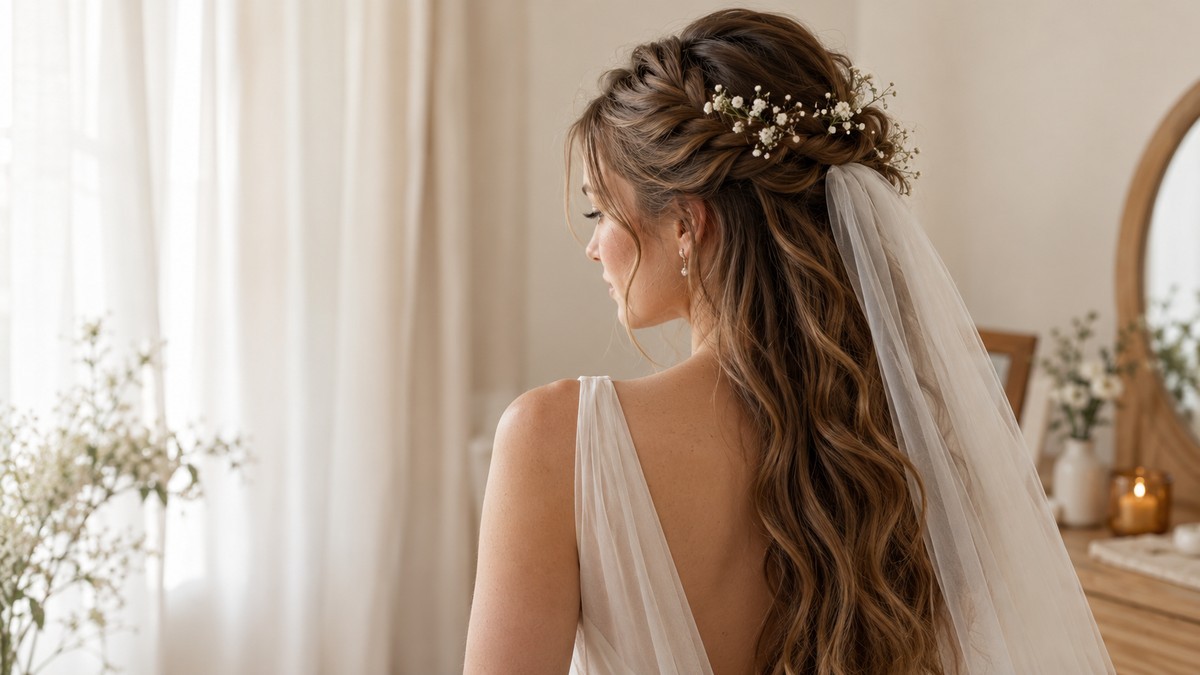
A half-up crown braid or twist secures the upper section while leaving waves, curls, or coils down. The lower section can remain in its natural pattern, be set, or be gathered later if you plan a second look. Soft pieces around the face can move freely; decide how much movement you welcome before asking for them. A textured low bun may show individual curls and loops instead of one sleek surface. If shorter layers escape a reference style, ask your stylist whether a different anchor, placement, or smaller accessory will serve the same silhouette without pulling tightly.
03 / The salon conversation
Consultation Card: What to Tell Your Stylist
Bring front, side, and back references, your veil or headpiece, and a photo of your hair worn naturally. Say where you want the height and width, whether the part should stay visible, and which pieces must remain off your face. Explain the ceremony location, likely weather, outfit neckline, and whether you will remove the veil or change hairstyles. Ask your stylist to build and test the foundation with the actual accessory; a veil comb needs a stable place to sit rather than relying on surface volume alone.
| Style | Length and texture | Hold and refresh plan |
|---|---|---|
| Low chignon | Check that the shortest pieces reach the nape anchor; discuss a smooth or textured finish. | Test pin comfort, veil insertion, and whether loose face pieces need a small touch-up. |
| Half-up braid or twist | Keep enough upper length for a stable braid or twist; assess the lower hair at its dry length. | Check the accessory's attachment and how down hair behaves after movement or weather exposure. |
| Hair worn down | Choose a part, face framing, and natural or set texture; allow for shrinkage where relevant. | Plan how to reset individual sections without repeatedly heating the whole style. |
Try this: “I want a low, softly textured shape with a little height at the crown. Please show me the hidden anchor, test this veil comb above it, and teach my attendant how to remove the veil. I want the front to look similar after the veil comes out.”
04 / Before and during the event
Daily Styling Routine & Maintenance
In the days before the wedding, follow the cleansing and conditioning routine that already works for your hair. Do not add several unfamiliar products on the event morning. At your trial, note whether the stylist needs your hair freshly washed, fully dry, or prepared in another way, and record which products and tools they use. If the finish uses hot tools, discuss a heat protectant and appropriate heat settings. The American Academy of Dermatology recommends limiting heat styling, using low or medium heat, and using a product intended to protect hair from heat. Let set curls cool before you separate them so you can judge the shape without immediately loosening it.
On the day, check the style from all sides before the veil goes in. Keep any touch-up kit specific to your finish: a few matching pins, the product your stylist recommends, and a small comb may be enough. Let your stylist demonstrate any veil removal; pull the comb along its insertion path while supporting the anchor, rather than tugging upward through pinned sections. A hairstyle that hurts or pulls should be adjusted, even if it looks secure. Dermatologists advise avoiding hairstyles that pull tightly, especially when tension is persistent. After the event, remove pins and accessories gently before detangling and washing according to your usual routine.
05 / Quick answers
Frequently Asked Questions
How often does this style require maintenance or trimming?
A wedding hairstyle is usually built for one event, so it does not require a recurring trim schedule of its own. If the plan depends on a sharp fringe or specific face-framing length, discuss a haircut roughly four to eight weeks beforehand as a planning range, then let your stylist set the timing around your growth and the trial. Avoid a major last-minute cut that changes how much hair reaches the anchor. After the event, return to the upkeep schedule for your underlying haircut.
Can this style work on fine or thinning hair?
Yes. Fine hair has smaller strand diameter; thinning refers to reduced density or coverage. A compact chignon, a lighter half-up design, or a down style with a defined perimeter may need less hair to support than a large, heavy shape. Ask the stylist to test the veil's weight and position with your actual hair, and avoid uncomfortable tension or teasing. An accessory can be adjusted without making your hair carry more weight than it comfortably can.
More ways to compare your style
For a braided detail in your ceremony style, compare the overhand construction in the French braid guide. If you want to preserve visible curl texture, use the curly hairstyle guide to describe your preferred outline before the trial.