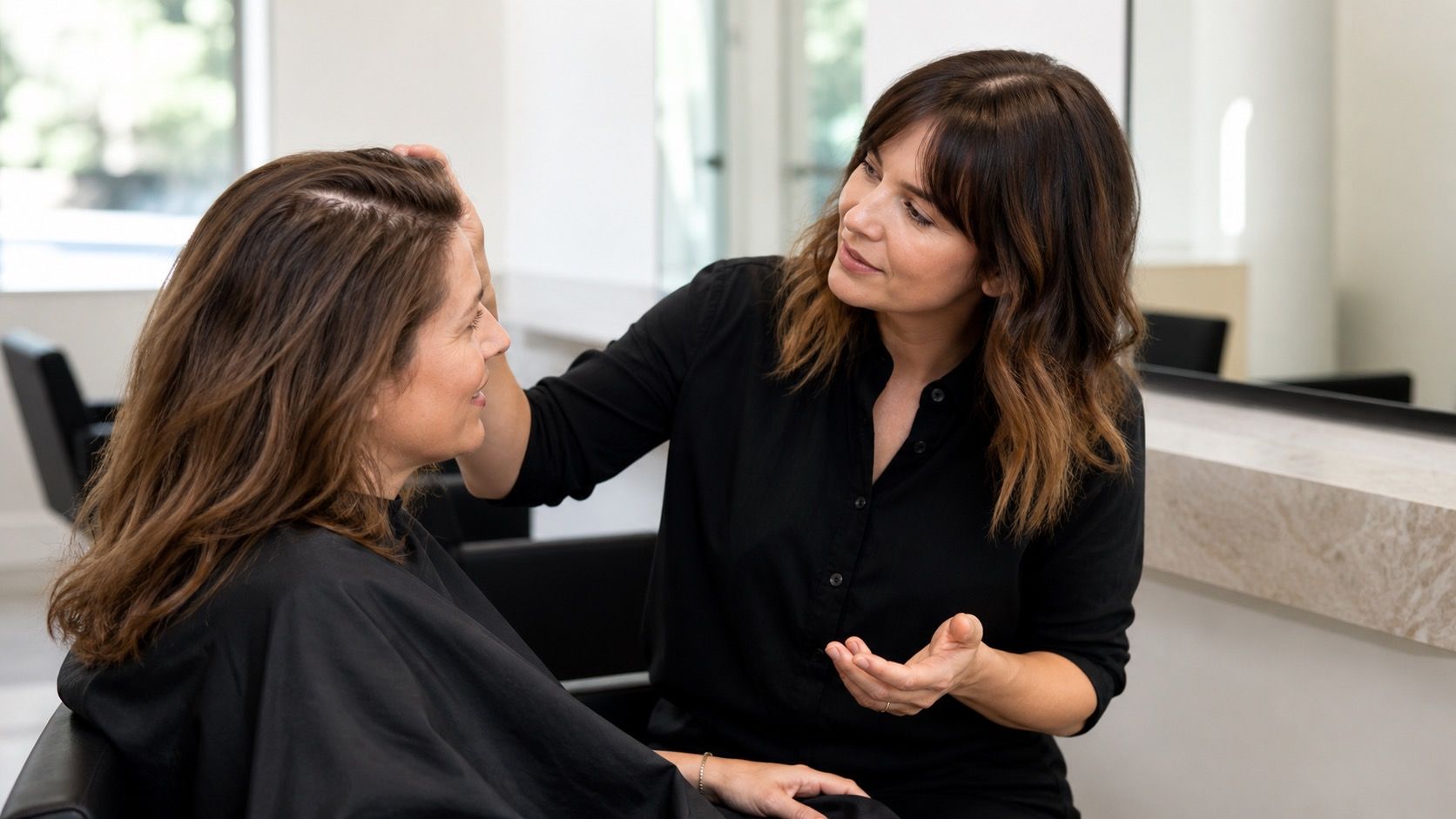
A good consultation is not a test of salon vocabulary. Words such as ash, honey, mocha and caramel mean different things to different brands, while a photograph can hide a filter, extensions and several hours of styling. The clearest description explains what you want to see around your face, what you want to avoid, and what your hair can realistically do today.
Bring evidence, not just a shade name
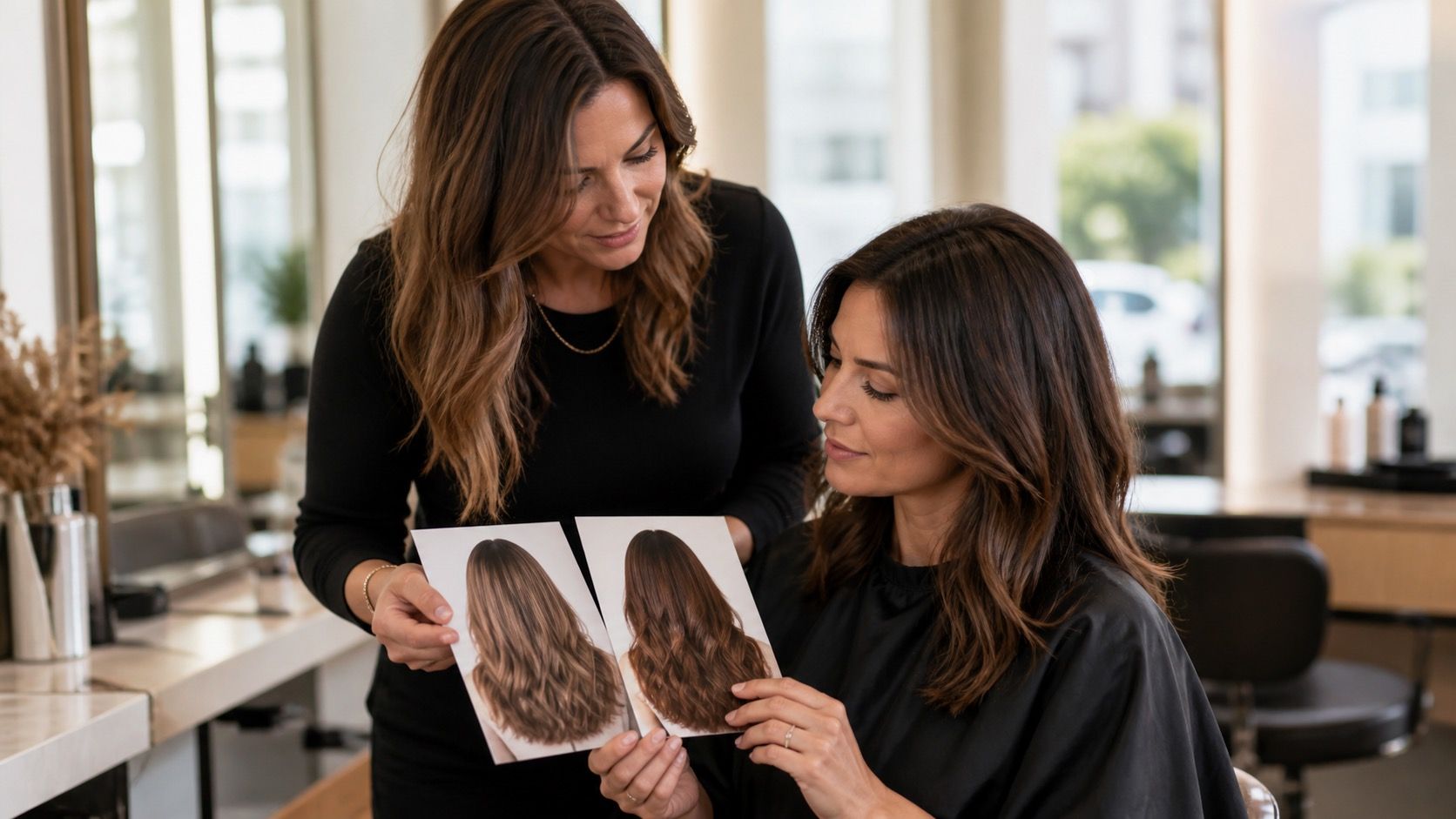
Use the three photo rule: bring one image for the overall depth, one for the placement of lightness, and one for the finish you like. Perhaps one has the root blend you want, another has the soft beige face frame, and a third has the amount of dimension. This is more useful than presenting three unrelated celebrity photos and asking for a combination that exists only in an edited feed.
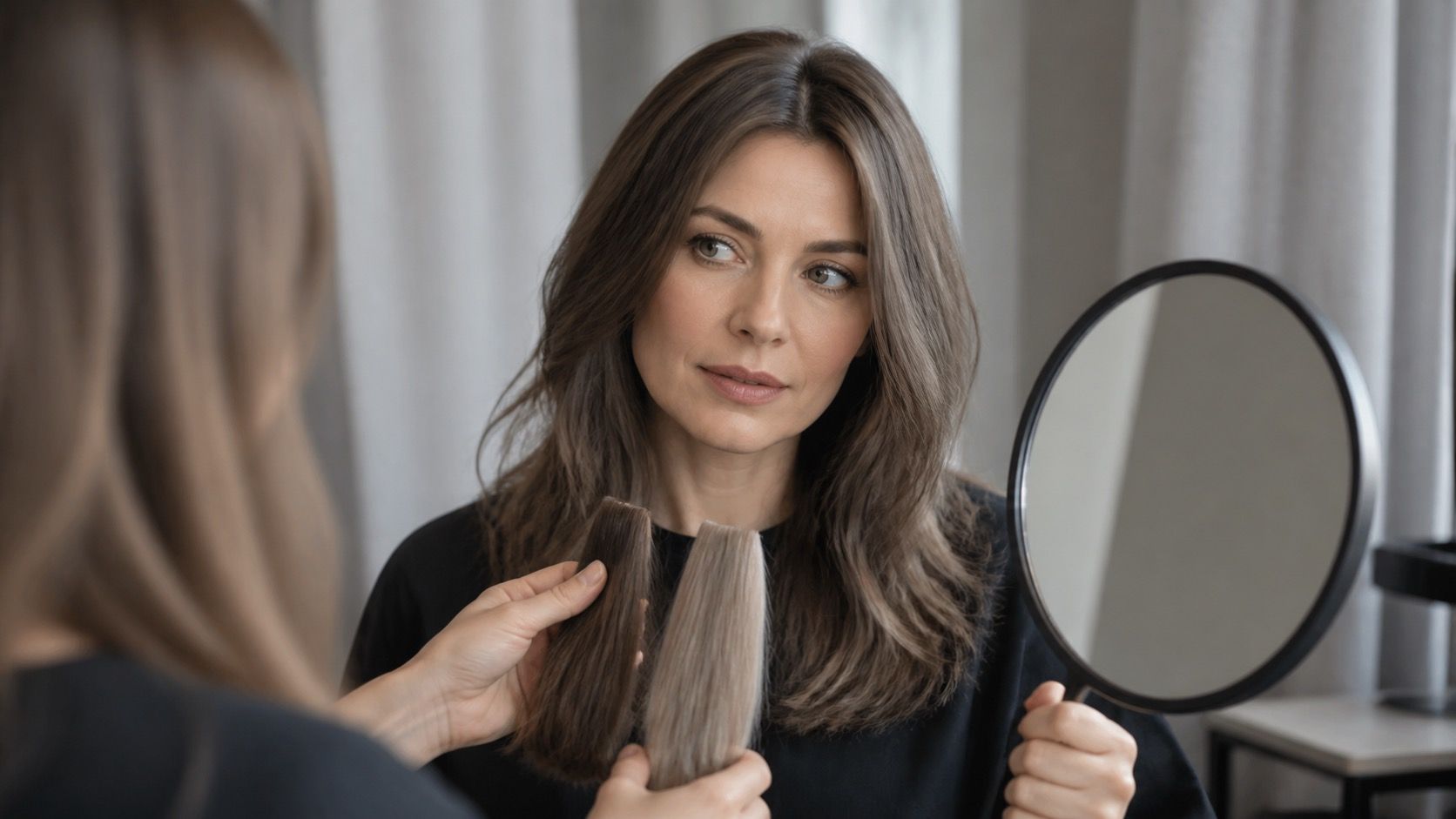
Show the photos before a cape goes on, then say what you see in them. You might like that the blonde begins below the root, that the brunette is not flat, or that the front pieces are subtle. A hair color try on can help you reject obviously wrong depth, but it cannot reveal porosity, previous dye, or how a formula will fade. The colourist needs both the visual target and the physical starting point.
Name the result you want to avoid
Negative preferences are often more precise than positive names. Say that you do not want orange after a few washes, a stripe at the parting, very pale pieces around the face, or a dark base that makes you reach for heavier makeup. Unwanted warmth, excessive ash, and high-contrast highlights are all different problems with different fixes. A clear no gives the colourist a boundary for the formula.
Be specific about where the problem appeared last time. If the ends went brassy but the root looked good, the issue may be porous lengths and a fading toner. If the first inch at the hairline looked too light, placement may be the culprit rather than the whole colour direction. Small details stop a consultation from becoming a vague promise that the result will look natural.
Tell the truth about your colour history
Your natural base is important, but your chemical history is just as important. Mention box dye, henna, bleach, dark glosses, colour-depositing masks, swimming, extensions and any recent smoothing treatment. This is not information a colourist asks to judge you. It decides whether the hair can lift evenly and whether a cool or bright target is sensible in one appointment.
Bring a recent daylight photo of your unstyled hair if the current colour is hard to read under salon lights. If you have used henna or a dark permanent dye, say so even if it was months ago. Covering that detail can lead to unexpected bands or stubborn warmth, and no reference photo is worth gambling with the condition of the hair.
| Useful thing to say | Why it helps |
|---|---|
| I like the depth here but not the bright front pieces | Separates the base decision from highlight placement |
| I want warmth, but not orange when it fades | Opens a conversation about underlying pigment and glosses |
| I wash my hair daily and visit every three months | Sets a realistic maintenance limit |
| I used dark dye last winter | Helps predict lifting, bands and timing |
Agree on maintenance before the colour goes on
Ask how the colour will look at week one, week four and week eight. A bright blonde, vivid copper, and cool espresso can all look excellent on appointment day, but their schedules are different. Ask whether you will need a gloss appointment, how visible the root blend will be, and whether the result assumes purple shampoo, colour masks, or a return visit before the next full service.
Budget belongs here as well. There is no point agreeing to a high-maintenance blend when you want two appointments a year. A softer face frame, lived-in highlight or richer gloss can be a better design than a dramatic transformation that becomes stressful as soon as the root appears. The right colour is one you can keep liking after the first mirror selfie.
Use the consultation to check safety and condition
If you have had reactions to dye, mention it and ask about a patch test in advance. A test strand is also sensible when you are lifting old colour, working with fragile ends, or moving from very dark to very light. It can feel slower than booking a transformation immediately, but it gives you information that no online hair color analysis can provide: how your own hair responds.
Ask what the colourist would postpone or refuse. A thoughtful answer is a good sign, especially when the hair needs repair before more lightening. A service plan can include trimming compromised ends, using a gloss first, or building highlights over two visits. That is not a weaker result; it is a route that protects the hair you need for the final result to look good.
Leave with a care plan you can actually follow
Before you leave, confirm the product type, wash routine, heat protection and the signal that tells you it is time for a gloss appointment. You do not need a shopping bag full of products. You do need to know whether the goal is to protect a cool toner, preserve red pigment, or prevent a lightened face frame from becoming dry and yellow.
A strong consultation turns a shade request into shared decisions: depth, warmth, placement, history, upkeep and condition. If you can describe those six things, you do not need to memorise a single confusing swatch name. The result has a far better chance of looking like your reference for longer than the drive home.
If the consultation feels rushed, pause before the colour starts. Ask the colourist to repeat back the agreed depth, placement and maintenance plan in ordinary language. You should know whether the aim is a soft root blend, brighter face framing, less unwanted warmth, or a low-commitment gloss. A shared picture of the first appointment makes future appointments easier too, because you can say what held up well and what you would change instead of beginning from a shade name all over again.