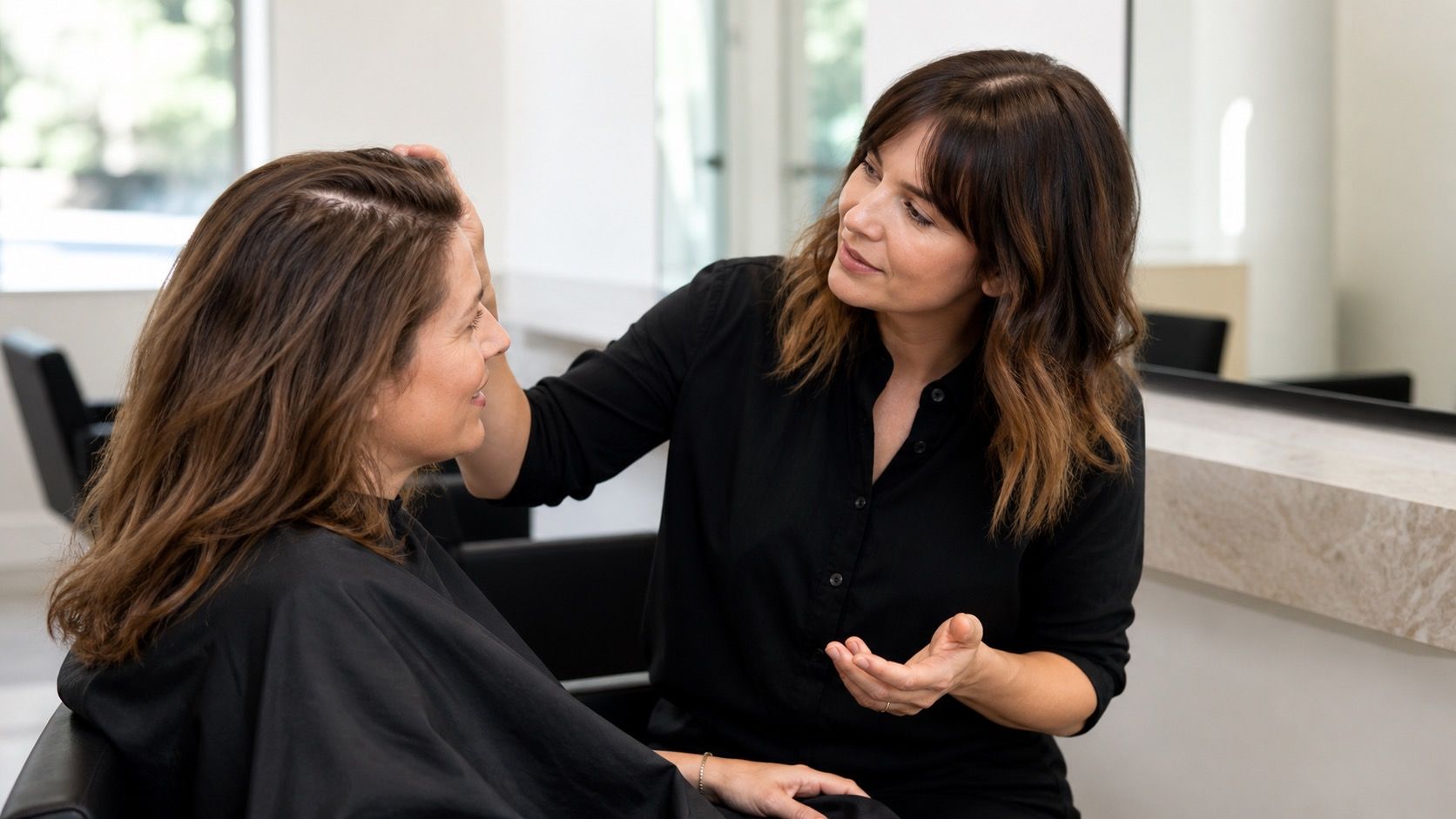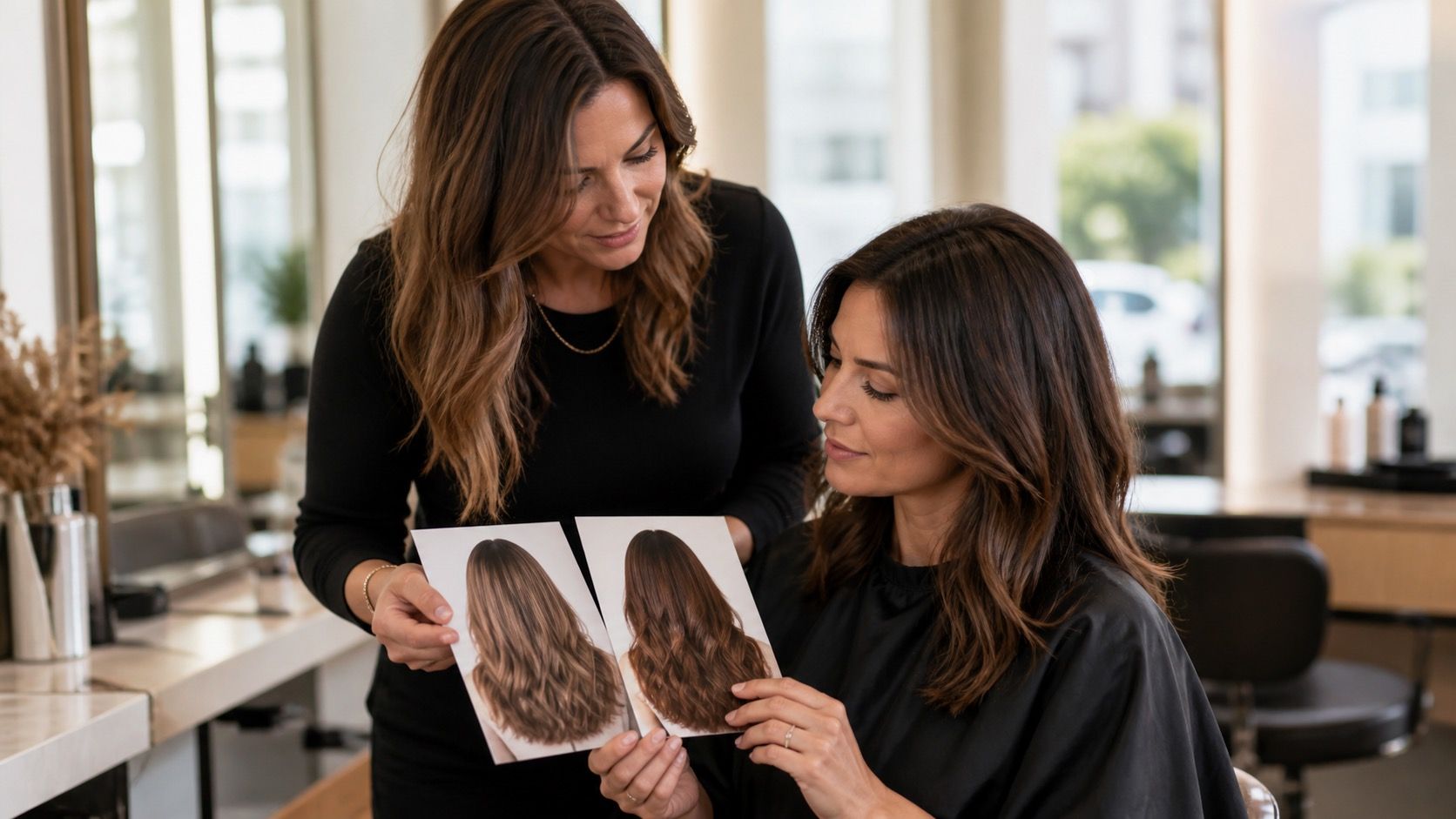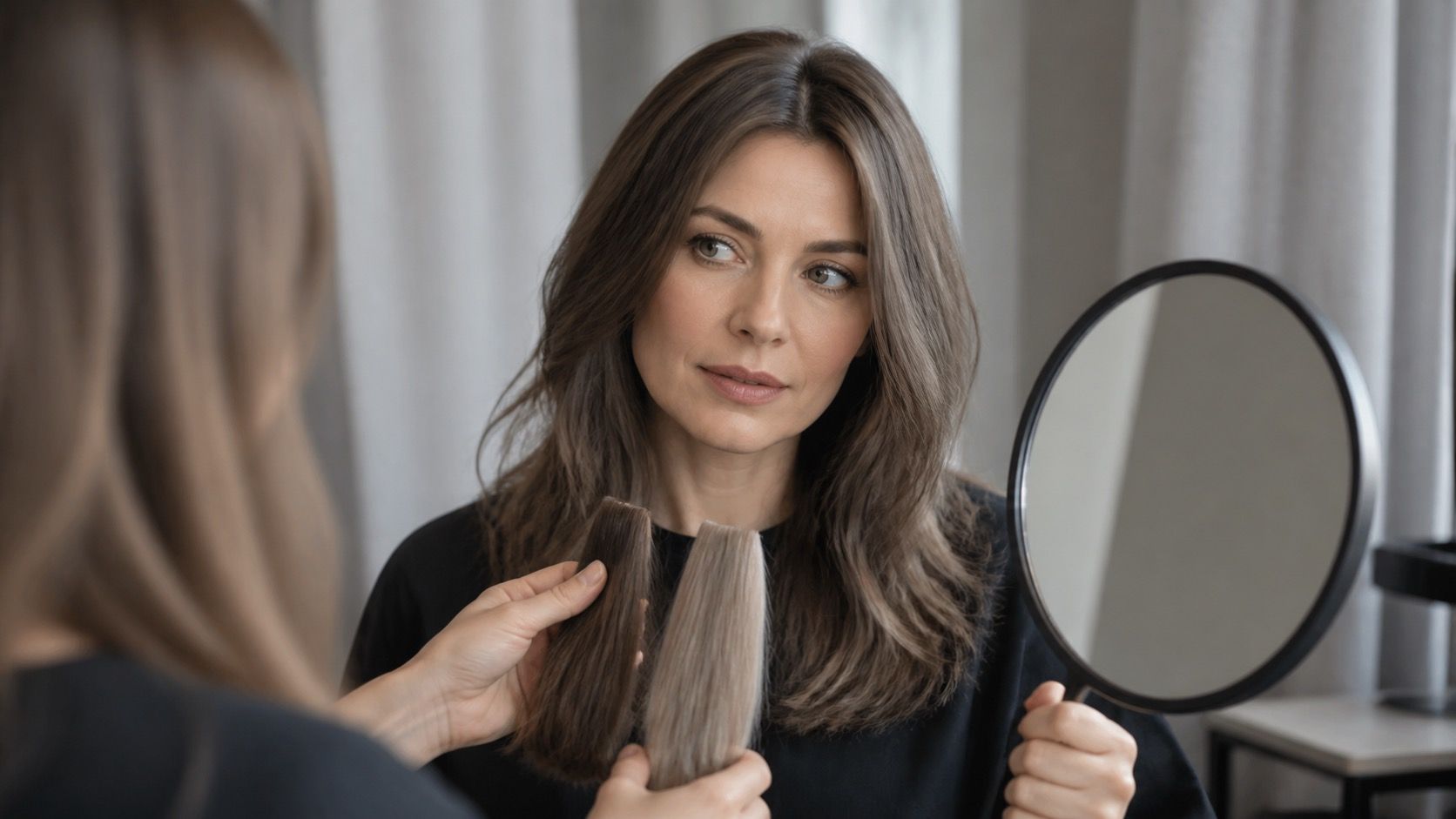
The best hair color for Soft Summer is usually the one that changes the hair without making the face look suddenly harder, yellower, or less awake. Soft Summer colouring tends to handle coolness well, but it also needs restraint. A smoky brown, a beige blonde, and a muted auburn can all be better choices than a single universal answer. The decision comes down to your natural base, how much contrast your features carry, and whether you want a quiet adjustment or a visible new direction.
Start with the base you already have
Look at the first inch of natural regrowth in a daylight mirror. That depth is not a rule, but it is an honest reference point for value contrast. A level 6 to 8 natural base often gives Soft Summer people room to move lighter or deeper without losing the softness around the eyes. If your brows are medium and your eye colour is grey, blue-grey, or softly hazel, a dramatic jump to near-black or white blonde may ask for more contrast than your face naturally offers.
Check skin clarity rather than chasing a celebrity photograph. Put a cool medium-brown scarf next to the face, then a golden chestnut one. When the brown is right, redness beside the nose looks less obvious and the lips look more defined. When it is wrong, you may still like the hair itself, but the face begins to look tired. This small test is more revealing than a swatch held against the ends.
Soft brown is the safest way to add depth
Cool brown, ash brown, mushroom brown, and taupe mocha are strong starting points for anyone who wants definition without a severe frame. They work particularly well when the natural base is dark blonde to medium brown and the hair has lost richness through sun or old highlights. Ask for a little dimension rather than a dense solid dye job: a deeper root and subtly lighter mids are often enough to make the cut look intentional.
Avoid reading “cool” as a demand for charcoal. Over-ash brown can turn greenish on porous lengths or look flat beside soft skin. A neutral-cool gloss usually has more room to move. It also makes grey blending easier because the new silver hairs sit within the same muted family instead of looking like bright wires against a warm brown.
Beige blonde works when lightness stays believable
Beige blonde is usually kinder than bright gold or platinum because it brings light around the face without a yellow edge. For a Soft Summer base, fine highlights, a soft root shadow, and a cool beige toner often produce a more convincing result than an all-over lift. The best version still allows the eyebrows and lash line to matter. If a blonde makes those features vanish, go one level darker or leave more depth at the crown.
Maintenance deserves an honest place in the choice. Light pieces near the face show warmth first, especially after swimming, heat styling, or several weeks in strong sunlight. That does not make blonde a bad option; it means you should plan for toner and occasional gloss appointments. A lived-in beige blonde can grow out gently, while a very pale full bleach leaves little space between “fresh” and “needs attention.”
Muted red can be interesting without becoming orange
Muted auburn, rose brown, and a cool berry-brown reflect can give a Soft Summer face warmth of expression without forcing warm colour into the skin. The useful references are wine, dusty rose, and brown with a red undertone, not copper coin or pumpkin. Inspect red inspiration photos outside the salon; intense lighting can hide the orange cast that appears on ordinary pavement and in office light.
Red is often the most emotional choice and the fastest to fade. A demi-permanent gloss is a sensible first move, especially if your hair is lightened or you have never seen yourself with red around the face. It lets you learn whether the result makes eyes brighter or makes cheeks look pinker. If it works, a colourist can build more depth next time instead of trying to undo a permanent surprise.
Compare the effect before choosing the appointment
| Option | Best for | Maintenance | Effect |
|---|---|---|---|
| Cool brown | Natural bases around level 6–7 | Low to moderate; gloss as needed | Quiet definition and easy grey blending |
| Beige blonde | Those wanting brightness with low contrast | Moderate; toner and face-frame refreshes | Soft light around the face |
| Muted auburn | Anyone wanting a visible but gentle change | Moderate to high; colour fades quickly | Rosy depth without obvious orange |
The table is only a starting point, because faded colour matters as much as day-one colour. Cool brown may become warmer through the ends, beige blonde may turn yellow, and muted auburn may soften into brown. Ask your colourist to describe that month-six version. A good answer includes the likely regrowth line, the gloss schedule, and what can be adjusted without relifting the hair.
Make the final decision in daylight
Save three unfiltered images at a similar angle: your natural base, your preferred brown or blonde, and your red option if you have one. View them the next morning by a window. The best hair color for Soft Summer usually feels less theatrical than expected, but it makes you look more like yourself on a good day. If two directions work, choose the one whose upkeep suits your life. A restrained change can always be built brighter or deeper; recovering from too much contrast is slower and rarely as fun.
Ask for a colour plan that can change with you
Hair does not stay in the same condition through every season. Sun, grey regrowth, a new haircut, and a change in how much time you have for appointments can alter the best choice. A useful plan begins with a natural-looking base and allows you to add beige brightness, cooler depth, or a muted red gloss later. That flexibility matters more than arriving at the salon with one rigid formula.
Pay attention to the first two weeks, not only the mirror at the end of the service. Does the hair still look balanced in a wool coat, under office lighting, and without a full face of makeup? If it does, keep the notes and repeat the direction. If it does not, identify the issue precisely: too light around the face, too warm through the ends, or too dark at the root. Soft Summer colour is easiest to refine when the feedback is specific.