Blonde hair, blue eyes, and fair skin sound like a ready-made colour recipe, yet the best clothing colours can change dramatically from one person to another. A cool ash blonde and a warm golden blonde do not need the same navy, pink, or ivory. Instead of following a rigid list, look at the undertone in your hair, the contrast in your features, and the colour closest to your face.
Hair tone changes the answer more than “blonde” does
Blonde is a depth range, not one undertone. Cool blondes with ash, pearl, beige, or silvery reflection often look at ease beside soft navy, dusty rose, smoky blue, and blue-based pink. Those colours repeat the quiet coolness in the hair without putting a hard line around fair skin. If your hair looks neutral in daylight rather than yellow, start there.
Golden, honey, strawberry, and warm beige blondes usually need a gentler warmth in clothing. Warm ivory, soft coral, peachy pink, camel, sage, and muted teal may make the skin look more even than optic white or blue-grey. The goal is not to match the hair exactly. It is to avoid a near-face colour that makes the warmth in the hair look accidental or the complexion look sallow.
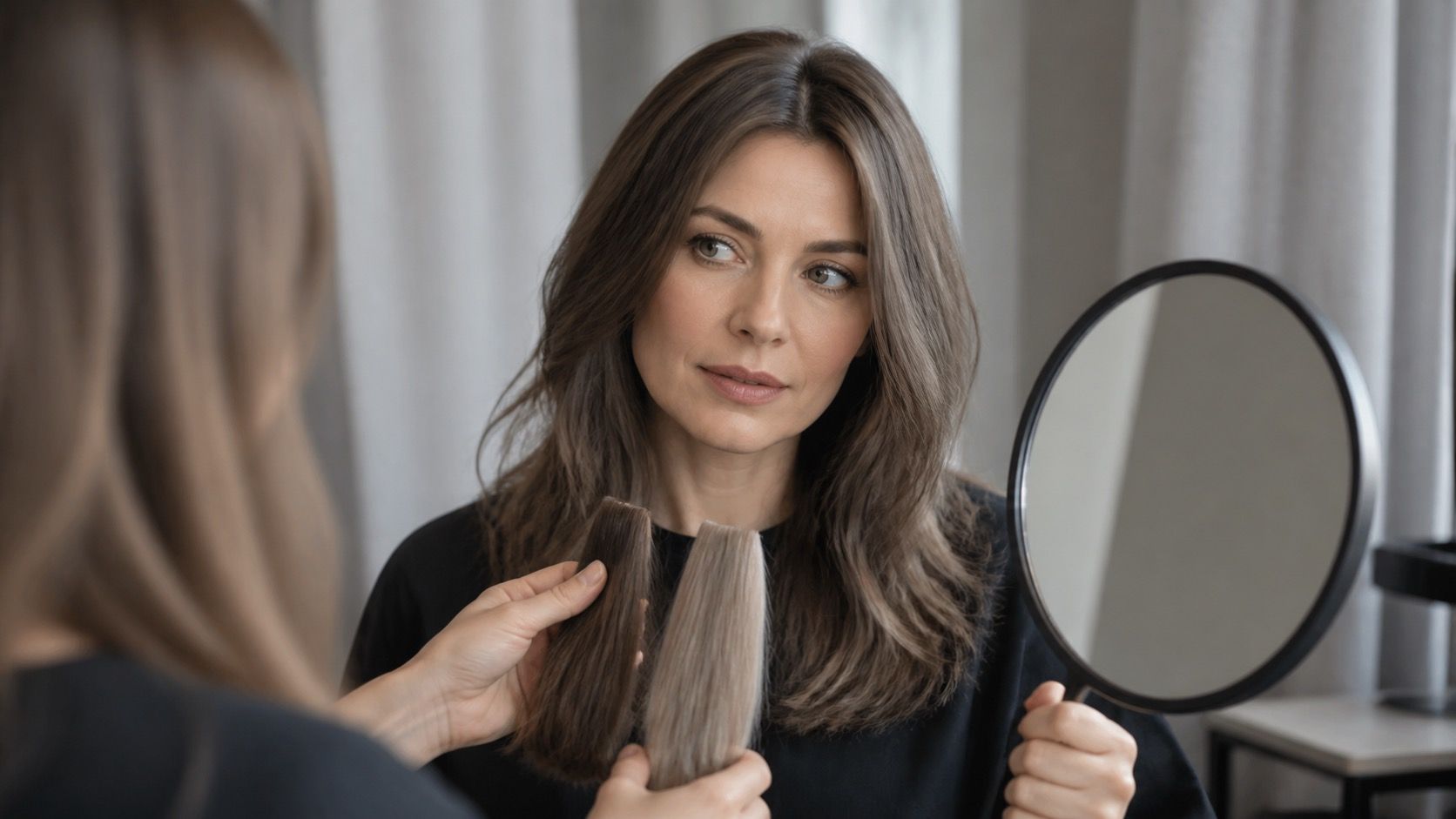
Look at the hairline in a mirror by a window. If your blonde reflects a little gold, test warm ivory before assuming a crisp white shirt is the default. If it reflects pearl or ash, compare white with soft dove grey or a cool off-white. This small test is more dependable than an online palette labelled simply “blonde.”
Try colours that can make blue eyes look clearer
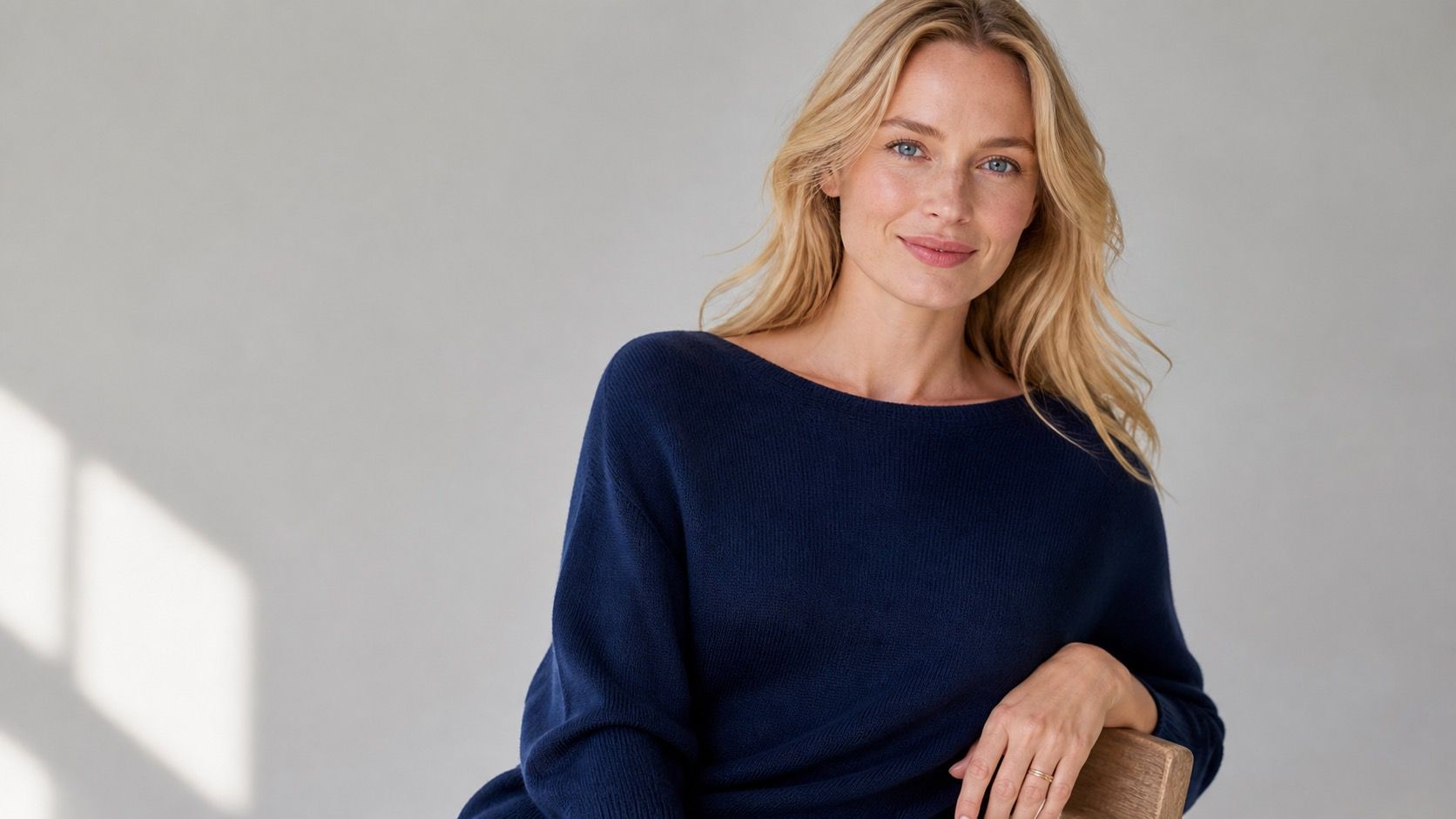
Blue eyes often respond well to colours that sit near blue without matching them exactly. Soft navy can deepen pale blue eyes while remaining quieter than true black. Icy blue and dusty denim pick up grey or green notes in the iris. Cool pink can create a useful contrast: it brings a little colour to fair skin and lets the eye colour remain visible rather than competing with a bright blue top.
Keep saturation in proportion to your features. A muted eye can disappear beside electric cobalt even though both are technically blue. Try a softened version first: mineral blue, cornflower, slate, faded teal, or a dark denim shirt. If a brighter shade is fun, wear it farther from the face as trousers, a bag, or shoes and let a gentler neckline colour do the framing.
In a fitting room, take one photo in full daylight if you can. Shop lighting can turn every pale complexion warmer or greener than usual. Compare the top with no lipstick, then with your normal makeup intensity. A shade that needs heavy bronzer or a very strong lip to work may not be the versatile colour you hoped for.
| Near-face colour | Often suits | Test it this way |
|---|---|---|
| Soft navy | Cool or neutral blondes; light-to-medium contrast | Check that it deepens the eyes without casting a grey shadow under them |
| Cool pink | Fair skin with pink or neutral-cool undertones | Compare with peach; keep the one that makes redness look quieter |
| Icy blue | Pearl, ash, or light neutral blonde | Use a matte fabric first so sheen does not do all the flattering work |
| Warm ivory | Golden, honey, or strawberry blonde | Hold it beside bright white and look for a calmer jawline and neck |
| Muted teal | Neutral blonde with blue, grey, or green eyes | Choose a softened teal rather than a neon turquoise |
Choose soft or bright contrast according to your face
Contrast is the jump between your hair, skin, brows, and eyes. A light blonde with fair skin and delicate brows often looks more coherent in medium-soft contrast: dusty blue with soft navy trousers, cool pink with grey, or ivory with a muted teal scarf. These outfits create definition without making the face seem unfinished between strong blocks of colour.
If your brows are darker, your eyes are a clear blue, or your blonde has a deeper root, you may carry more contrast. A navy sweater, berry lip, or a white-and-blue print can feel balanced rather than overpowering. The useful clue is whether the clothing arrives before you do. If people notice the top first and your face second, reduce saturation or move the strongest colour away from the neckline.
Black is a common example. It can look striking on a fair blonde with clear eyes and stronger brows, especially with deliberate makeup. On softer colouring, it can exaggerate under-eye shadows and make pale hair look washed out. Charcoal, ink navy, deep plum, or soft espresso often give the same useful depth with less severity.
Test difficult colours instead of banning them forever
There is no need to put yellow, orange, bright red, or beige on a permanent no list. The issue is usually the version and placement. A pale warm yellow worn right under a cool ash blonde may make both skin and hair look dull, while a deeper mustard used in a skirt with a soft blue blouse can be excellent. Bright orange near the face may be harsh, but a rust bag can add warmth without changing the whole portrait.
Beige is another colour that gets unfairly blamed. A beige close to your fair skin can erase the natural edge between face and clothing, especially when the neckline is high. Choose a beige that is clearly cooler, deeper, or warmer than your skin instead of one that almost matches it. Texture helps too: denim, knitwear, and patterned fabric create separation where flat beige does not.
For red, compare blue-red berry tones with tomato or coral tones. Cool blondes and rosy fair skin often prefer raspberry, wine, or soft cranberry; golden blonde may look healthier beside coral or muted brick. Hold the fabric under your chin rather than against your arm. Neckline proximity is where the colour earns its place.
Build outfits around your exact blonde and your normal life
Start with three dependable near-face colours, then add variety through trousers, jackets, shoes, and prints. A cool blonde might begin with soft navy, cool pink, and icy blue. A warm blonde might start with warm ivory, muted teal, and soft coral. This is enough to make weekday dressing easier without pretending you must live inside three swatches.
Use a small phone album for experiments. Photograph the same simple top shape in different colours by daylight, with your usual hair styling. A sleek blow-dry can reflect more light than natural texture, and a fresh toner may make a colour work differently than it will six weeks later. Save the versions that make the skin look calm and the eyes visible before you buy more of them.
Makeup intensity is the last adjustment, not the foundation of the palette. If a bright top needs a stronger lip for evening, that can be a choice. For daily clothes, the most flattering colour usually leaves you looking awake with minimal effort. When hair tone, contrast, and neckline colour agree, blue eyes tend to look clearer without any colour theory lecture at all.