Blonde can look beautifully calm on a Cool Summer, but it is also easy to push it too yellow, too smoky, or simply too pale for the face. The useful question is not whether blondes can wear blonde; it is which mix of softness, coolness, and depth still lets the skin and eyes do the talking. A few details about your natural base and upkeep make the answer much clearer.
Start with the kind of cool blonde that still has softness
Cool Summer sits between the gentler Summer palettes and the sharper Winter family. Skin often reads rosy, neutral-cool, or softly beige rather than golden; eyes may be grey-blue, blue-green, muted hazel, or cool brown. Hair colour needs to echo that low-to-medium contrast. The best cool summer hair color usually has a veil of cool pigment, but it is not a flat silver sheet.
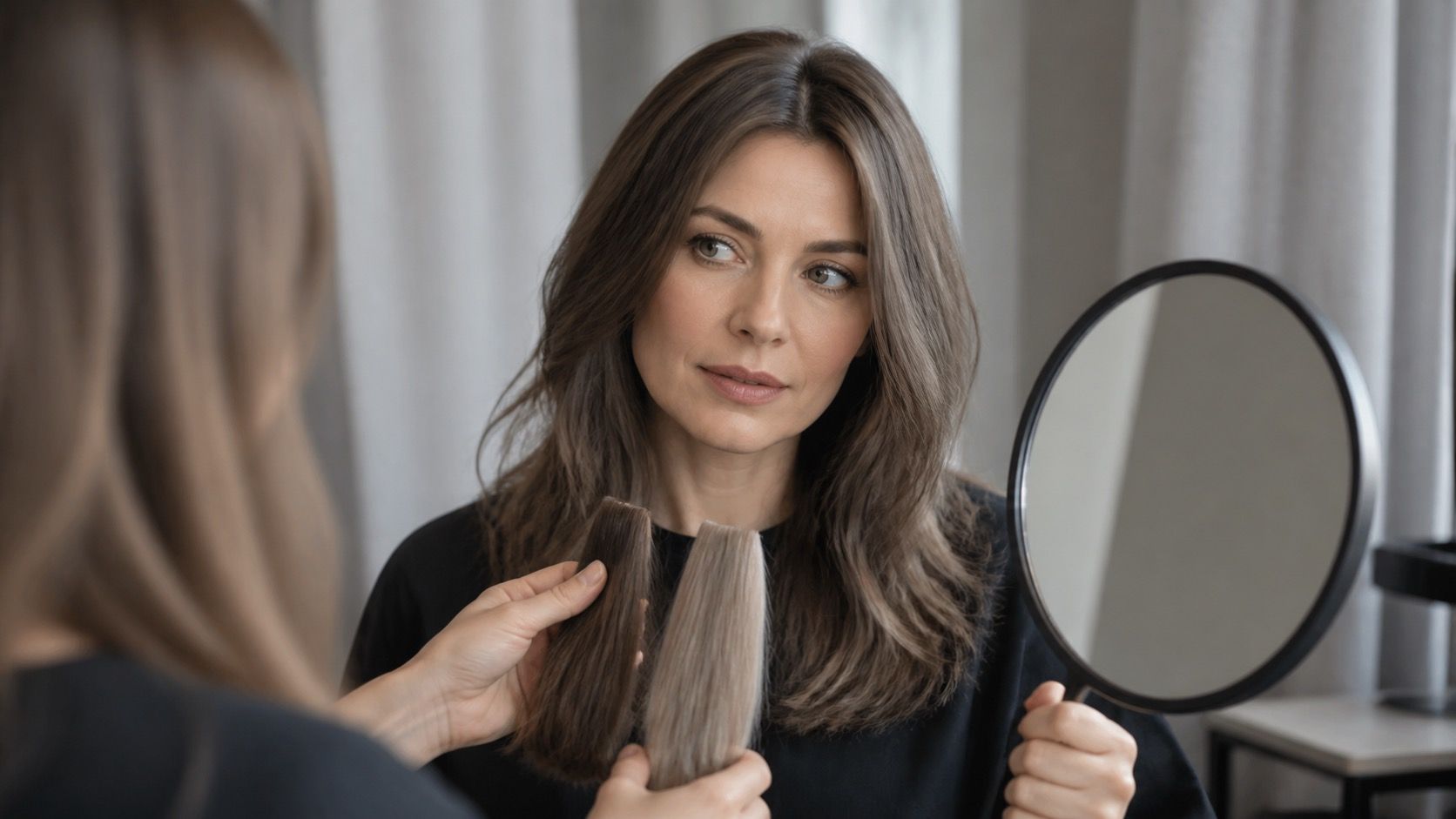
Look at your face near a north-facing window with no makeup. If a stark platinum sample makes the shadows around your mouth stronger, the issue is often contrast rather than the fact that it is cool. A medium pearl blonde, a mushroomy ash blonde, or a soft beige blonde with a cool cast usually gives the same freshness without draining the complexion.
There is a similar trap at the warm end. Honey and buttery blondes can make a Cool Summer's skin look pinker and more uneven, especially under indoor lighting. That does not mean every trace of warmth is forbidden. A restrained beige note can stop an ash formula from looking grey, as long as the overall result stays neutral-cool rather than yellow.
Pearl, ash and beige are different directions, not interchangeable labels
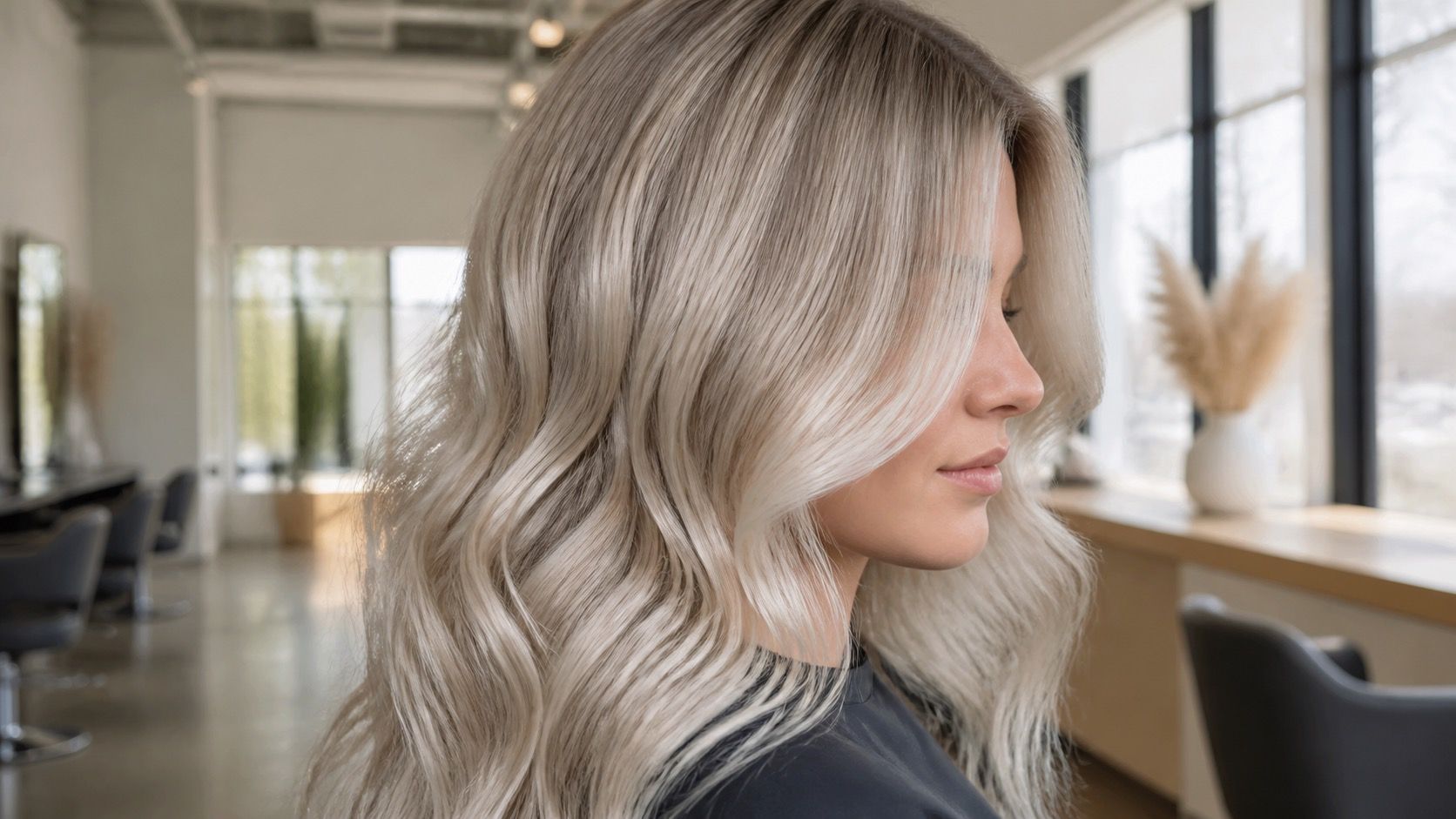
Pearl blonde has a light, opalescent effect: cool, creamy, and often slightly violet or pink-beige in reflection. It is a strong choice when your natural colouring is light and delicate. In daylight it can look polished rather than icy, but on very porous ends it may grab too lavender after toning. Ask to see the shade on hair similar to your starting level, not only on a salon swatch.
Ash blonde leans blue-grey or blue-violet. It is useful for cancelling yellow brassiness, particularly after lifting darker hair, but it can turn khaki or dull when overused. A believable ash blonde still has dimension at the root and between the highlighted ribbons. If the formula is described only as “ash,” ask what will keep it from reading solid grey after three washes.
Beige blonde is the broadest label. For Cool Summer, the useful version is a cool beige: think oat, mushroom, or pale sand with a muted finish, not caramel. It often gives the easiest everyday result because it tolerates ordinary bathroom lighting better than bright pearl and needs less aggressive toning than a very smoky ash.
| Direction | Usually works when | Watch for |
|---|---|---|
| Pearl blonde | Your natural contrast is light and your skin looks clear beside soft pinks and icy blue | Over-toned violet ends or a result that is too light at the hairline |
| Ash blonde | You need to counter visible yellow and prefer cooler grey-blue clothing colours | A flat, greenish, or overly dark deposit on porous hair |
| Cool beige blonde | You want a flexible, understated blonde with a little visual softness | Warm beige formulas that drift toward gold after several shampoos |
Choose the technique around your natural base, not the reference photo
A level of lift changes the conversation. Someone starting at a dark blonde can reach a pale beige or pearl effect with fine foil highlights and careful toner placement. Someone with a medium brown base may need more lifting to get there, and that extra lift affects porosity, shine, cost, and the chance of warmth appearing between appointments. The same photo can mean very different work.
Foil highlights are the most precise route when you want brightness close to the face while retaining a cooler, deeper base underneath. They give the colourist control over lift level and are useful if your existing colour has uneven bands. A root melt can soften the grow-out, but it should stay cool and translucent; a heavy dark root may look harsher than the rest of a Cool Summer palette.
Balayage can work too, especially for a lived-in beige blonde, but it needs deliberate placement. Broad warm-painted ends are unlikely to give the subtle result most people mean by cool summer hair colors. Show the colourist photos in daylight and say whether you want the brightness concentrated around the face, distributed through the lengths, or kept mainly at the ends.
Take better language into the colour consultation
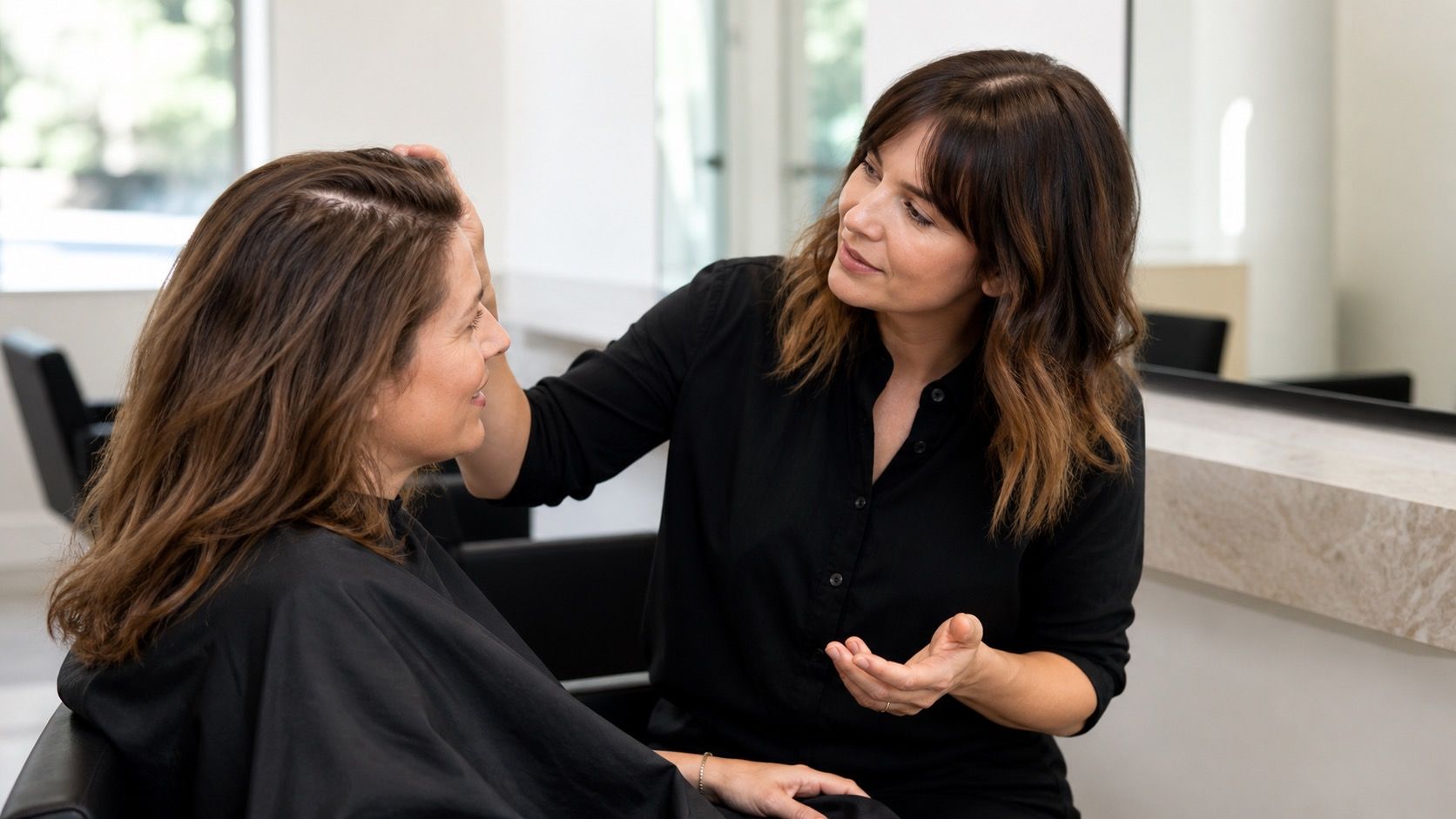
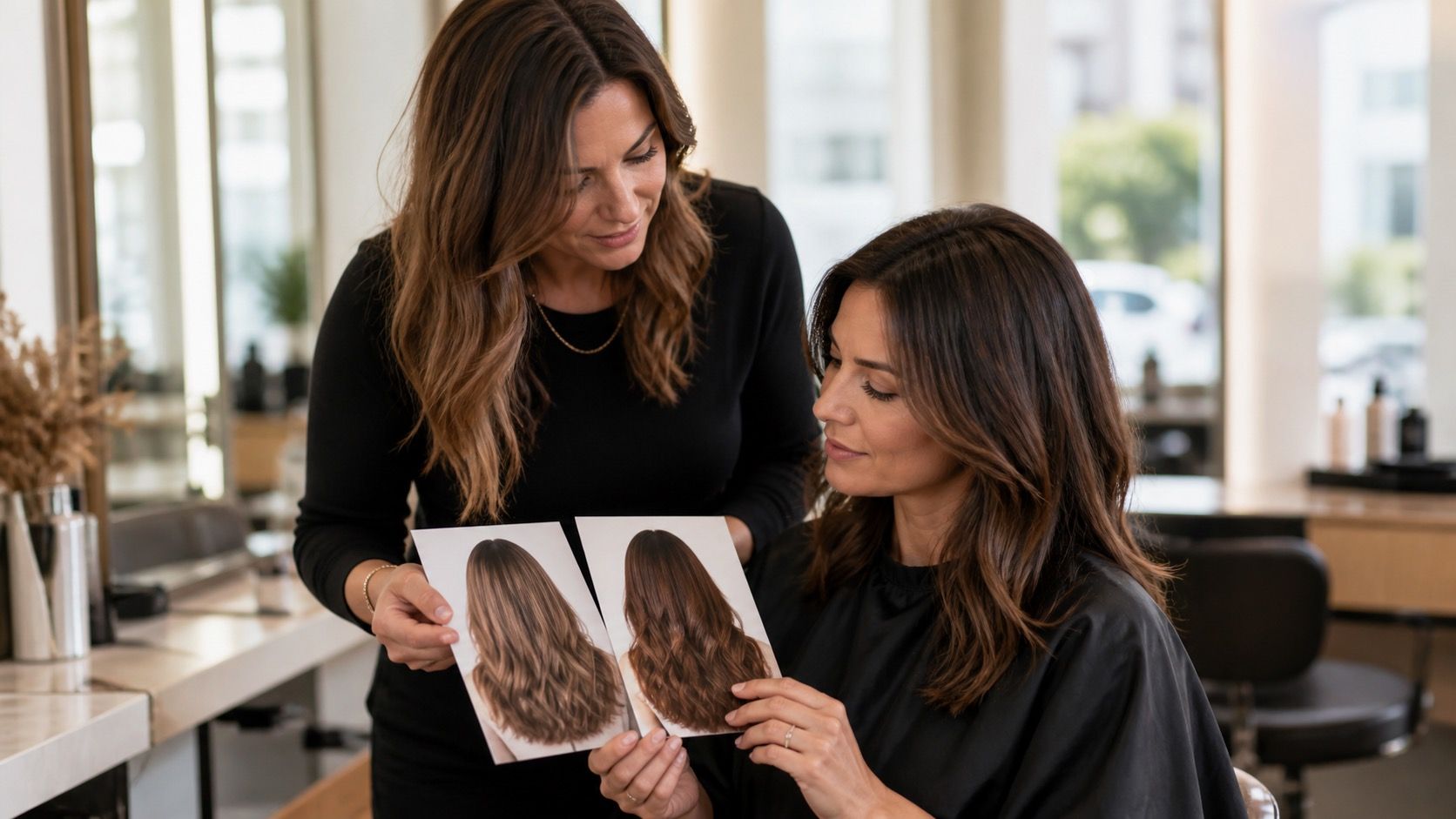
“Cool blonde” is a useful starting phrase, not a complete description. Bring two or three references that share a tonal idea rather than ten unrelated pictures. Point out what you like in each one: a soft pearl at the hairline, a natural root, fine ribbons, or beige dimension. Also say what you do not want, such as yellow gold, strong silver, chunky contrast, or a dark shadow root.
Ask about your current lift level and whether old colour will lift evenly. Previous box dye, copper glosses, and dark toners matter more than the result shown by a virtual filter. A good consultation includes a realistic discussion of how pale the first appointment can safely go and whether a strand test is sensible. That is practical planning, not pessimism.
It also helps to ask which toner family will be used and what the salon maintenance schedule looks like. Toner does not permanently change the underlying lightening, so it fades. If you prefer a soft beige finish over a visibly ashy one, say so before the formula is mixed. The colourist can then keep enough neutral pigment in the plan instead of trying to rescue the result at the basin.
Keep the tone clean without turning hair care into a chemistry project
Blonde maintenance is mostly about preventing a small shift from becoming a big one. Wash with a gentle shampoo, use heat protection, and notice when the hair starts reflecting more yellow than it did in the first week. Hard water, sun, hot tools, and porous ends can all make a cool toner disappear faster than expected.
Purple shampoo is a corrective tool, not an everyday personality trait. Used too often, it can leave very light or porous hair dull, lavender, or uneven. Start sparingly and follow the timing on the product. If your goal is cool beige rather than pale ash, a toning conditioner or occasional salon gloss may be a better fit than strong violet shampoo every wash day.
Finally, judge the colour in several lights before deciding it has gone wrong. Warm restaurant lighting will add gold to nearly any blonde; cold office light can make pearl tones look flatter. Daylight, a plain mirror, and a top in soft navy or cool pink are a more reliable test. The right blonde should make you look rested in ordinary life, not only in the first salon selfie.