A useful hair color analysis is less about being assigned a flattering label and more about noticing what happens to your face when a shade changes. The right colour can make skin look rested and eyes more present; the wrong one can make perfectly healthy skin look grey, flushed, or oddly unfinished. Before booking a big change, compare undertone, natural depth, eye colour, and contrast in ordinary daylight rather than trusting a salon mirror or a filtered photo.
What you are really comparing when you analyse hair colour
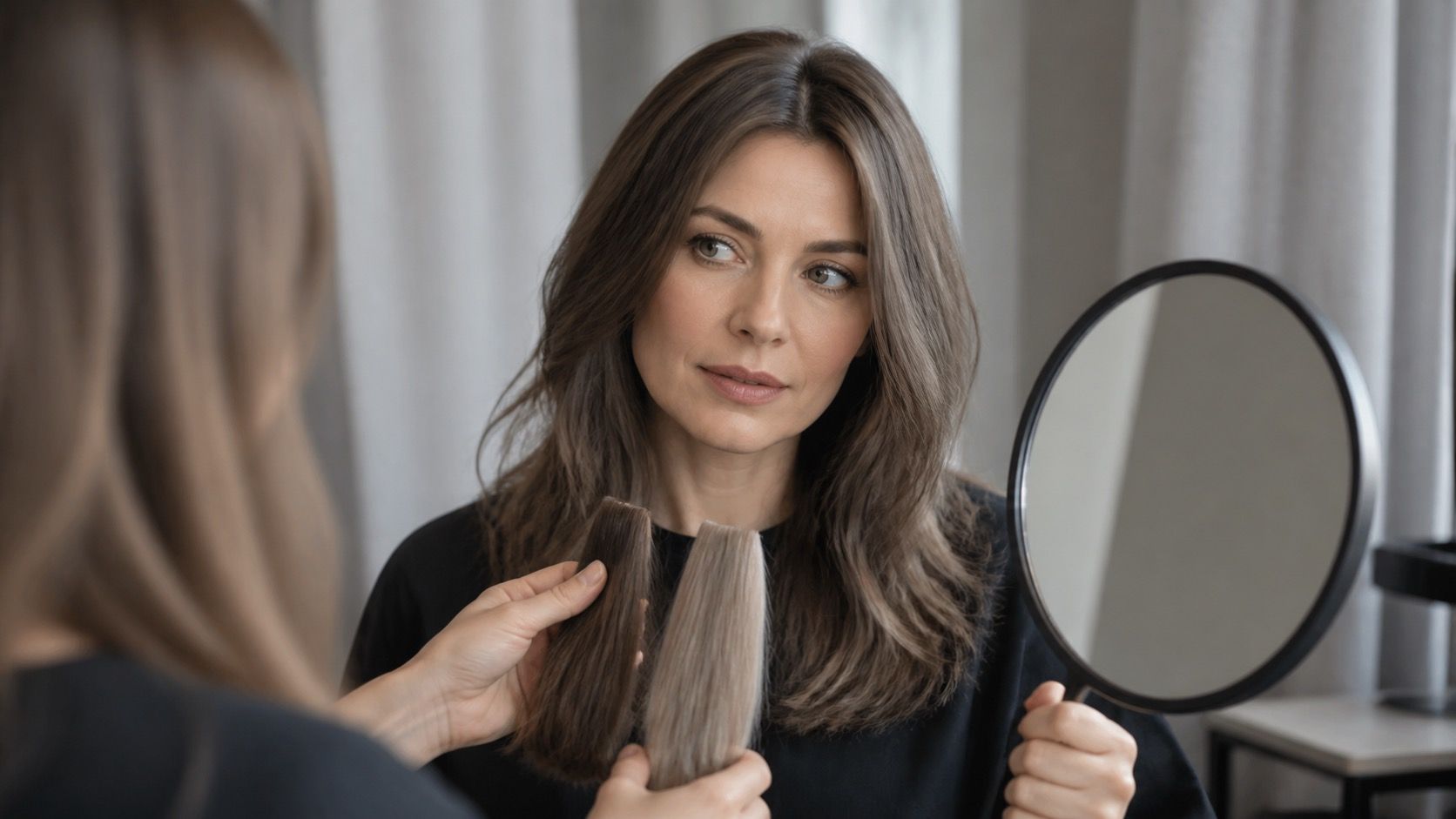
Hair colour analysis begins with the relationship between your face and your hair, not with a swatch name. Put a cool ash-brown strand beside a warm caramel one and look at the area around the mouth, under the eyes, and along the jaw. One option usually makes those shadows less noticeable. That is more useful evidence than whether your wrist veins look blue or green, since the vein test is easily distorted by skin thickness and room light.
Natural root colour is the calmest starting point because it already belongs to your complexion. It does not mean you must stay there. A dark blonde can wear a lighter beige blonde, and a medium brunette can go softer or deeper, but the distance from the root tells you how much new contrast the face will have to carry. Hair that looks dramatic in a ring light may feel much louder at the supermarket or on a video call.
Read undertone without turning it into a guessing game
Use indirect daylight near a window, with makeup removed if possible. Drape a clean white towel around your shoulders first; it removes the influence of a black jumper, bright blouse, or patterned scarf. Then hold muted silver-grey fabric and a softened cream or camel fabric close to the lower half of the face. Do not ask which fabric you like. Ask which one makes uneven colour around the nose and chin easier to ignore.
The gold versus silver test works in the same modest way. Silver jewellery may make cool or neutral-cool skin look clearer, while aged gold can be kinder to warm or neutral-warm skin. Neither result is a verdict. Many people suit both metals, and strong tan, redness, or foundation can muddy the result. Treat it as one vote alongside daylight photos and your natural regrowth.
Match depth and contrast before chasing a particular tone
Depth means how light or dark the hair reads beside the skin. Contrast describes the visible gap between hair, skin, and eyes. Someone with pale skin, soft grey-blue eyes, and medium ash hair often looks most convincing in a gentle range of values. Very black hair may pull attention away from her features even if it is technically cool. Someone with dark eyes and clear brows may tolerate a deeper cool espresso much more easily.
| What you notice | A useful direction to test | Watch for |
|---|---|---|
| Face looks washed out beside very light hair | Keep more depth at the root; try dark blonde or soft brown | Bleach that removes all definition |
| Warm gold makes skin look yellow or pink | Beige, ash, mushroom, or neutral-cool tones | Overly smoky colour that looks grey |
| Dark hair makes features sharper in a good way | Cool medium brown or espresso with subtle light | Flat, inky black against low contrast |
| Bright copper overwhelms the eyes | Rose brown or muted auburn instead | Orange reflect in direct sun |
Eye colour matters mostly through contrast, not because green eyes require red hair or blue eyes require blonde. A quiet eye colour can be beautifully framed by a quiet shade; a clear eye colour often benefits from a little brightness near the face. Look at your eyebrows too. If the proposed colour makes brows seem to disappear, either preserve a deeper root or choose a shade closer to their depth.
Do an at-home comparison that gives you usable evidence
Make three simple phone photos at the same window: hair tucked back, current hair loose, and a towel or scarf in the colour family you are considering. Turn off portrait mode, beauty filters, and warm display settings. Take them at roughly the same time of day. A photo is not perfect, but a side-by-side comparison stops memory from selling you a fantasy version of the shade.
Keep the test narrow. Compare cool beige against golden beige, or medium ash brown against chestnut, rather than twenty saved inspiration pictures. The question is not whether the model is attractive. It is whether the colour lets you see your own eyes, skin, and mouth first. If both options work, choose the one whose root regrowth and upkeep fit your actual routine.
Turn the result into a useful salon conversation
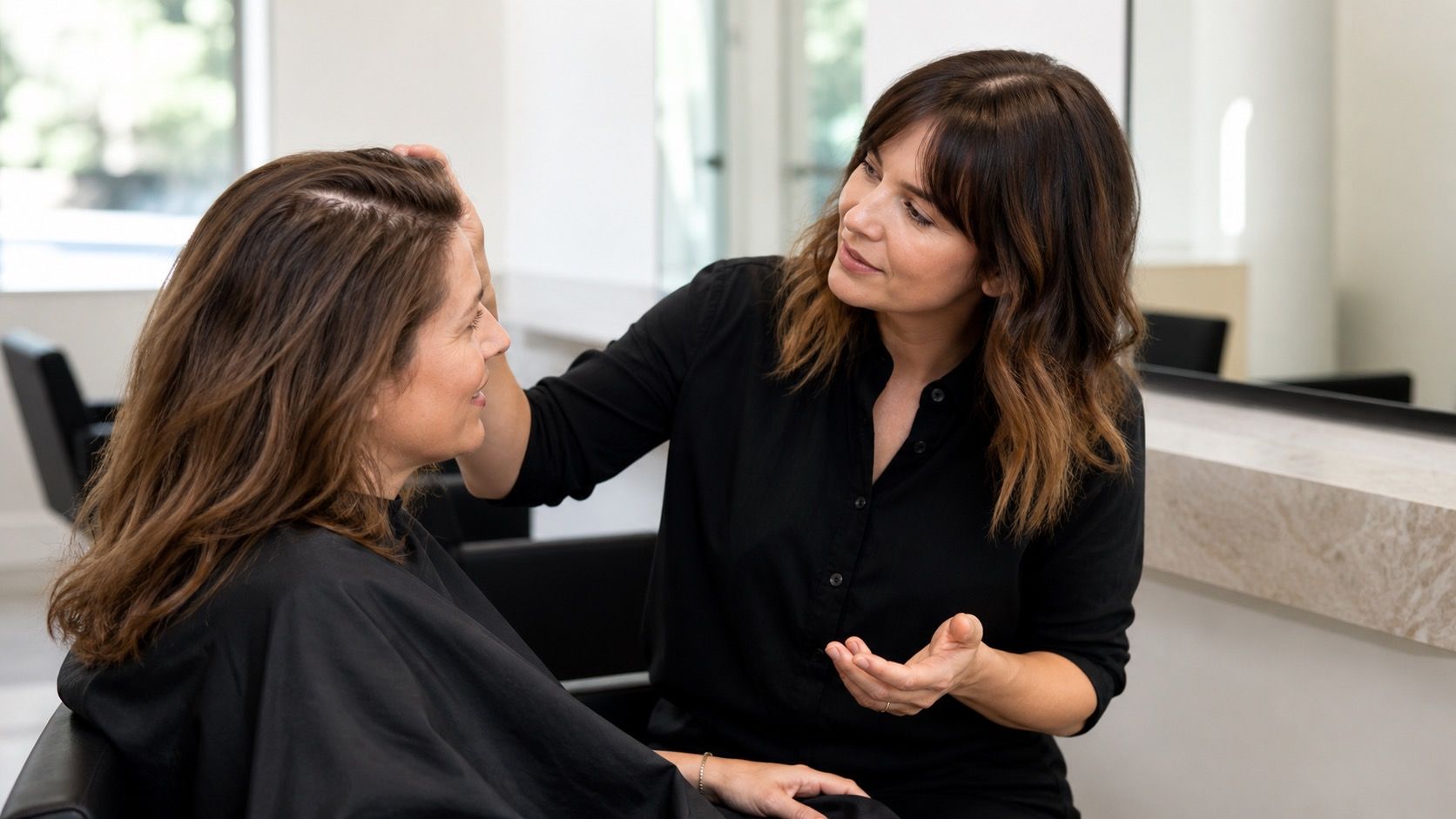
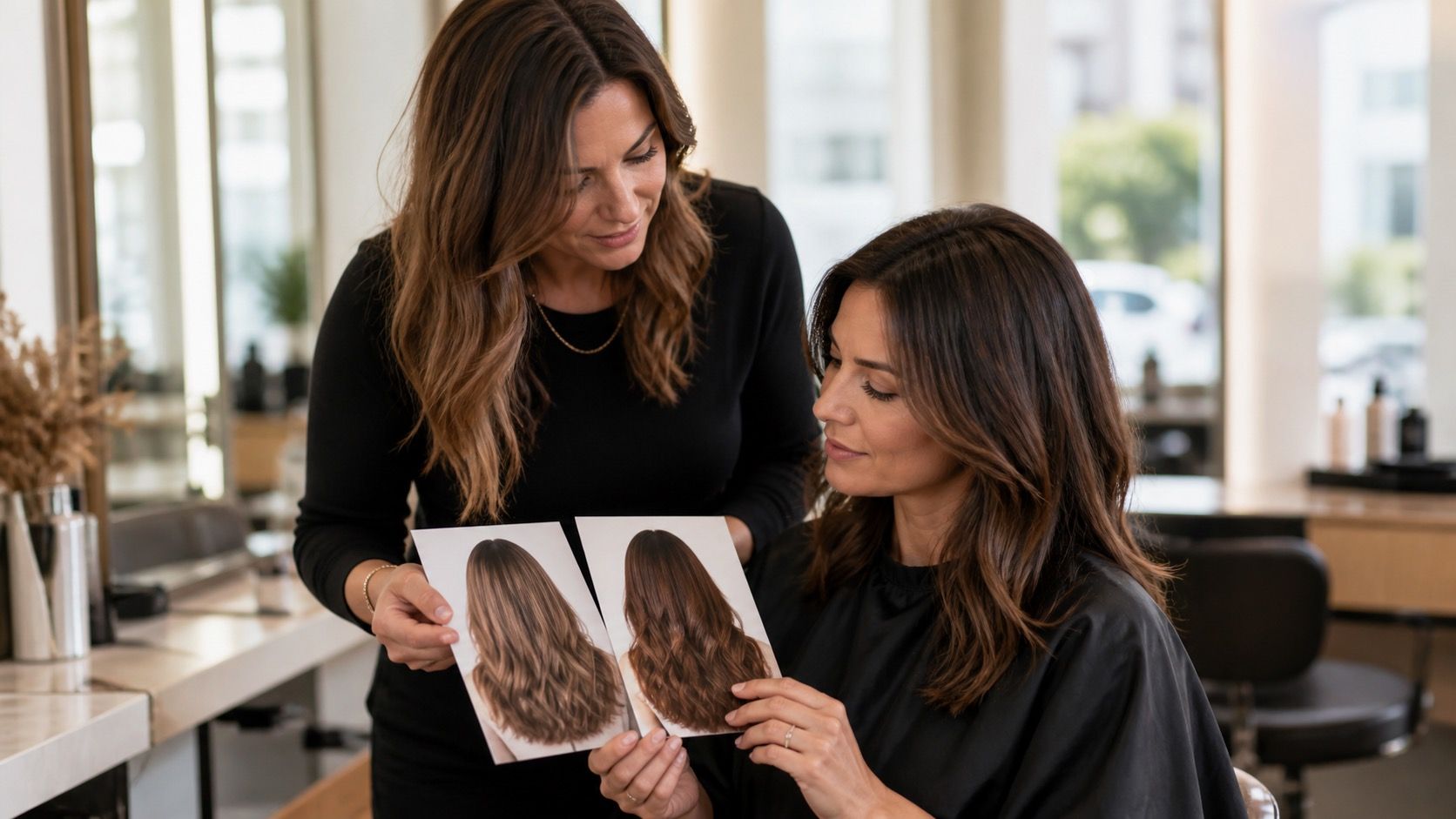
Bring two or three unfiltered consultation photos: one in daylight, one showing your natural roots, and one example of the finish you like. Explain what you observed in plain language: perhaps golden pieces make you look sallow, or an all-over light blonde removes your brows. A colourist can translate that into placement, toner, and level far better than they can translate the word “cool.”
Ask where the darkest point will sit, how much of your natural root will remain, and what the colour will look like after six weeks rather than just after the blow-dry. These questions matter especially with highlights. A soft root shadow can protect low-contrast features and make appointments less urgent; a bright money piece can be lovely, but it changes the whole face every morning.
Common mismatches and the quieter fixes
The most common mistake is confusing “cool” with “ashy enough to erase warmth completely.” Skin is not a paint chip. A neutral brunette may need a cool-beige gloss rather than slate-grey toner. Another frequent mismatch is choosing the depth of an inspiration photo without noticing that the model has darker brows, stronger eye contrast, or studio lighting. The correction is usually smaller than people expect: leave a little root, reduce the highlight width, or shift one level darker.
Seasonal colour analysis can offer a useful vocabulary, but it should not override the mirror. If a recommended shade makes your complexion look tired in daylight, it is not your shade simply because a chart says it should be. Keep notes from your comparison, give a semi-permanent gloss time to fade, and build the next appointment from what your real face told you. That is the part of color analysis hair that remains useful after the labels have been forgotten.