Finding a flattering colour is less about locating the iciest swatch in the salon book and more about controlling the balance around your face. A cool undertone can carry depth, softness, or a little neutrality, so the useful question is not whether a shade is cool enough but whether it still looks believable in ordinary daylight.
Start with the skin, not the vein test
A cool undertone often shows as a pink, rosy, or blue-leaning cast beneath the surface of the skin. Silver jewellery may look more settled than yellow gold, and white paper held beside the jaw can make a peachy foundation look unexpectedly yellow. None of those checks is decisive alone. Tanned skin, redness, and bathroom lighting are capable of making a warm complexion look cool for five minutes.
Use a small set of comparisons instead. Look at your bare face by a window, then place a soft charcoal fabric and a warm camel fabric near the chin. If charcoal makes the eye area clearer while camel brings out uneven redness, that is useful evidence. Hair colour analysis works best when it notices repeated reactions rather than trying to label a person from one wrist photo.
Choose brunette depth before choosing the word ash
Ash brown is helpful because it cuts orange and red reflect, but an extremely flat ash formula can make a naturally rosy face look grey. The better choice is usually a depth level that agrees with your brows and eye contrast, with a cool or neutral-cool direction layered on top. A level five smoky brown can feel polished on someone whose natural hair is medium brown; the same formula may look severe against fair brows and low-contrast features.
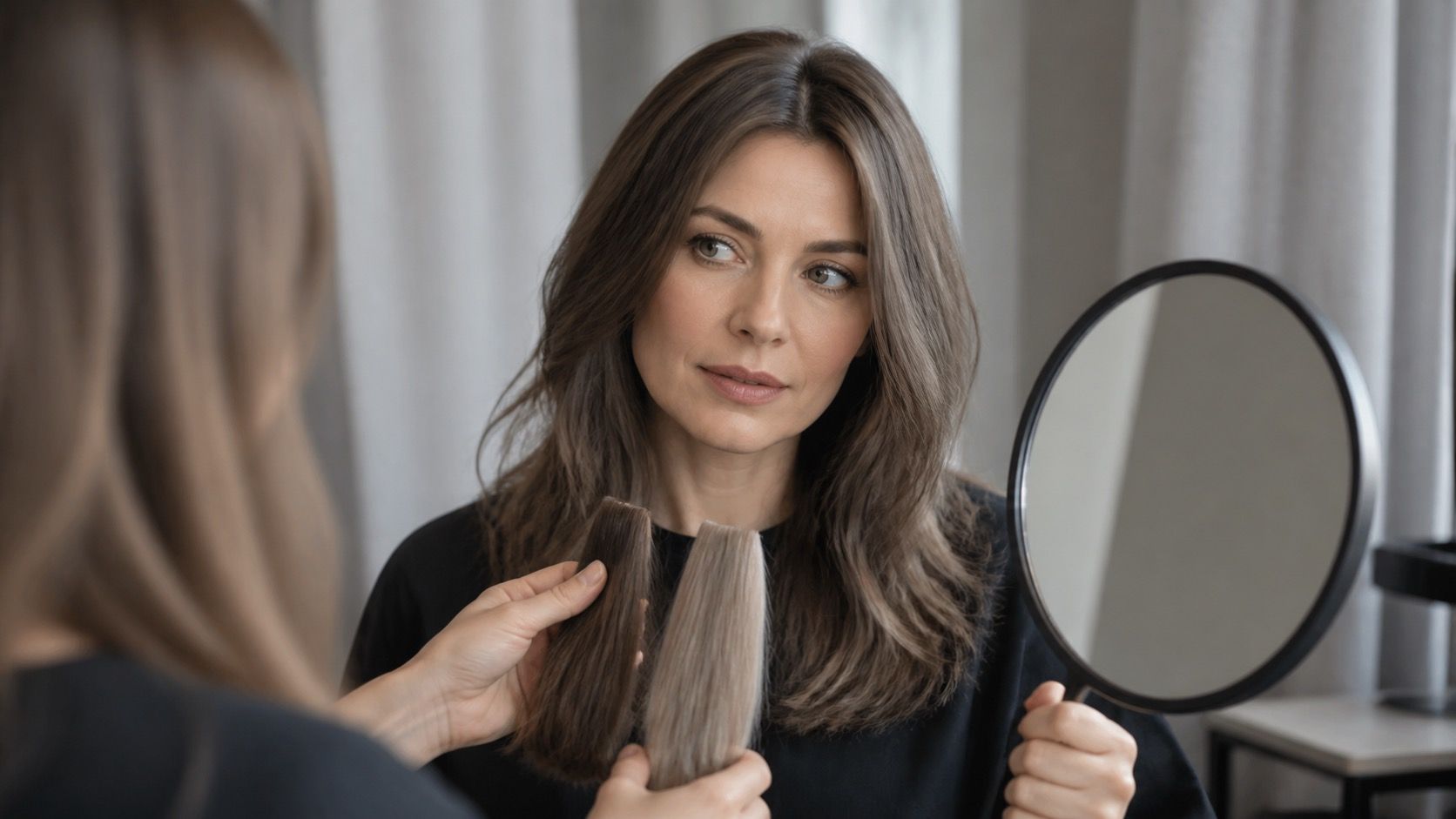
Ask to see the shade against the hairline rather than only on a ring of swatches. The face frame is where an over-dark formula announces itself first. If you want a deeper change, a soft root blend and subtle variation through the lengths preserve movement. One solid espresso block can be striking, but it asks more of your makeup, brows, and maintenance than the inspiration photo usually admits.
Cool blonde needs a believable base
Cool blonde is not a single destination. Pearl, beige-ash, mushroom, and silvery blonde all sit differently against a cool undertone. The decision starts with how much lift your natural base can tolerate. A dark base lifted aggressively to pale yellow needs frequent toning and often shows warmth again before the next appointment. A darker cool blonde with fine highlights may look calmer and cost less to maintain.
Pay attention to the part line and the first inch around the temple. Bright, icy pieces there can make blue or grey eyes stand out, yet they can also create a hard stripe if the rest of the hair remains much darker. A blended root and varied highlight width usually reads more expensive in natural light because the transition is not competing with the face.
| Starting point | Useful cool direction | Check before committing |
|---|---|---|
| Dark brown base | Smoky brunette or cool mocha | Keep the face frame lighter than a solid near-black block |
| Medium brown base | Ash brown, mushroom bronde | Test whether the ash looks soft rather than green beside the skin |
| Natural dark blonde | Beige-ash or pearl highlights | Plan for toner as porous ends can turn warmer quickly |
| Light blonde base | Soft silver or cool beige blonde | Leave some shadow at the root to avoid a washed-out effect |
Reds work when the red is blue-based
Cool undertones are often told to avoid red altogether, which is too blunt. Blue-red, berry, plum, and wine directions can look remarkably coherent because they echo the cooler cast in the skin. Copper and orange-red are more likely to emphasise redness around the nose or cheeks, especially once the first bright salon gloss fades. The issue is not bravery; it is the red family.
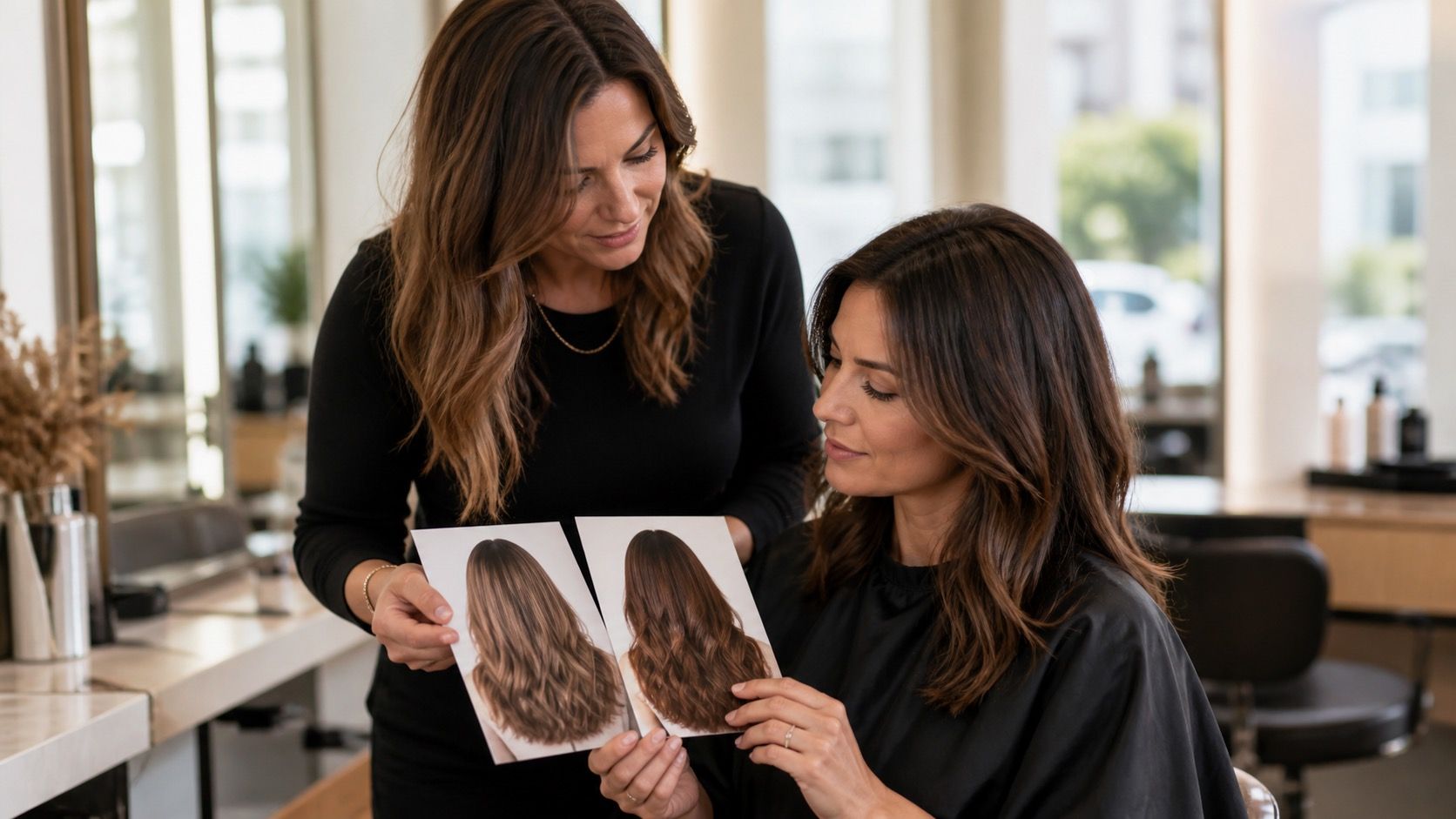
Bring a photo taken outdoors and name the part you actually like: the depth at the root, the violet cast in the mid-lengths, or the brightness near the face. A colourist can translate that into a formula more reliably than a name such as auburn, which means very different things across brands. Fashion tones behave the same way. A muted burgundy can be wearable; a saturated magenta may overwhelm a quiet, neutral-cool complexion.
Plan for warmth to return between appointments
Brassiness is not a personal failure. Underlying warm pigment appears as hair is lightened, and porous lengths release cool toner faster than healthy new growth. A purple shampoo can help a pale blonde look cleaner, while a blue-based product is more relevant for orange in brunette or dark blonde hair. Neither product replaces a proper gloss, and leaving either on too long can create dull, uneven patches.
Build your fading pattern into the original decision. If you wash often, swim, use hot tools, or spend time in strong sun, choose a cool shade that still looks acceptable one step warmer. A lived-in cool brunette can soften gracefully; an ultra-silver blonde can look yellow overnight once the toner shifts. That is the practical distinction between a colour that photographs well on appointment day and one that still feels like you three weeks later.
Use daylight as the final judge
Before a major change, take two unfiltered photos: one near a north-facing window and one outside in open shade. Look at the hairline, not just the shiny lengths. If the colour makes shadows under the eyes look deeper or turns the pink skin cast vivid, adjust depth or warmth rather than piling on more toner. A good salon result should not need a ring light to make sense.
There is room for preference inside every rule. You may like a dramatic dark brown or a slightly warmer beige blonde even if a colour analysis would choose another direction. Treat undertone as a useful filter, then decide how much contrast and upkeep fit your life. The shade that looks intentional is usually the one whose root, face frame, and fading pattern have all been thought through together.
Give yourself one ordinary week before judging it. Wear your usual coat colours, tie your hair back, and look at the crown where old colour and new growth meet. Those quiet checks reveal more than a freshly styled salon photo, and they tell you whether the next adjustment should be depth, placement, or simply a refresh of the toner.