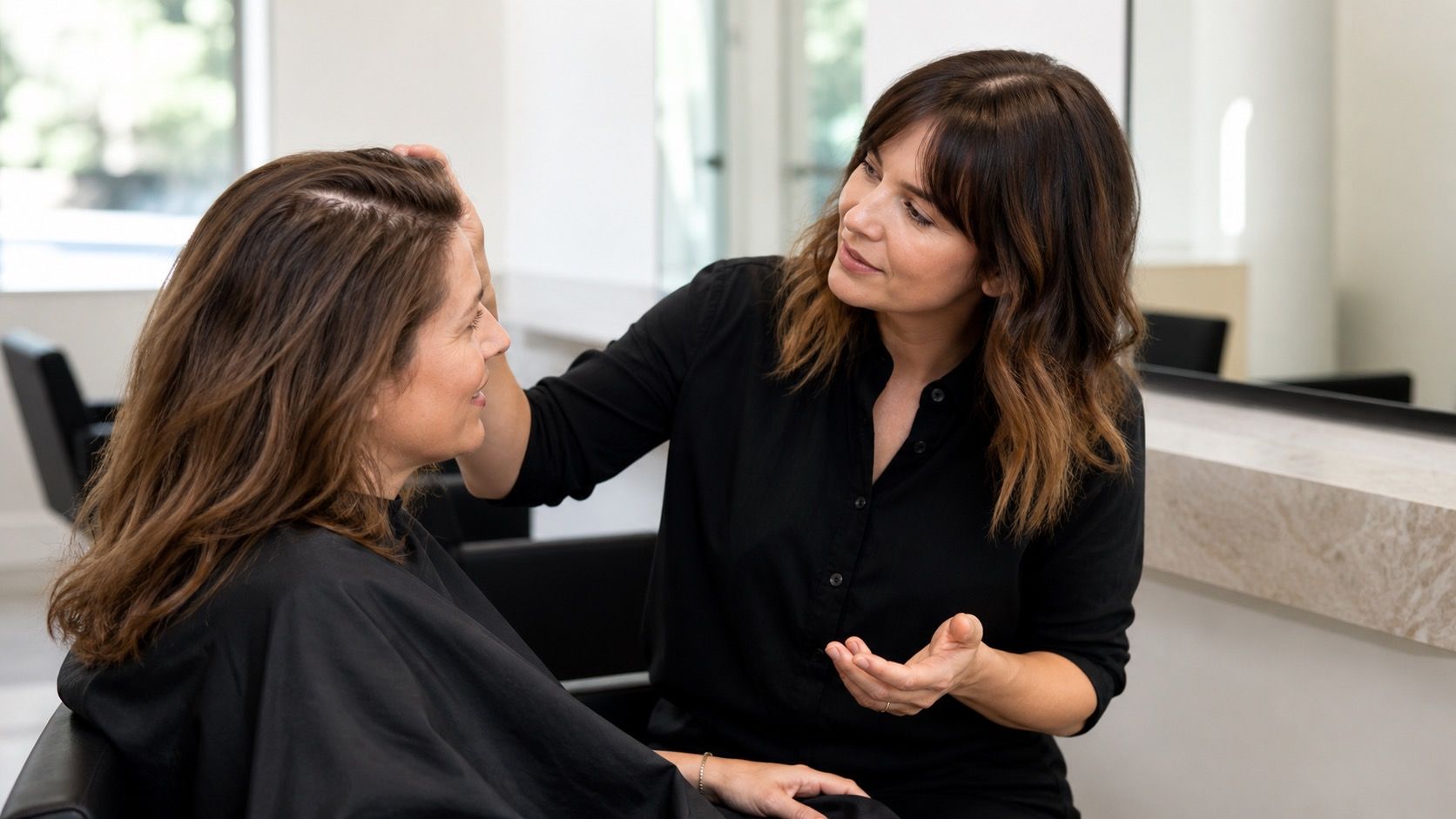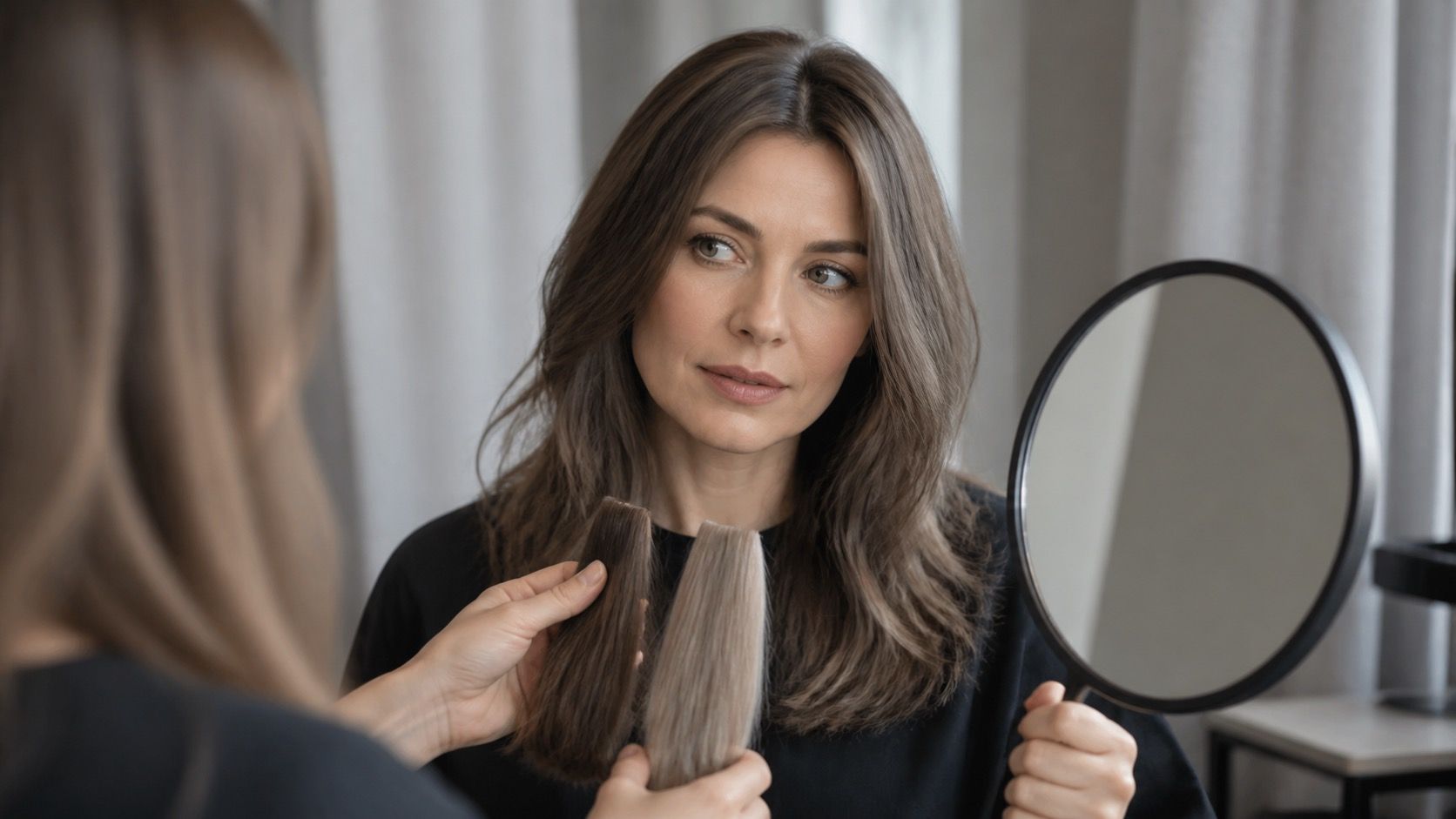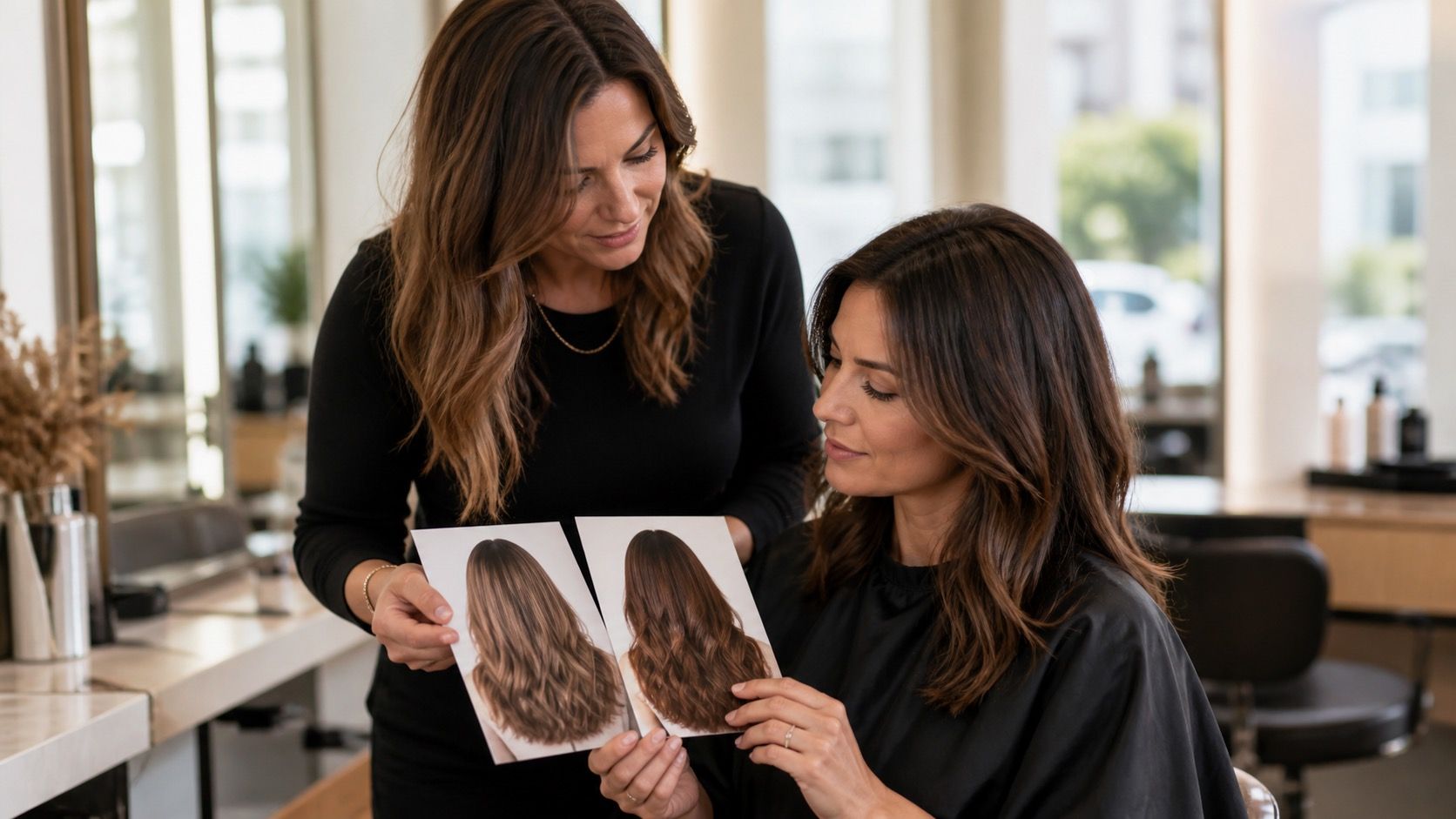
A hair color try on can make a new shade feel wonderfully certain before a salon visit. Then the consultation begins and the picture gets more complicated: your natural base, old colour, budget, and appointment time all have a say. That does not make the screenshot useless. It becomes genuinely helpful once you translate its polished result into a realistic target tone and a service plan.
Use the app result as a direction, not as a promise
A virtual try-on is good at showing the broad relationship between hair and face. It may reveal that you prefer a cooler brunette, a brighter face frame, or less contrast than you expected. It cannot read the history hiding in your lengths. A seamless digital blonde does not show whether your darker areas contain artificial pigment, whether your ends are porous, or how much lift is required.
Look at the screenshot and separate what you actually like. Is it the overall depth, the warm or cool reflection, the lightness around the face, or the shiny finish? Write down two of those qualities. “I like a neutral dark blonde with a lighter front” gives a colourist room to plan. “Make me this app filter” asks a photo to do a technical consultation.
Save the original daylight photo used for the virtual hair color try on. The before image shows your real starting position; the filtered image shows the preference. Without both, the salon is asked to guess whether the app changed your hair by one level or four. That distinction affects cost, damage risk, and appointment duration.
Prepare a colour history that a stylist can work with
Before the appointment, list anything applied during the past year or two: permanent colour, box dye, bleach, toners, glosses, henna, colour-depositing masks, and dark brown or black products. Include rough dates, even if you do not remember the shade name. Previous colour does not always behave according to the picture on the box, and honesty is much more helpful than a neat story.
Your natural base matters separately from the colour you see in the mirror. The stylist may examine the root, mids, and ends because they can lift at different speeds. If you have a band from an old highlight or a darker strip under the crown, say so. Those details may turn a simple all-over idea into a partial correction with foils and a gloss.
A strand test is worth considering when you want a big shift, have used home dye, or have fragile hair. It is a small, controlled way to see how one section lifts and holds a target tone. The result can prevent a rushed decision at the basin and gives a better estimate of what the first visit can achieve.
Match the screenshot to a service, not a single tube of colour
Many virtual results are uniform from roots to ends, while salon colour is usually placed in layers. A soft blonde may be foils plus toner; a richer brunette may be a root gloss with lowlights through faded lengths; a red change may need filling before the final tone. The service is the route, and the screenshot is the destination sign.
Ask the colourist which part of the image is realistic now and which part would need stages. A natural base that is several levels darker than the target often cannot move to pale blonde in one healthy appointment. It may be more sensible to make the first session a bright, neutral bronde with controlled warmth, then lift further after the hair has recovered.
| Screenshot goal | Likely salon conversation | Reality check |
|---|---|---|
| Lighter all-over blonde | Foils, balayage, or a full lightening service plus toner | Old dye and natural depth determine the lift required |
| Cooler brunette | Gloss, lowlights, or a root-to-length correction | Very warm underlying pigment may return as toner fades |
| Bright face frame | Partial foils or money-piece placement | Placement can be achievable without changing every length |
| Grey coverage with dimension | Root coverage with highlights or a gloss | A flat app overlay rarely shows grow-out and root contrast |
Ask questions that prevent a surprise at the mirror
Ask what the target tone will look like on your hair after the first wash and again after several weeks. This is not a trick question. Toner fades, warmth can reappear, and a cool gloss may soften into something more neutral. Knowing that progression helps you decide whether the original target is still worth the maintenance.
Ask whether the quote includes toner, a bond-building treatment, a cut, and a future maintenance appointment. The cheapest version of a major change may leave out the steps that make the result look polished. It is also sensible to ask how long you will be in the chair. A four-hour appointment and a short root refresh are different commitments even if both begin with the same inspiration photo.
Show one image you dislike as well as the image you love. A clear “not too golden,” “no harsh stripe at the root,” or “not silver-grey at the ends” helps the colourist interpret taste. Good communication is about boundaries as much as it is about goals.
Split a large change into stages when the hair asks for it
Staging is often a strategic choice rather than a disappointing compromise. Going from previously coloured dark brown to a pale cool blonde may require more than one lift to protect the hair and control the underlying warmth. The first appointment can still look intentional: add brightness around the face, build a softer base, and choose a tone that belongs between your current hair and the future target.
Budget and maintenance belong in this decision. A high-lift blonde may mean toner visits, careful heat styling, and more frequent trims, while a dimensional version can grow out more gently. Decide which part matters most: being very light, being very cool, having low maintenance, or preserving maximum softness. Usually you can prioritise two without making the plan miserable.
Leave the salon with a written idea of the next step: when to reassess, what products support the tone, and what change is still pending. The app screenshot should not set an impossible deadline. Used well, it helps you and your colourist agree on a result that looks good now and has a sensible route forward.