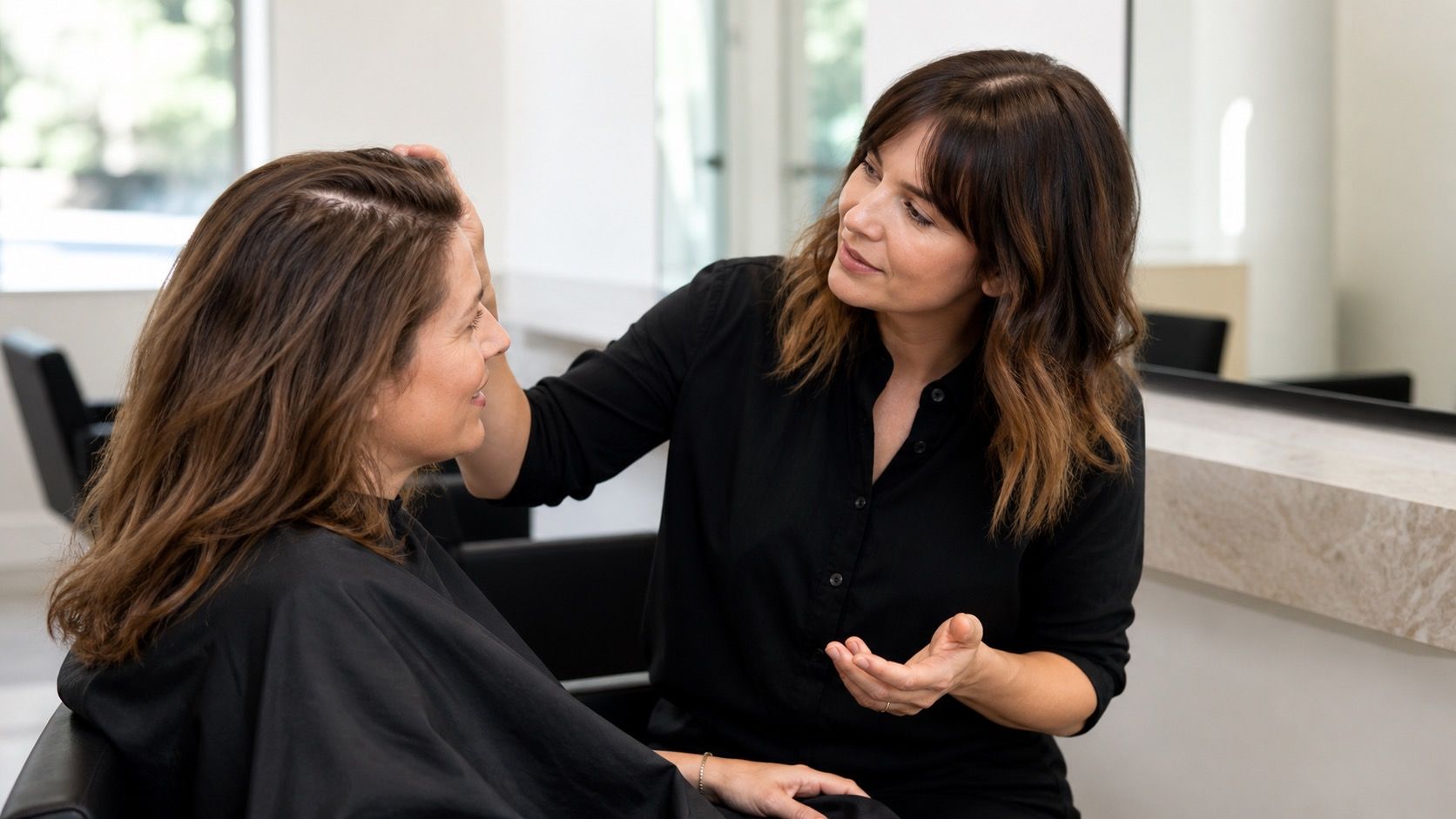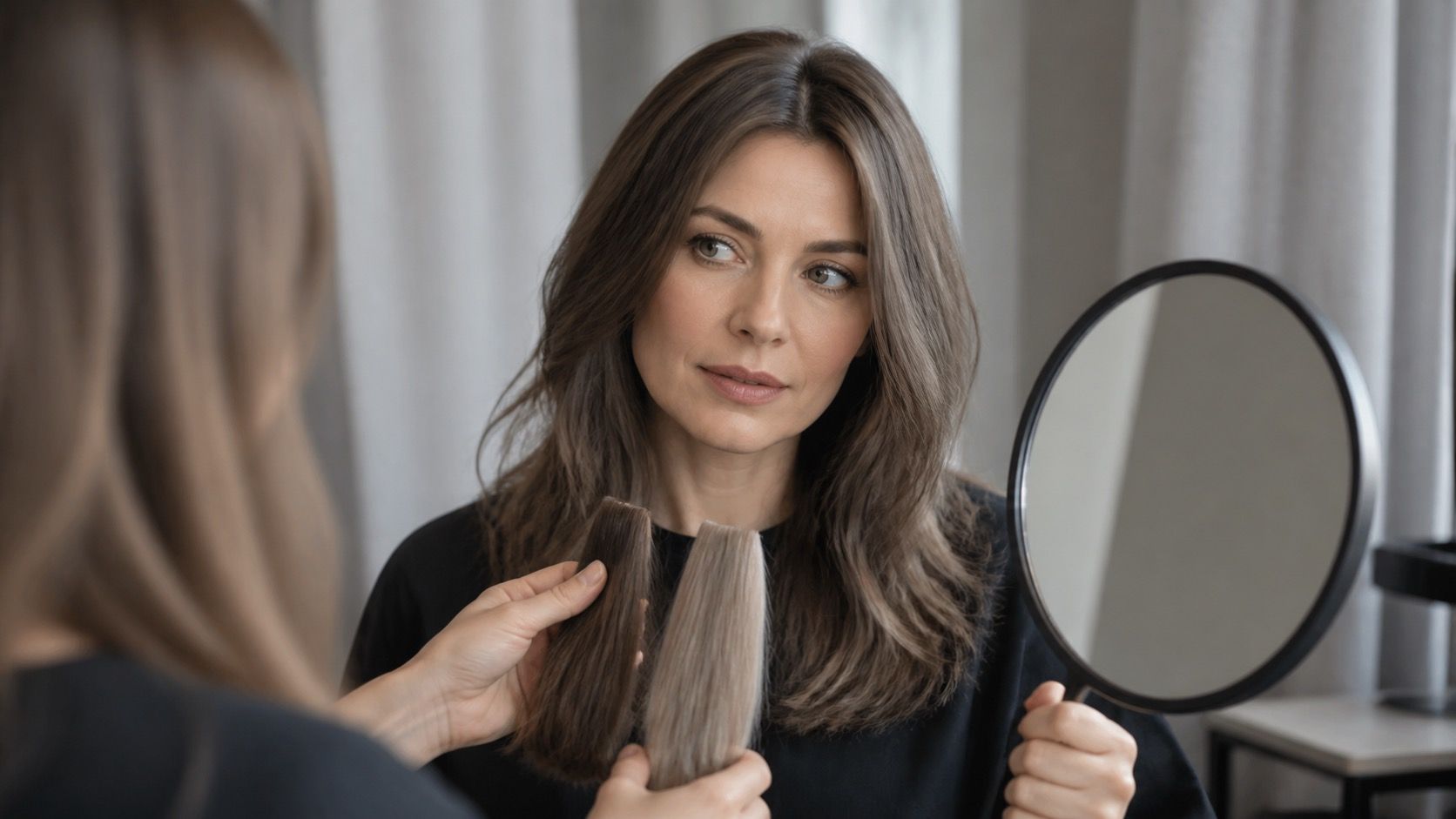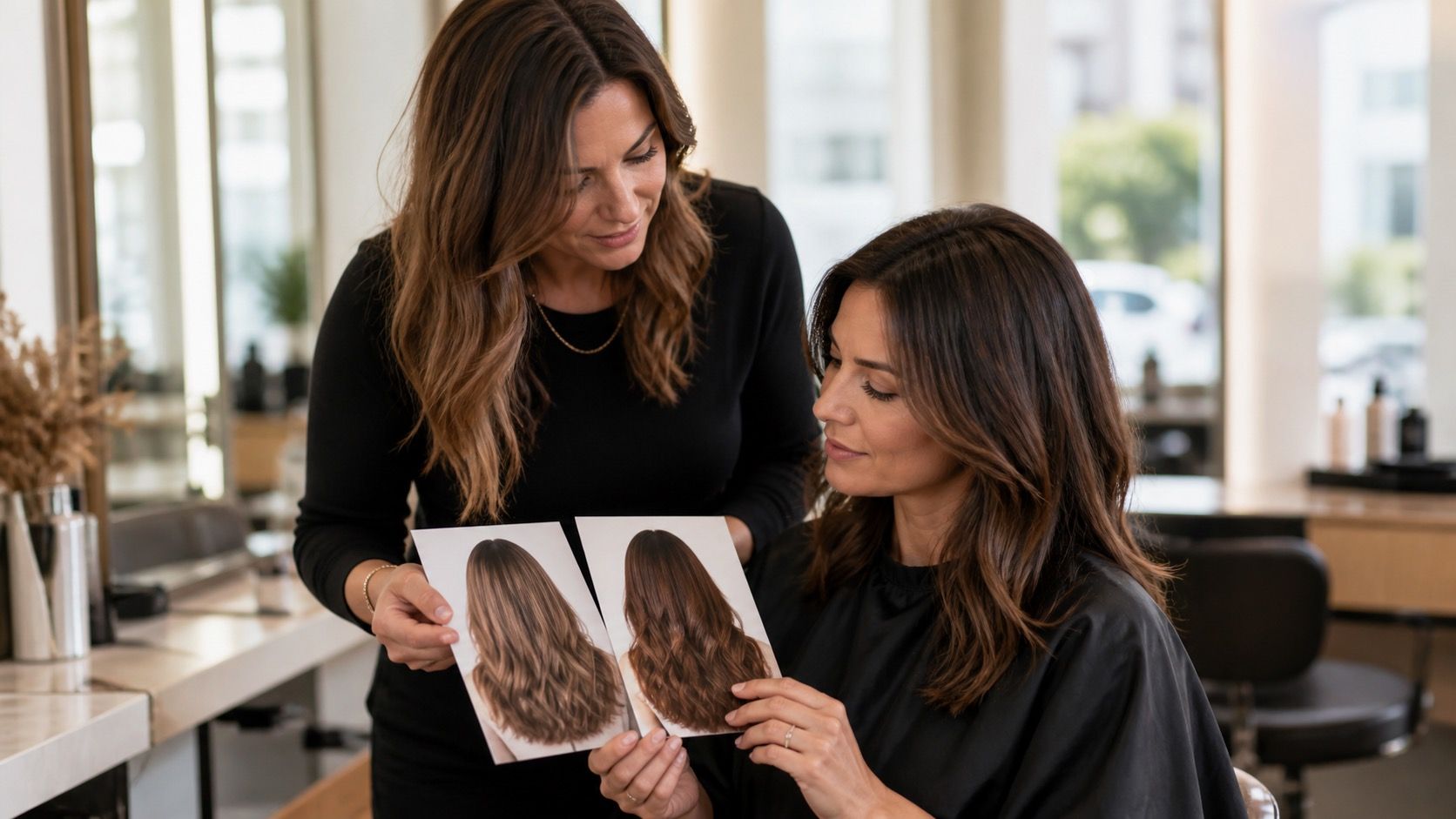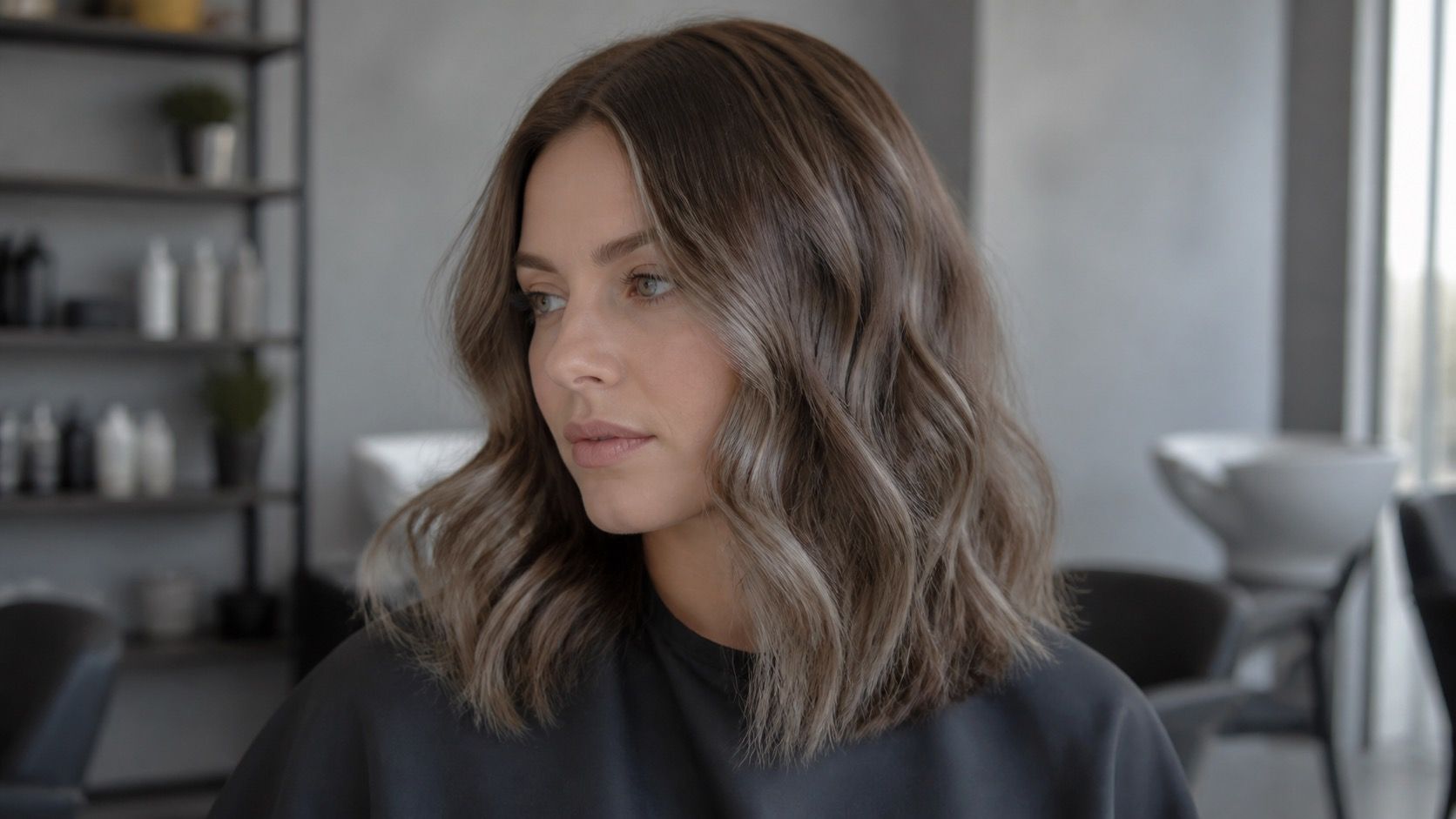
Soft Summer hair color is often misunderstood as a command to go grey. The more useful idea is gentler: this palette usually looks best when colour is cool-leaning, muted, and close enough in depth to let the face stay visible. Think of a cloudy afternoon rather than a black-and-white photograph. Ash brown, mushroom blonde, smoky beige, and rose brown can all work beautifully, provided the colour keeps a little life and does not create a sharp contrast the features never had.
Recognise the Soft Summer difference before changing your hair
Soft Summer sits between coolness and softness. Compared with a brighter cool palette, the face often looks more harmonious beside dusty, blended shades than beside icy platinum or saturated burgundy. Compared with a warmer muted palette, orange-gold and obvious copper tend to arrive before the person does. Check this in daylight with a muted taupe scarf and then a clear black or vivid orange one; the less dominant option tells you more than a seasonal label.
Low contrast is the practical clue. If your brows, skin, and eyes blend softly together, very dark espresso or bright white-blonde hair can look like a border drawn around the face. That does not prohibit depth or highlights. It simply means transitions matter: a root shadow, softly woven panels, and a cool-beige gloss are often more convincing than an abrupt one-colour change.
Choose brunette and blonde directions by depth, not fashion names
For brunettes, ash brown, mushroom brown, soft mocha, and taupe brown are dependable directions. The best versions have a muted cool reflect without the greenish cast that appears when an ash formula is overused on porous hair. Ask to see the shade outside the salon. Under warm bulbs, nearly every brown looks richer than it will in a car park or by a window.
Mushroom blonde and smoky beige suit many Soft Summer people because they create lightness without a yellow edge. A dark blonde base with fine beige highlights is usually easier to wear than a blanket of pale bleach. Keep enough natural depth at the root so brows and eyes do not become the only dark features left in the face.
| Direction | Why it can work | Small caution |
|---|---|---|
| Ash brown | Quiet depth for a medium natural base | Too much ash can look khaki on porous ends |
| Mushroom blonde | Lightness with a softened cool edge | Needs a beige balance, not icy toner alone |
| Rose brown | Gives a muted rosy change without orange | Fades quickly if the hair is very light |
| Smoky beige highlights | Adds movement while preserving low contrast | Wide bright ribbons can become stripy |
Approach red and very dark colour with a little scepticism
Muted auburn and rose brown can be lovely when the red sits under brown rather than shouting over it. Bring reference pictures that show the colour in daylight, not only a polished salon reel. A Soft Summer-friendly red tends to feel berry, rose, or soft wine rather than pumpkin, cinnamon, or flame. If the first warm copper test makes skin look blotchy, believe the mirror.
Very dark colour is another tempting shortcut. It can make a haircut look expensive on day one, yet leave a low-contrast face looking stern after the first wash. A cool medium brown with a deeper root often supplies the same definition with less severity. If you want to go darker, try a demi-permanent gloss first; it gives you a way back before a permanent formula and repeated removal become the project.
Use highlights to make the hair move, not to create a new stripe pattern
Soft Summer highlights are usually finest around the face and more diffused through the lengths. Ask for a few pieces that are only one or two levels lighter, with a blended root shadow. In a ponytail, the hair should still look like one family of colour. If individual bright ribbons jump out from across the room, the placement is probably doing more than the palette needs.
Brightness around the face is not the same as a thick money piece. A narrow veil of smoky beige can lift tired-looking lengths while remaining believable when your hair is tucked behind the ears. It is a useful choice for anyone who likes their natural base but wants a change that will grow out kindly.
Keep brassiness away without making the colour lifeless
Brassiness is common after a few weeks because lifted hair exposes warmth. Toning shampoo can help, but violet shampoo is not a daily cleanser and blue shampoo is not an automatic answer for every brunette. Use it sparingly, watch the ends, and stop when the hair starts to look smoky rather than soft. A salon gloss is often a more even reset when the colour has faded unevenly.
Between visits, protect the quiet balance: heat protection, a colour-safe cleanser, and a clear idea of what you want refreshed. Tell your colourist if the roots are fine but the face-framing pieces turn yellow, or if the ash has gone flat. Soft Summer hair colours work best when they stay nuanced. The aim is not a cold finish; it is a calm one that lets your eyes and skin look awake.
Decide what kind of change you actually need
Before asking for a new palette, separate boredom from a genuine colour mismatch. If your natural ash brown works but the ends look dull, a gloss and a few smoky-beige pieces may solve the problem more elegantly than a full transformation. If the face feels washed out, bring depth back at the root first. Soft Summer hair often responds better to refinement than to a dramatic correction.
Photograph the finished shade once in daylight and once after several washes. That small record is valuable at the next appointment: you can show whether the toner faded too warm, whether the root shadow felt too dark, or whether the face-framing highlights were just right. A muted palette stays interesting when each adjustment has a purpose, not when more colour is simply added.
Check the shade in the clothes you really wear
A colour that looks elegant with a salon cape can shift completely beside your favourite navy coat, soft grey knit, or faded denim. Wear the colours you reach for most often when you judge the result. Soft Summer shades usually settle beautifully beside muted blues, cool rose, taupe, and soft charcoal; if the hair suddenly looks orange or inky against them, the formula needs a gentler correction.
Also notice the hair in motion. Straight hair can hide a cool highlight pattern that becomes obvious once it is waved, and a root shadow that feels subtle indoors may appear much darker outside. Give yourself several ordinary days before deciding on another change. The most balanced shade is usually the one you stop thinking about because every familiar outfit and every casual photo begins to work with it.