Soft Summer hair colour is easy to misunderstand because the palette is not asking for grey hair or a permanently cool-toned life. It is asking for moderation: cooler, muted colour with enough depth to frame the face, but not so much darkness, lightness or shine that the hair becomes the first thing anyone notices.
The Soft Summer balance is cool, muted and gently contrasted
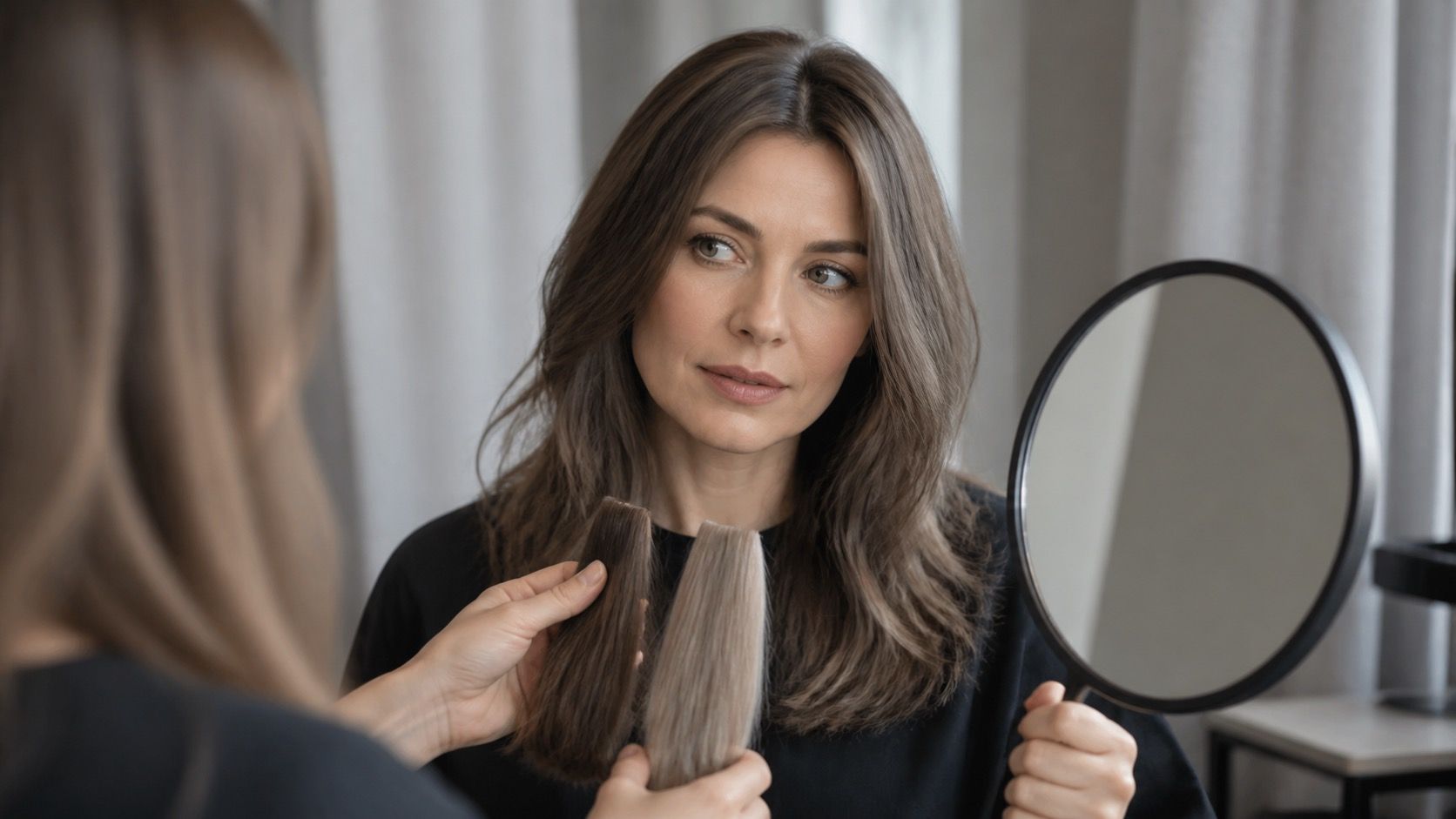
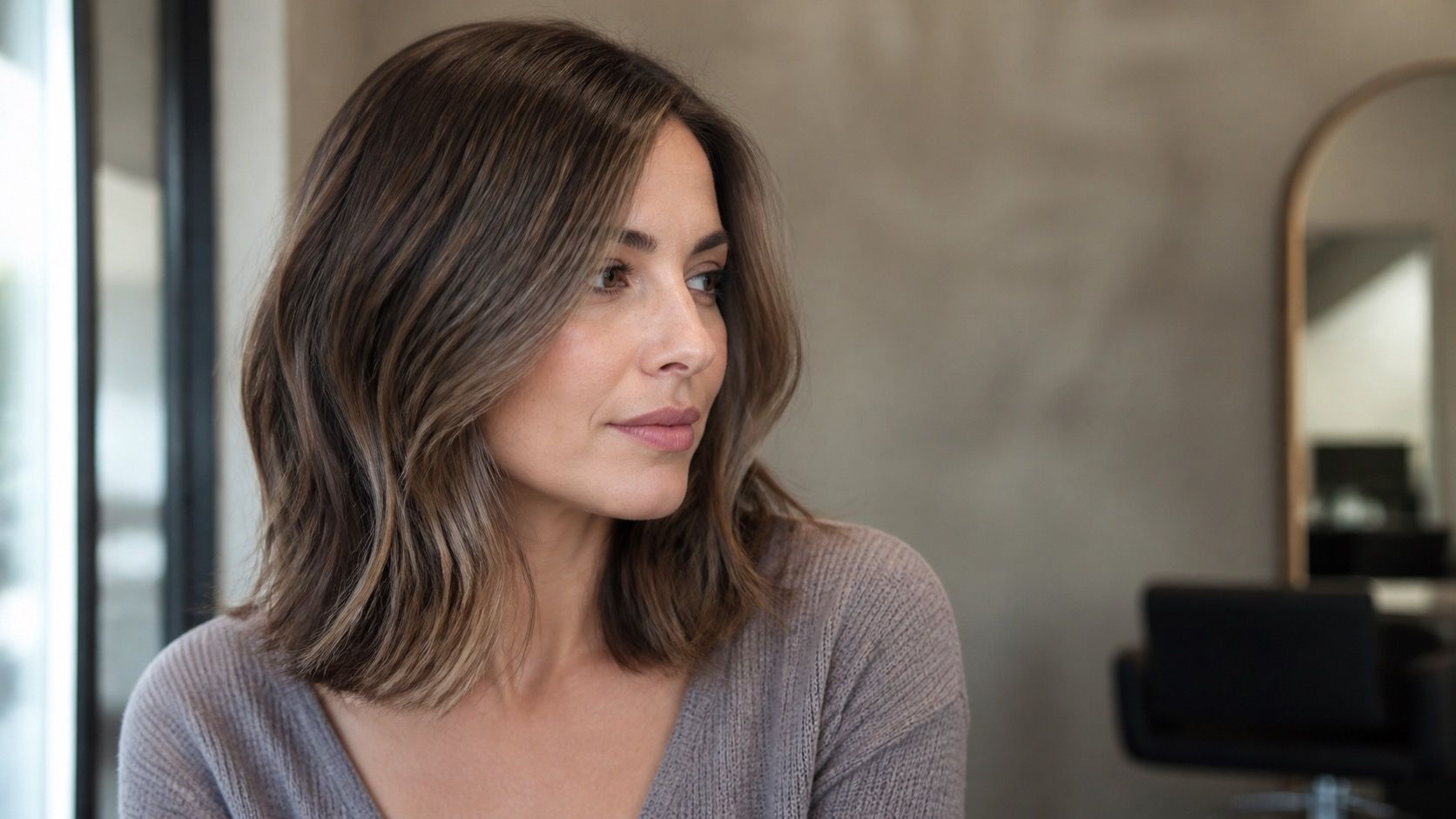
Soft Summer usually sits between coolness and softness. The skin, eyes and natural hair often have a blended quality, even when individual features are striking up close. Muted cool tones tend to look easier than bright gold, sharp orange or inky black because they do not force an artificial outline around the face. Smoky brown, mushroom brown, soft beige-ash and muted rose-brown are often more useful directions than a single dramatic label.
The common mistake is treating cool as the only instruction. A highly silver blonde or blue-black brunette may technically be cool, yet still overwhelm low-to-medium contrast features. In natural light, the right shade should allow the eye colour and skin texture to remain visible. If a new colour makes you feel as though your brows, lip colour and clothing all need to become stronger, it may be adding too much contrast.
Too dark can look harder than expected
Jet black is the classic temptation when someone wants more definition. On many Soft Summers it creates a clean graphic frame that photographs well and then feels severe in a bathroom mirror. The hairline can make under-eye shadows more obvious, while soft blue, grey or hazel eyes lose the gentle complexity that made them interesting. A smoky medium brown often gives a similar sense of polish without the heavy block of colour.
If you want to go darker, change depth in steps. Start with a root shadow, lowlights, or a demi-permanent gloss one level deeper than your natural base. Live with it through daylight, work lighting and an unstyled wash day. Permanent near-black is difficult to reverse cleanly, and the price of a dramatic first appointment can be several months of warmth appearing while you try to lift it out.
Too bright can be just as distracting
Bright gold blonde, clear platinum and vivid copper have strong visual energy. The issue is not that they are forbidden; it is that they can sit ahead of a muted complexion rather than alongside it. A pale bright face frame can make the centre of the face look comparatively pink or grey. Copper can pull redness forward even when the shade itself is beautifully applied.
Look for soft summer hair color ideas with a little smoke or beige inside them: muted sandy blonde, cool beige, dusty rose-brown, mushroom bronde or a gentle strawberry-beige rather than orange copper. The names are imperfect, so judge a reference by its saturation. If the colour is the loudest thing in a small thumbnail, it is probably brighter than the Soft Summer effect you are trying to create.
Warmth becomes a problem when it takes over the fade
Brassiness is especially frustrating because a colour can leave the salon balanced and become yellow or orange at the ends two weeks later. Lightened hair exposes warm pigment, and porous lengths release toner first. A faded colour is not proof that you chose the wrong family; it may simply need a more realistic formula, a gentler wash routine, or a scheduled gloss before it reaches the point you dislike.
Do not counter every warm note with increasingly purple products. Over-toning can leave pale sections dull, violet, or uneven while the deeper parts remain warm. A purple shampoo suits yellow blonde; blue pigment is more relevant to orange on darker hair. Use the product for a short time and observe the result in daylight. If warmth returns fast, a salon gloss and a discussion of porosity are usually more productive than a bathroom chemistry experiment.
| What feels wrong | Likely cause | Gentler correction |
|---|---|---|
| Face looks stark and tired | Base is too dark or too solid | Soften with smoky brown dimension and a lighter face frame |
| Hair looks yellow beside the skin | Faded toner or overly bright gold | Use a beige-cool gloss rather than a drastic re-lightening |
| Highlights look striped | Too much highlight density near the hairline | Blur with lowlights and finer varied pieces |
| Colour looks flat and grey | Over-toning or missing depth variation | Add muted neutral-cool dimension, not more silver pigment |
Highlight placement can create unwanted contrast
Soft Summer colour often works better when the lightness is distributed rather than concentrated in two pale ribbons beside the cheeks. High-density highlights can be lovely, but they need a root shadow and varied width to avoid creating a striped halo. The most convincing blends have a few slightly deeper areas, so the eye reads texture instead of a hard before-and-after line.
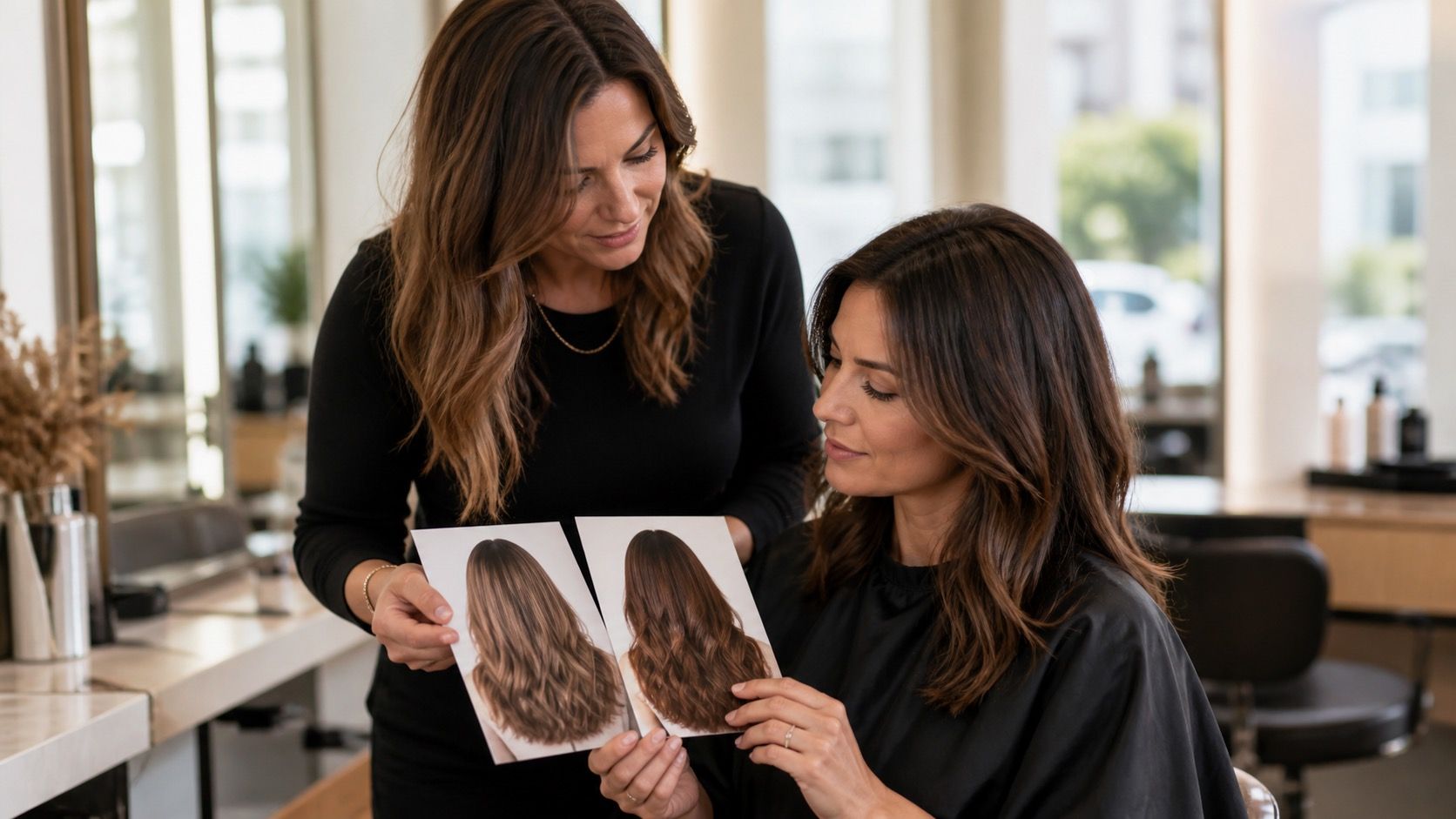
Ask to see the colour with the hair parted as you normally wear it. A style with a centre part reveals front pieces differently from an off-centre part, and a reference photo with waves may hide a much stronger highlight pattern than your straight weekday hair will. Placement is a design decision, not an afterthought. It changes contrast without changing the whole base colour.
Reset a colour that feels wrong before changing everything
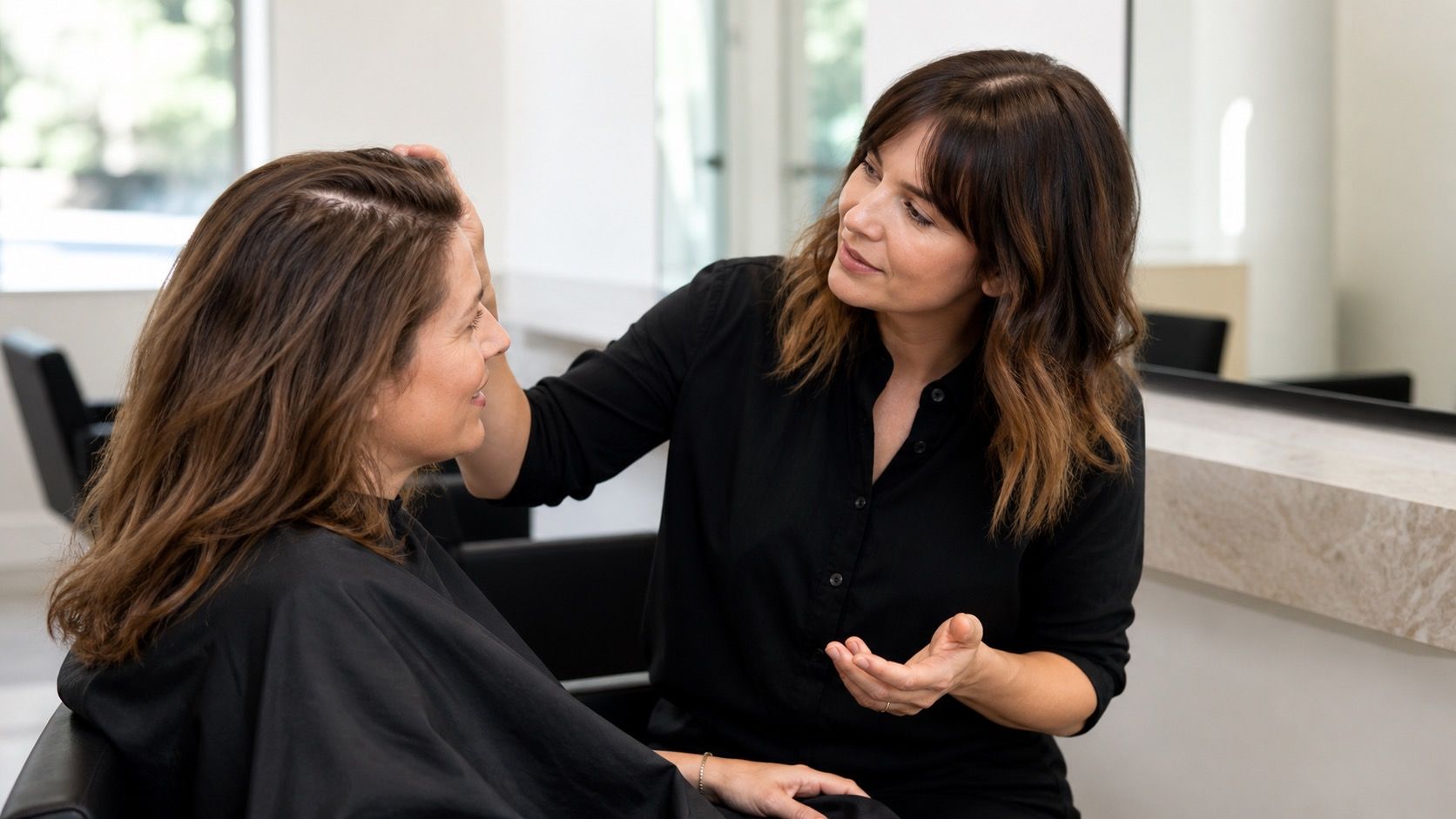
Start by naming the problem in plain language: too dark, too bright, too warm, too grey, or too stripy. Then separate the root from the ends. A root that is right with lengths that are brassy needs a different fix from a root that is too deep. Take photos in open shade and bring them to the salon; they are more useful than a photo taken directly under a yellow ceiling lamp.
A practical reset may be a gloss, a few lowlights, a softer root blend, or a trim of the most porous ends. It does not always require stripping the colour out. Soft Summer is a forgiving direction once you stop treating softness as blandness. Muted coolness, controlled depth and moderate contrast can still look deliberate, current and fully your own.
Give the final choice time outside the salon
Check a new shade on an overcast day as well as in sun. Soft colours sometimes look quieter indoors, but that is not the same as looking lifeless. The question is whether the hair makes your face look settled without needing a filter. If the result feels right only in one particular light, the depth, tone or lightness may need a small adjustment.
Seasonal colour language is a useful shortcut, not a prison. A Soft Summer can enjoy deeper brown or a touch of warmth when it is balanced by the rest of the formula. What matters is avoiding the extremes that make a soft face work too hard: jet black, bright gold blonde, clear copper, flat grey and sharply striped highlights. The best correction is often calmer, not bigger.